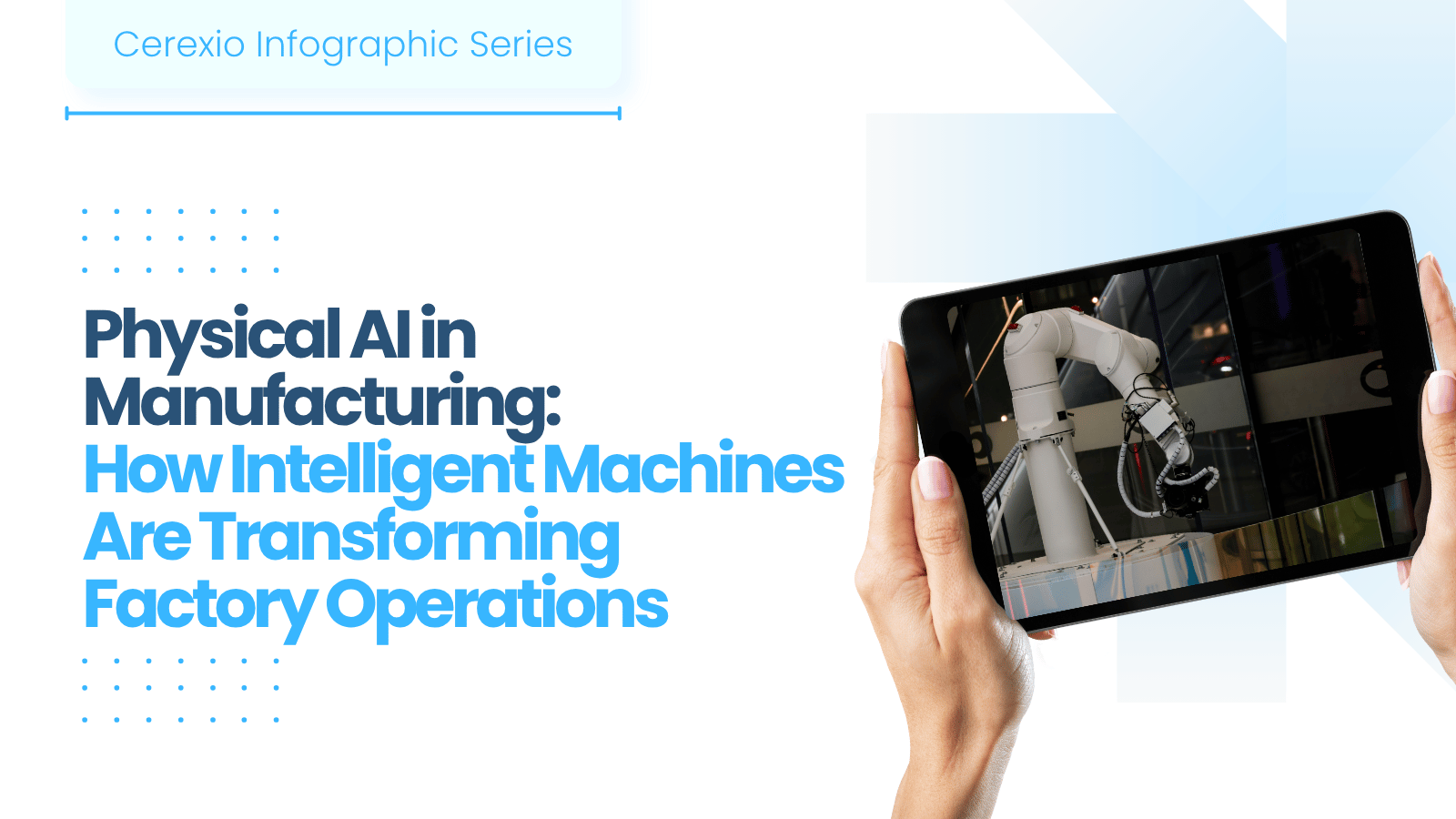
Artificial intelligence is no longer limited to analysing data, generating reports or providing recommendations. With the emergence of Physical AI, intelligence is moving into the physical world, enabling machines and robotic systems to perceive their surroundings, make decisions and perform actions in real time.
By combining AI, computer vision, sensors, connected systems and robotics, manufacturers can create production environments where machines respond more intelligently to changing conditions. From automated inspection and precision assembly to adaptive material handling, Physical AI opens new possibilities for improving production speed, quality and operational flexibility. It also creates opportunities to reduce repetitive manual tasks, minimise errors and support safer working environments.
As manufacturing becomes increasingly connected and automated, Physical AI represents an important step towards more intelligent and adaptive industrial operations.
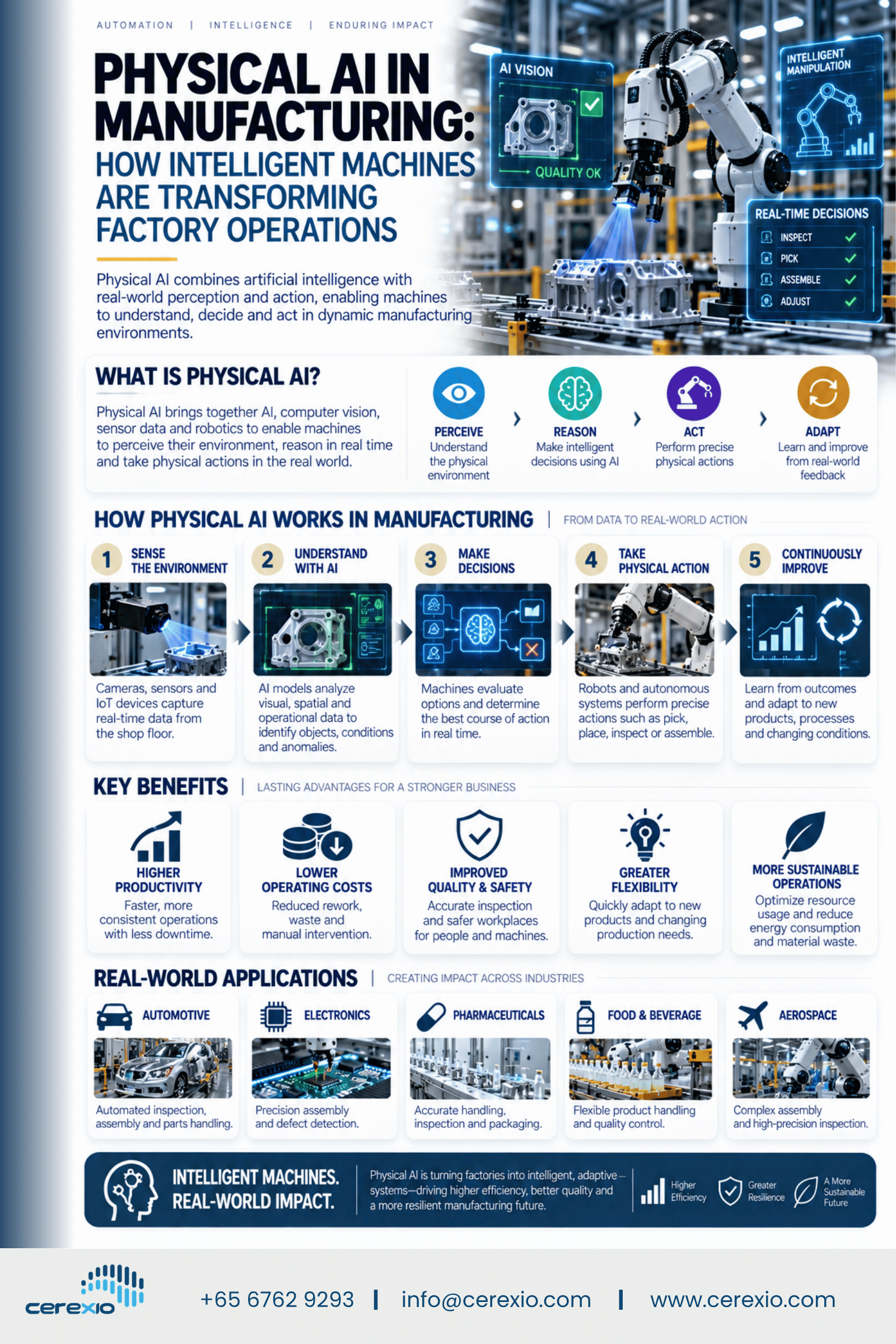
The infographic below explains how Physical AI works, from sensing and decision-making to real-world action, while highlighting its key benefits and applications across manufacturing industries.