Everyone who works directly or indirectly to satisfy a customer’s request is an important component of the supply chain. Manufacturers, suppliers, transporters, warehouses, retailers, and ultimately the customers themselves are a few examples of the stakeholders involved. The fact that a single company can be a part of multiple supply chains highlights how a supply chain is a network. Yes, it is one large network!
Yet, we can see that supply networks have changed during the past years due to technological advancements.
Businesses are rapidly integrating AI technology into their supply chains due to their recent explosive growth. The application of various forms of artificial intelligence simply enhances supply chain operations for manufacturers.
This article uncovers the different types of Machine Learning that work for Supply chain optimisation.
We will explore
- Key Types of Machine Learning and AI in Supply Chains
- FAQs About Machine Learning Supply Chain Optimisation
Key Types of Machine Learning and AI in Supply Chains
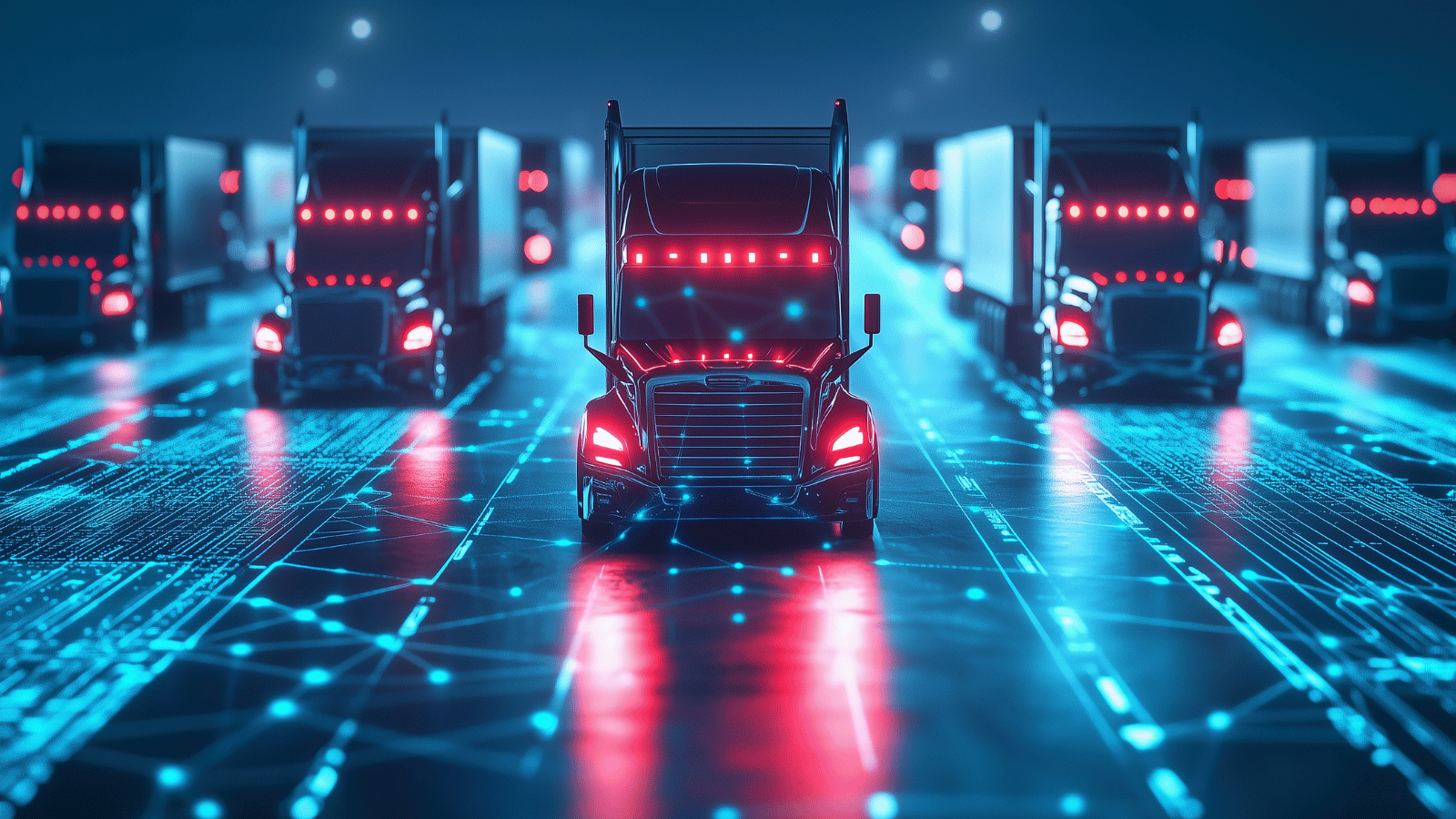
Supply chain management has seen revolutionary developments as a result of data analytics advancements, particularly in manufacturing, quality assurance, and logistics. Let’s explore what types of ML and AI developments allow for greater efficiency and capacity to improve SCM applications through the integration of machine learning, IoT technologies, artificial intelligence, and artificial neural networks :-
Machine Learning (ML)
Machine learning simulates human nature based on the knowledge and experience gathered. In order to provide computers, the capacity to learn without explicit programming, machine learning was developed. It does this by extracting information from data and using it to solve problems.
Understanding supply chain partners’ motivations for exchanging information and eventually fortifying their collaboration can be accomplished through machine learning (ML).
For instance, the bullwhip effect, a skewed demand signal at the end of the supply chain, can be predicted using machine learning. Companies suffer from distorted demand because it might result in excess or insufficient inventory, which raises prices or creates a stock shortage.
Supply chain partners’ processes can become more efficient with the aid of machine learning, particularly automation. Since robots can generate more dependable results than humans, machine learning greatly aids in supply chain collaboration.
Artificial Intelligence (AI)
Artificial intelligence is the application of computers to reasoning, pattern recognition, and knowledge development in order to solve problems in decision-making scenarios. AI gives a machine the ability to perform any cognitive tasks that replicate human behaviour.
AI has the potential to significantly alter present business processes and is necessary for the automation and digitalisation of supply chain operations. Software that mimics human behaviour to accomplish tasks is referred to as artificial intelligence.
Different components of the supply chain model can be connected and integrated thanks to cloud computing and artificial intelligence technology.
This makes it possible for various supply chain components to work harder in real time and form clusters of related tasks. This is possible in large part by cloud computing, which facilitates data analysis, learning, and decision-making. This results in novel approaches to supply chain behaviour and process management.
Artificial Neural Networks (ANN)
The way neurons or brain cells work is the basis for artificial neural networks. ANNs can use the interconnected network of computer memories to process information, identify patterns, and learn from experience.
ANN’s special image processing skills make it suitable for semantic modelling and autonomous vehicle navigation. ANN was used to manoeuvre a land vehicle down a highway lane in order to simulate the actions of a human driver.
ANN was also effectively utilised to create hierarchical supply chain planning, which made it possible to estimate the ideal lot size between supply chain processes, link inventory and scheduling decisions, and accurately determine the time and capacity required for setups.
Blockchain Technology
Blockchain technology makes use of the Internet’s power to record data in a decentralised way, forming a chain of information blocks. Immutability is one of Blockchain’s distinguishing features.
Since blockchain provides a dependable, unchangeable digital log, it can be helpful for supply chains. Multiple organisations are involved in supply chains, which results in disjointed operational data. Blockchain can store data in an unchangeable, verifiable record regarding goods, operations, procedures, etc.
This would make it simple to track the origins of products, confirm their legitimacy, and guarantee sustainability.
Internet of Things (IoT)
IoT shapes the future supply chain by bridging the physical and digital domains at every stage of the process, from design and manufacture to transportation, customer use, and service.
IoT-enabled real-time monitoring of company KPIs is significantly improving the industrial sector’s bottom line.
Reduced downtime from real-time truck monitoring, on-time arrivals from position tracking and intelligent routing, and a decrease in liabilities from driver behaviour and in-transit damages are all advantages for the transportation and logistics industry.
How Cerexio MES Uses AI and Machine Learning for Smarter Supply Chain Optimisation
Are you seeking modern tools to optimise supply chain performance? Then, partner with Cerexio Manufacturing Execution System, powered by embedded AI, machine learning, and Industry 4.0 technologies. Our software solution can analyse real-time production data, monitor material availability, and identify bottlenecks before they disrupt operations.
Its predictive insights support demand planning, inventory control, and production scheduling. Improve resource utilisation, reduce delays, minimise waste, and strengthen coordination between manufacturing and supply chain teams for greater agility, efficiency, and operational resilience.
Call for a free demo.
Cerexio- For A Sophisticated Supply Chain Network
FAQs About Machine Learning Supply Chain Optimisation
Machine learning in supply chain optimisation uses algorithms to analyse operational data, predict demand, improve inventory management, and enhance logistics and supply chain decision-making.
Machine learning improves supply chain efficiency by forecasting demand, optimising delivery routes, identifying potential disruptions, reducing inventory costs, and improving coordination between suppliers and manufacturers.
Applications include demand forecasting, inventory optimisation, supplier evaluation, predictive maintenance, warehouse automation, delivery route planning, risk assessment, and real-time supply chain monitoring.
Common challenges include poor data quality, integration difficulties, implementation costs, skills shortages, cybersecurity risks, and resistance to adopting new technologies across supply chain operations.