Being competitive becomes difficult for all industries in an environment where the industrial market is drastically changing due to globalisation and delocalisation. Predicting the life cycle impact of design choices early in the product development process is essential to creating successful new goods. In this context, we can see that considerations for the product’s manufacturing, shipping, installation, use, maintenance, retirement, and recycling become a part of the downstream life cycle.
However, ignoring downstream concerns or generating inaccurate estimations results in subpar product designs that could lead to unanticipated issues and exorbitant expenses downstream. Redesign can sometimes be used to fix issues found during design verification or testing, although the expense of doing so at this late point may be unaffordable.
In this article, we uncover how Design for Manufacture or DFMA enters the production scenario, enhancing product development in different design stages.
We will explore
- What is Design for Manufacture (DFM)?
- DFMA and Its Different Stages In Product Development
- FAQs About DFMA in Product Development
What is Design for Manufacture (DFM)?
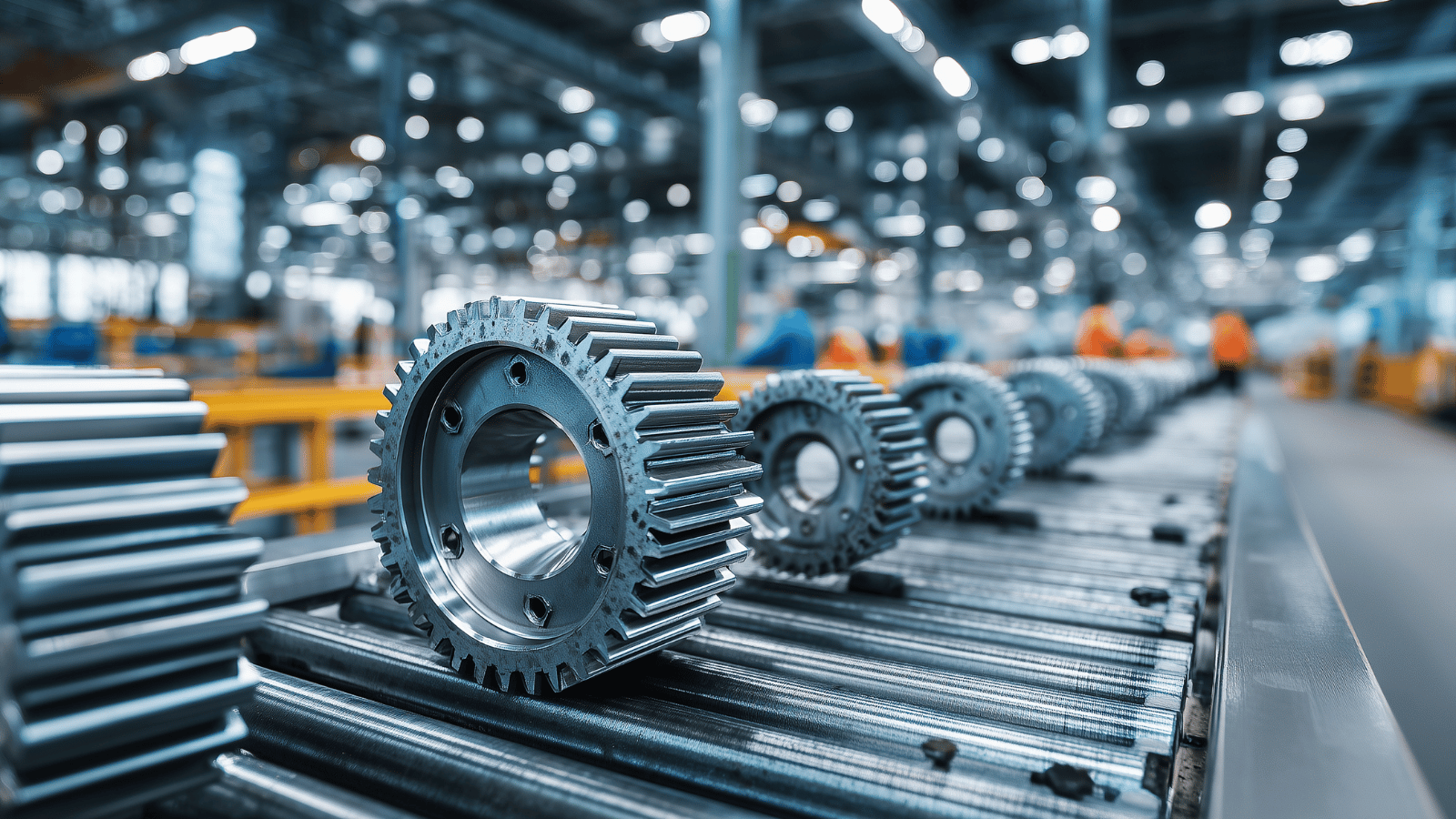
It is a method of product design that takes production data and design objectives into account as soon as possible during product definition.
DFMA and Its Different Stages In Product Development
In the section below, we look into DFMA’s application in the different product development and design stages :-
Product Architecture
The goal of conceptual design is to identify the right product architecture that will meet the product concept. The product elements and how they are assembled or linked together must be identified in order to describe the product architecture.
Modular and integrated product architectures are the two main categories.
While integral architecture focuses on the inner workings and purpose of each module or function, modular architecture concentrates on the linkage, connection, and interaction between two modules or functions.
DFMA helps optimise the latter stage by arranging the parts and modules of a product to make production, assembly, and integration easier. It improves product quality, dependability, and scalability while lowering part complexity, production costs, and assembly time.
Configuration Design
Using predetermined components, functions, and their interactions, the designer creates a product or its components using this method.
A quicker and more economical method of designing is configuration design. During this stage, the designer gives each component or function its definition, dimensions, or shape.
DFMA helps to streamline production by organising parts and choosing appropriate manufacturing and assembly techniques. It improves product functionality, uniformity, and ease of assembly while lowering production costs, part count, and assembly complexity.
Parametric Design
The characteristics of the components found in configuration design serve as the parametric design’s look variables. identifying the exact dimensions, values, or tolerances of the parts or features that are thought to be essential to quality.
The planning stage may have the most impact on the materials flow cycle, the production techniques that are employed, and many of the minute details because this is where decisions about materials and shapes are made. The product’s highly modular design makes its disassembly simple. The overall plan can facilitate the completion of the necessary procedures in remanufacturing.
The last design step will bring the products to their final form. It must be fully defined at the top. The engineer has useful principles, guidelines, and three fundamental rules for this procedure.
DFM in Detail Design
A variety of DFM techniques are commonly used in an attempt to identify problems, catch errors, and prevent downstream changes given the selection of materials and procedures during embodiment design and the approaching release of the product design to manufacture.
Integration with Computer-Aided Design (CAD) tools becomes essential for processing and product analysis during thorough design. For instance, it is typical to incorporate Computer-Aided Manufacturing (CAM) and Failure Modes and Effects Analysis (FMEA) into CAD.
Both a part’s shape and tolerance are important aspects of detail design. Expert systems or design standards can be used to apply DFM to form, which is very process dependent. The consideration of tolerance and its impact on function is more universal to all processes.
Each failure mode and its possible effects on system performance, safety, and maintenance are methodically assessed and documented by the development team.
DFM in Embodiment Design
Product development is familiar with embodiment design. This should result in lower manufacturing costs, appropriate requirements, low weights, minimal losses, and ideal handling. It is treated as a design process starting from the very initial or concept phase of the product.
The design should be created in accordance with economic and product engineering standards. The structural evolution of the design concepts occurs throughout this period.
Additionally, the design concept is endowed with physical form during this phase, where judgements are made regarding strength, material selection, size, shape, and spatial compatibility.
How Cerexio Digital Twin Technology Simplifies DFMA in Product Development
If you expect to accelerate Design for Manufacturing and Assembly (DFMA), it is time to partner with Cerexio Digital Twin System, powered by advanced digital twin technologies and Industry 4.0 capabilities.
Our software platform helps organisations create virtual product models, simulate assembly processes, and evaluate design alternatives before physical production. Its real-time data integration helps you identify design flaws, simplify components, reduce material waste, and shorten development cycles.
With Cerexio DT, you can improve collaboration, control production costs, and deliver manufacturable, high-quality products with greater efficiency and confidence.
Call for a free demo.
Cerexio-Test Your Products On A Virtual Platform
FAQs About DFMA in Product Development
Design for Manufacturing and Assembly (DFMA) is an engineering method that streamlines product design to facilitate quicker, easier, and more economical manufacturing and assembly.
DFMA lowers production costs, minimises component complexity, shortens development cycles, enhances product quality, streamlines assembly, and promotes effective manufacturing from the very beginning of design.
DFMA minimises extraneous parts, streamlines assembly procedures, chooses appropriate materials, lowers production errors, and enhances resource use throughout product development to lower manufacturing costs.
Digital twin technology helps designers find assembly problems, test design alternatives, optimise workflows, and cut down on expensive physical prototypes by virtually simulating product designs and manufacturing processes.