

Have you ever considered streamlining your manufacturing oganisation using digital supply chain management (SCM) automation? Do you know that 90% of manufacturers believe that digital transformation is what helps them stay competitive in today’s world?
We have to admit that one industry where supply chain management has been greatly impacted by automation is manufacturing. Manufacturers must frequently adjust their manufacturing tactics to keep up with the ever-changing demand for their products. Manufacturers have been able to expedite the process by automating a large portion of the paperwork associated with digital supply chain management. Because of this, industries are now able to create more goods with fewer workers and fewer disruptions.
Digital automation actually has a lot of potential to revolutionise your company. They can automate jobs and procedures, as well as all other aspects. This enables manufacturing businesses to operate more profitably and efficiently. Additionally, it creates fresh chances for departmental cooperation.
This article covers
Digital Transformation in Supply Chain Management-An Overview

Digital transformation is the process of using digital technologies to improve existing supply chain management operations. This entails enhancing data-driven decision-making, automation, analytics, and communications. Additionally, companies can save expenses, increase productivity, and enhance supply chain management by utilising digital transformation.
Smart warehouse management, predictive analytics, real-time tracking, and automated order processing are some cases of supply chain management’s digital transformation.
Improved customer service, cost savings, and increased accuracy and efficiency are all possible outcomes of supply chain automation. Automation can also make companies more flexible and sensitive to changes in supply chain conditions and customer demand.
Additionally, automation can increase supply chain visibility, enabling companies to keep a closer eye on deliveries and inventory levels. It can reduce costs related to physical labour, improve consistency throughout operations, and eradicate mistakes.
Plus, automation can help companies better understand the effectiveness of their supply chains and pinpoint areas that need improvement. Businesses can improve the speed and accuracy of their supply chain operations and obtain more control over their operations by automating the process.
Key Takeaways
- Digital Transformation in Manufacturing supply chain refers to the process of employing cutting-edge technologies and tools to improve the outcome of the supply chain easily and flexibly.
- Supply chain digital transformation enhances visibility, trace quality outputs, and helps with reducing errors on a digital platform.
- Many manufacturers lean towards digital transformation for supply chain operations considering cost savings, time saving, process perfection, etc.
Importance of Digital Transformation in Supply Chain Management
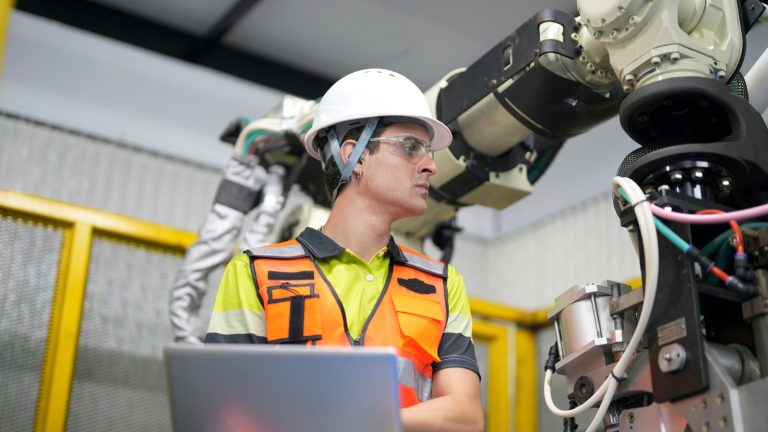
The manufacturing supply chain landscape requires digital transformation due to the top-notch benefits such as enhanced visibility, process automation, business flexibility, enhanced safety, etc.
In the section below, we cover some of the most important advantages of digital transformation in supply chain management in detail.
Automation of Processes
When you use digital transformation, everything in your supply chain is completed automatically and with very little manual assistance. Supervisors must get accurate, logical, and comprehensive data.
It facilitates the conversion of physical operations into the predetermined digital plan, resulting in a highly accurate and dependable network.
Better Customer Support
Digital supply chain management can help companies offer better customer service by helping them better understand the demands and preferences of their customers.
Predictive analytics, for instance, can give businesses the information they need to foresee and proactively respond to customer needs.
Complete Client Communication
Customer interaction will increase as a result of the digital revolution. A consumer who places an order, for instance, will receive updates on its status.
Customers will then have the appropriate control, transparency, and experience when purchasing from that brand.
Enhanced Safety
Manufacturers can employ cutting-edge security measures thanks to the digitalisation of supply chain management and logistics transformation. To protect their data, it incorporates tokenisation, authentication, and encryption.
This can guarantee the security of company data and shield its supply chain from possible cyber threats.
Enhanced Visibility
By offering visibility into the movement of goods and services, digital transformation in supply chain management enables companies to better understand their supply chain performance.
Businesses are empowered to make better judgments, enhance their production procedures, and more successfully manage their supply chains thanks to this visibility.
Regulatory Compliance
The best method to guarantee that certain requirements are met and that operations are flexible enough to change is to document and automate tasks. Additionally, companies can better control supply chain risks by using data analytics to spot trends and hazards.
Tools for risk analysis and monitoring can be used to monitor products and processes, as well as to find and identify risks in the supply chain.
This will make it possible for businesses to recognise possible hazards and create plans to reduce them.
Flexibility in Business
Businesses will have flexibility throughout the entire process due to digital solutions, which will reduce any delays or bottlenecks brought on by manual labour. The logistics and transportation situation gets more difficult as a company expands.
Once everything is digitalised, the best transit options will be available. The efficiency of client service and transport will then immediately improve.
Improving the Making of Decisions
Making better and faster decisions will be simple once you have sufficient supply chain management solutions with the most accurate data connected.
Additionally, by merging transactional data with easily accessible data, performance may be quickly and precisely assessed.
It so aids in avoiding the distortions brought about by average costs.
Improved Teamwork
Adopting digital transformation can enhance a business’s capacity to collaborate with suppliers, customers, and partners.
Better information exchange, quicker reaction times, and enhanced general service can result from this.
Innovation
Every digital transformation project starts with innovation. It complements the company concept and improves traditional supply chain management techniques. Your manufacturing company can strengthen its relationships with clients and suppliers.
If a corporation wants to be perceived as competent, it should strive for supply chain management that is as simple as possible.
Every digital transformation project starts with innovation.
Simpler Procedures
Businesses can optimise their supply chain operations by deploying digital technology like robotics, artificial intelligence (AI), and sophisticated analytics.
This can lead to lower costs, more efficiency, and less complexity.
Transparency and Visibility in Operations
Poor connectivity has led to a lack of openness during the previous few decades. More apps and systems were added to boost productivity, but doing so resulted in gaps and silos across systems, making it difficult to assess project progress and transfer data between them.
However, with digital transformation, employees receive the most recent status updates and are empowered to act confidently when performing jobs that rely on critical information due to the availability of real-time data.
Both customers and employees benefit from the ease with which they may find out how their order is progressing via the supply chain.
How Cerexio Solutions Help Manufacturing Digital Transformation Journey
Cerexio offers a variety of digital tools for the manufacturing industry, such as Manufacturing Execution System, Digital Twin, Warehouse Management System, Predictive Maintenance Platform, etc., to help them align with this fast-moving era’s digital transformation requirements.
Our solutions support significant cost savings, time savings, energy efficiency, and productivity gains, and offer a competitive advantage for manufacturing organisations.
Call for a personalised demo.
Cerexio-Your Digital Partner In Scaling Up
Walk on the Path of Digital Transformation to Gain Maximum Outcome
Organisations are reassessing their business practices due to the rapidly evolving technological landscape and rising customer expectations. Digital technology integration can help the supply chain become more resilient, flexible, and productive.
This is the perfect time for companies to start implementing their plans as they evaluate their supply networks. These days, one of the best and safest approaches to creating a resilient company is through digital supply chain transformation.
FAQs About Digital Transformation in Manufacturing
Digital transformation in manufacturing refers to employing cutting-edge technologies such as AI, IoT, automation, analytics, and cloud computing, with the objective of enhancing efficiency, production, quality, and decision-making.
Digital transformation in manufacturing is important because it can decrease costs, enhance operational efficiency, reduce downtime, bring up the product quality, and optimise overall profitability.
Digital transformation is enabled by key digital advancements such as Industrial IoT, artificial intelligence, machine learning, robotics, cloud computing, digital twins, predictive analytics, and automation.
Manufacturers can start by determining operational difficulties, establishing quantifiable objectives, evaluating current systems, ranking high-impact technologies, and progressively putting solutions into place in accordance with business requirements.