
If you are a manufacturer, you may be searching for ‘What are the latest automation technologies in manufacturing?’ right? That is because the fast development of artificial intelligence (AI) and autonomous AI agents is forming the next era of business automation. Organisations must put smarter automation strategies in place to drive meaningful results and better outcomes. These digital changes are expected to be greatest in supply chains, customer service functions, and repetitive administrative activities. However, this will be a tough game!
This year will be about more of the same: experimentation giving way to execution. Companies are going to go beyond what is tested and into legitimate, real-world agentic solutions. Without further explanation, let us dive into finding the answers to the question ‘what are the latest automation technologies in manufacturing?’ below.
We will look into
- What Have Been the Latest Advances in Automation Technology?
- What Are the Current Trends in Automation?
- What Are the Automation Trends in 2026 According to Cerexio?
- What Are the Latest Automation Technologies?
- Key Trends Shaping the Future of Automation
- What Is the Next Big Thing in Automation?
- FAQs About Automation Technologies in Manufacturing
What Have Been the Latest Advances in Automation Technology?

Intelligent automation (IA) now encompasses robotic process automation (RPA), artificial intelligence (AI), and machine learning (ML), as well as related technologies such as task and process mining, business process management (BPM), and more. And collectively, these abilities facilitate automation of the whole end-to-end business processes, not a certain action.
With more and more organisations integrating autonomous enterprise AI automation solutions, automation can now deal with such advanced, high-volume workloads that they used to demand significant human attention.
Key Takeaways
- In 2026, enterprise automation is powered by AI agents, orchestration, and platforms that scale with the opportunity, rather than single-purpose point tools.
- Excellence in governance, security, and compliance is now a prerequisite for turning AI automation into measurable business value.
- Integrated platform solutions enable enterprises to achieve faster ROI by bringing people, processes, and technology together.
- The future of automation relies on effective collaboration between humans and AI, supported by upskilling and intelligent orchestration.
What Are the Current Trends in Automation?

One of the most recent phenomena is the proliferation of automation in recent years, including in highly complex domains such as AI agents. But the development of automation is not guided by any single trend.
Instead, businesses are seeing a more fundamental change that extends to return on investment (ROI) strategies, AI–human collaboration, AI readiness, AI-driven orchestration, and governance frameworks, as well as how business users engage with automation technologies on the fly.
With automation now mature, the emphasis is moving from an individual productivity lift to a company-wide value play. This is where manufacturing organisations are focusing on scaling results while delivering with ethics and transparency in mind.
It is a good strategy to ensure automation is well aligned with their long-term digital transformation goals rather than experimenting.
About who controls such technology, how it is to be made accountable, and how trust is to be inculcated, success will not just be about who does automation first, but about who does automation right.
Tomorrow belongs to strategic leaders who build governance, compliance, and transparency into their automation efforts from day one.
As we have stepped into 2026, agentic automation will abruptly alter how the enterprise operates. Now, the discussion is no longer about whether we can do this technologically, but about control, accountability, and trust.
It is not that those who automate first will succeed, but those who are wiser in their automation use.
One thing we have to admit. The best fit and strategic leaders of the future will be those who couple leadership with governance, compliance, and transparency from day one of an automation journey!
Organisations that can successfully orchestrate this complexity, with humans and AI agents working in concert and risk management, will drive sustained transformation and real value throughout the organisation.
What Are the Automation Trends in 2026 According to Cerexio?
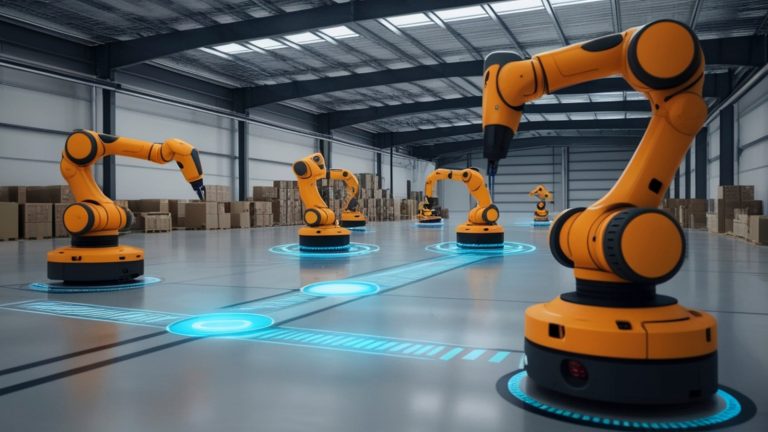
As Cerexio identified, there are seven primary trends in agentic AI and automation trends that will shape enterprise automation strategies by 2026. These technological concepts reflect a move from experimenting to executing, stressing governance, and delivering real measures of success.
Companies that support these priorities will be more likely to be able to bring AI into the manufacturing business in a responsible manner and use AI to create sustainable long-term value.
Cerexio’s key automation and AI trends for 2026 include:
- Creating trustworthy governance
- Orchestrating AI agents
- AI readiness
- Proving ROI
- Supercharging RPA with AI
- Human-centric AI collaboration
- Scaling AI projects
ROI Proof Over Promise
These days, the surge in AI investment means that prospective is not enough. This is when the manufacturing stakeholders must show very visibly where their AI automation is generating tangible business results.
It requires you to put ROI-driven metrics above everything else and to discover operational impact. You also need to know how to redesign your business processes to maximise your utilisation of AI capabilities instead of bolting on intelligence to an already broken process.
Real-world examples around the world show that companies that anchor their AI strategy to value realisation will secure executive buy-in and funding over the long haul. Even cutting-edge automation programmes are at risk of stagnation or of losing stakeholder confidence before scaling, without strong proof points.
According to reliable sources, as a result of this, by 2028, 90% of B2B buying will be AI agent–intermediated, driving more than $15 trillion of B2B spend through AI agent exchanges.
Organisational Readiness Takes Centre Stage
The enterprise AI task is a burden of a new era that requires modern enterprise operating models. Businesses are busy reconfiguring organisational structures, re-imagining jobs, and upskilling to prepare a workforce for building a scalable automation.
In fact, strategic planning for AI readiness is evolving from an option to a prerequisite for sustainable transformation. That will lead to disparate deployments and abandoned technologies if your business does not prepare ahead of time to overcome this problem.
Here is where the progressive enterprises build automation strategy, governance, and workforce transformation into the very beginning. This establishes a foundation that fuels lasting innovation and immunity.
Since AI is everywhere, slothfulness poses the biggest threat to organisational transformation. For any real advancement to occur, however, manufacturers need to upskill their talent and reshape roles to realise the value of technology.
AI–Human Collaboration Comes Into Focus
We can see that the adoption of low-code and no-code automation is leading to an AI adoption used directly by business users. Workers are now more likely to work alongside AI agents, collaborative robots, and intelligent assistants, often in an environment that has structured training and AI-human orchestration models.
Skills, such as prompt engineering, are increasingly treated as core knowledge while AI agents handle data-heavy and repetitive tasks. This shift decreases reliance on legacy data roles and enables employees to concentrate on making decisions, creative thinking, and strategic value.
According to Gartner, 75% of hiring processes will take into account a job applicant’s ability to work with workplace AI proficiency by 2027.
AI Agent Orchestration Becomes Mission-Critical
With AI systems, models, and tools multiplying on the fly, orchestration is the only way to stay in control. AI-driven orchestration links people, platforms, and agents to unified end-to-end workflows that produce actual business results.
You may have noticed that companies that depend on separated or siloed resources struggle to derive value. Winners will design agentic workflows that coordinate intelligence across departments, in a manner with scalability and reliability, as well as operational consistency.
According to expert predictions, AI agents will be used in one-third of payment workflows processes in the B2B space.
Building Trust Through AI Governance
With the continued growth of global AI regulations, the governance of AI is no longer an additional tool to have. Organisations are embracing explainability, auditability, and accountability in AI models to mitigate compliance risk and trust automated decisions.
In the absence of governance, innovation soon becomes operational and legal risk.
Strong AI governance frameworks safeguard privacy, secure data, and support responsible scaling. As threats change, governance-first automation ensures these organisations stay compliant while boldly growing their AI.
According to Forrester Research, 60% of Fortune 100 companies will have a head of AI governance to manage regulatory exposure in 2026.
Scaling AI Projects That Actually Deliver
Real AI scalability takes place with a pervasive, enterprise-wide strategy. If you fail to invest in foundational readiness, you will find your organisation’s initiatives fragmented and underperforming.
AI-ready means aligning infrastructure, governance, and orchestration before hyperautomation. Organisations need to align their AI infrastructure, governance, and orchestration to be ready for mobilisation.
Further, multi-agent systems allow AI agents to work together on complex tasks without much human supervision. With end-to-end orchestration, scaling automation is faster, more secure, and cost-efficient.
By 2026, agentic automation drives democratised AI at scale, though organisations without strong governance will struggle to turn access into advantage.
RPA Is Evolving—Not Disappearing
Even as AI is changing work, robotic process automation (RPA) continues to be crucial for predictable, rules-based tasks. Far from supplanting RPA, AI supplements it, delivering more intelligent, responsive, and autonomous automation ecosystems that extend the value of today’s investments.
When we combine AI agents and RPA, we can take automation beyond routine tasks to decision-based processes. It simply boosts productivity while maintaining dependability.
As predicted by Gartner, AI Agents will break into mainstream productivity tools by 2027, creating a USD 58 billion market shift.
What Are the Latest Automation Technologies?
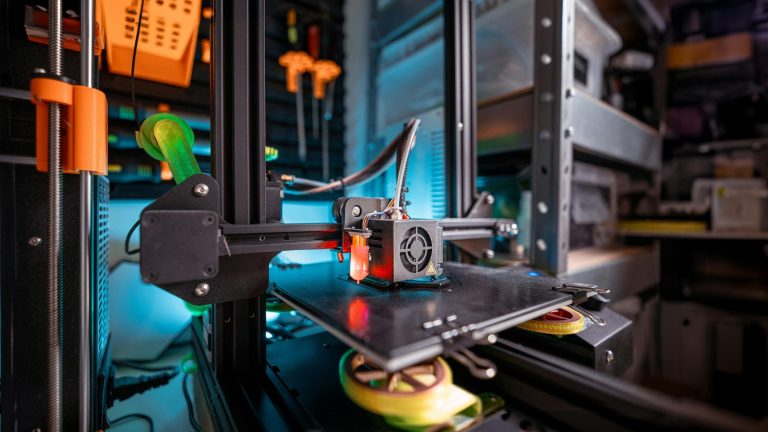
It is evident that modern automation ecosystems depend on their enterprise automation, AI agents, people, and systems. Rather than siloed tools, companies are opting for cohesive platforms built for scale, security, and governance.
The top automation technologies in 2026 embody the trends toward intelligent orchestration, governed AI, and enterprise-wide scalability. Powered by AI-powered automation, process intelligence, and cloud-native infrastructure, these solutions offer faster deployment, better compliance, and measurable ROI to enterprises on screen or mobile device across industries and operating models.
Here are some of the key automation technologies defining 2026.
- Generative AI
- Single platform solutions
- Process intelligence
- Natural language processing (NLP)
- AI gateway
- Cloud-native platform solutions
- Intelligent document processing (IDP)
- Specialised AI
Single Platform Solutions
End-to-end single-platform automation solutions bring automation, artificial intelligence (AI), and orchestration together. They link systems, people, and processes to add resiliency, visibility, control, and simplify enterprise governance while boosting time to value.
When produced in a centralised AI infrastructure, it also enhances security, facilitates compliance, and paves the way for digital transformation at scale.
Natural Language Processing (NLP)
Natural language processing (NLP) is at the core of the next-gen conversational AI, chatbot automation, and virtual assistants. NLP allows automation systems to interpret intent, context, and sentiment, which enables businesses to fuel faster, more customised customer engagements.
Moreover, once interaction volumes reach a critical mass, NLP is important to scaling customer service automation.
Generative AI
Generative AI is increasing automation by making the process of no-code and low-code development accessible to citizen developers. It enables content creation, decision-making, and workflow intelligence.
However, enterprise implementation calls for rigorous AI governance, guardrails, and risk management to enable responsible use while safeguarding long-term business value.
Intelligent Document Processing (IDP)
Intelligent document processing (IDP) transforms unstructured, semi-structured, and structured data into machine-understandable intelligence. In this context, IDP streamlines document-based workflows, improves process efficiency, reduces manual tasks, and mitigates risk by extracting, validating, and accelerating data-driven automation.
It is a key enabler in the digitalisation of processes in areas such as financials, HR, procure-to-pay, and customer onboarding.
Cloud-Native Platform Solutions
These cloud-native automation platforms allow for rapid delivery of hybrid digital workforces. They enable rapid scaling, remote access, and integration with enterprise systems.
With cloud-native solutions, the overhead of infrastructure limitations is low. Therefore, automation adoption can be cost-efficiently developed and used to respond dynamically to new business needs.
Specialised AI
Specialised AI agents that are built to perform narrow, domain-based functions such as UI automation, web automation, office productivity, and operations automation. Through the use of agentic process automation, these AI agents offer greater precision, speed, and efficiency, particularly in specialised or repetitive workflows that call for deep context processing.
Process Intelligence
Process intelligence, driven by task mining and process mining, allows companies to see how workflows unfold before their eyes in order to identify waste. This intelligence also facilitates proactive optimisation, allowing organisations to focus on the most impactful automation opportunities.
Through analytics and automation, companies can get better every day at automating and meet their full potential of using automation ROI to deliver value.
AI Gateway
An AI gateway provides a secure control layer between the AI models and enterprise systems. It governs AI, controls access and compliance, and minimises risk.
Now that global AI regulations are taking shape, governance-first architectures that are underpinned by AI gateways are increasingly a necessity for secure, scalable automation.
Key Trends Shaping the Future of Automation

We see that demands to work faster and smarter are also driving the adoption of low-code and no-code AI tools. Non-Developers build automation from ‘headquarters,’ and developers liaise with integration, connectors, and governance frameworks.
This change supports more widespread adoption of automation and enterprise-wide digital agility.
What Is the Next Big Thing in Automation?
The next big shift in automation is the emergence of autonomous AI agents working within governed, orchestrated workflows. As market buzz grows, businesses will demand that they evaluate automation technologies not just on their innovation velocity or features galore, but rather on the long-term value they provide, the trustworthiness of the platforms on which they live in security and compliance.
What Are the Future Goals of Automation?
Upcoming automation priorities entail integrating AI transformation ation with changing regulatory requirements and a compliance-first operating model. Software partners such as Cerexio, powered by Industry 4.0 technologies, enable companies to combine strategy, delivery, and governance, driving the responsible embedding of AI across business-as-usual.
Moving Forward with Automation Technologies in Manufacturing
AI, agentic workflows, and enterprise orchestration are driving automation at an increasing pace. This is how the deployment of AI alongside human expertise, combined with governance, scalable technologies, and continuous upskilling, becomes the driver of transformation.
Qualifying from the supercharged RPA to multi-agent systems, measurable ROI is becoming the norm, and is experimenting.
The next wave of automation will focus on AI agents, orchestration, and governance-based scale. The businesses that want to innovate and be in control, and forward-thinking enterprises, are looking for ways to innovate with technology without ceding control.
FAQs About Automation Technologies in Manufacturing
The latest automation technologies in 2026 include AI agents, intelligent automation, generative AI, process intelligence, intelligent document processing, and cloud-native automation platforms. Together, these technologies enable scalable, secure, and governance-driven enterprise automation across end-to-end business processes and digital operations.
AI agents improve enterprise automation by autonomously executing tasks, making context-aware decisions, and coordinating with humans and systems. Through agentic automation and orchestration, organisations reduce manual effort, increase efficiency, and scale intelligent workflows while maintaining governance, transparency, and operational control.
Governance in AI-driven automation ensures security, compliance, and trust. It provides explainability, auditability, and accountability for AI decisions. With global regulations increasing, governance frameworks and AI gateways help enterprises manage risk, protect data, and deploy automation responsibly at scale.
Single-platform automation solutions are important because they unify AI, automation, and orchestration into a single system. This reduces complexity, improves governance, accelerates deployment, and shortens time-to-value by enabling enterprises to manage people, processes, and technologies from a centralised platform.
The future of enterprise automation centres on agentic AI, human-in-the-loop governance, and enterprise-wide orchestration. Organisations that combine AI agents with skilled employees, scalable platforms, and strong governance will achieve measurable ROI and sustainable digital transformation beyond experimentation.