
If you have been keeping in touch with the latest industry news, you may have noticed that Singapore’s food sector is under strong pressure to modernise. The country imports over 90% of its food supply, making safety, traceability, and efficiency critical for survival and trust. At the same time, the Singapore Food Agency (SFA) continues tightening regulations to protect consumers and strengthen supply chain resilience. In this environment, digital manufacturing systems are no longer optional.
One of the most important technologies driving this shift is MES food beverage Singapore, which helps manufacturers control production, improve compliance, and reduce operational risk in real time.
This article explores
- Why Singapore F&B Manufacturers Need MES
- Key Singapore Compliance Requirements for F&B
- Key Feature 1 — End-to-End Batch Traceability
- Key Feature 2 — Recipe and Formula Management
- Key Feature 3 — Allergen and Contaminant Control
- Key Feature 4 — Real-Time Quality Control
- Key Feature 5 — Production Scheduling and OEE
- Key Feature 6 — Cold Chain and Shelf Life Monitoring
- How MES Supports HACCP Compliance
- How MES Integrates With ERP and Other Systems
- How Digital Twin Enhances F&B Production
- What Business Outcomes MES Delivers for F&B
- FAQs About MES Food Beverage Singapore
Why Singapore F&B Manufacturers Need MES
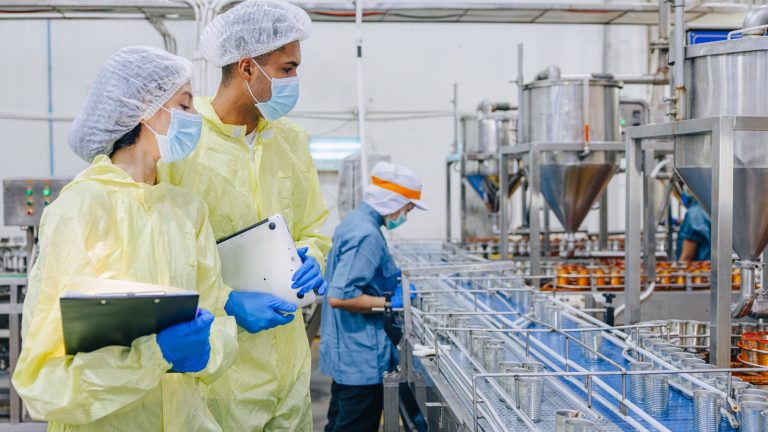
Singapore F&B manufacturers need MES because it enables real-time production control, improves regulatory compliance, and reduces operational risks. It helps factories manage complex processes, ensure product consistency, and meet strict safety standards in a highly regulated and competitive food industry.
Key Takeaways
- MES improves food safety, compliance, and production visibility in Singapore F&B manufacturing.
- Real-time traceability and quality monitoring reduce recalls, waste, and operational risks.
- MES supports HACCP, SFA, ISO 22000, and GMP compliance through automated digital workflows.
- Integrated MES platforms improve OEE, scheduling accuracy, and smart factory decision-making.
Singapore’s S$10.7 Billion F&B Industry at Stake
Singapore’s food and beverage sector contributes around S$10.7 billion annually, making it a key pillar of the national economy. With rising global supply chain disruptions and increasing consumer expectations, manufacturers must ensure consistent product quality and safety.
This is where the adoption of MES food beverage Singapore supports real-time visibility across production lines. Not to mention that it helps manufacturers reduce errors, maintain consistency, and protect brand reputation in a highly competitive market.
Rising SFA and International Compliance Demands
It is no secret that regulatory expectations are increasing in both local and export markets.
Systems aligned with food manufacturing MES Singapore enable manufacturers to meet strict documentation and monitoring requirements. The focus on food safety compliance is especially strong under SFA Singapore enforcement policies, where traceability and hygiene validation are mandatory.
Manufacturers exporting to global markets must also comply with ISO 22000 food safety and GMP food manufacturing frameworks. The latter approach makes digital systems essential.
Why Manual Production Tracking Creates Risk
Manual spreadsheets and paper logs are still used in some factories, but they introduce serious risks.
Human error, missing records, and delayed reporting can lead to non-compliance or product recalls.
In contrast, manufacturing execution system MES platforms provide automated data capture and validation. Without digitisation, manufacturers struggle to achieve proper food traceability, especially during audits or contamination investigations.
MES as the Industry 4.0 Backbone for F&B
Modern factories in Singapore are rapidly moving toward Industry 4.0 food transformation. MES acts as the central digital layer connecting machines, operators, and enterprise systems. It supports smart production decisions, improves transparency, and reduces waste.
In advanced setups, MES integrates with IoT devices and analytics tools, forming the backbone of intelligent and connected F&B production Singapore environments.
Key Singapore Compliance Requirements for F&B
F&B manufacturers in Singapore must comply with SFA regulations, HACCP certification, ISO 22000 food safety standards, GMP requirements, and national sustainability initiatives under the Singapore Food ITM.
1. Singapore Food Agency (SFA) Food Safety Standards
Compliance with SFA Singapore regulations is mandatory for all food producers. These standards focus on hygiene, contamination prevention, and production transparency.
A Singapore SFA compliance MES system helps manufacturers maintain digital records for inspections, ensuring full visibility into production activities. This reduces the risk of violations and supports faster approval processes during audits and certifications.
2. HACCP Certification Requirements for Manufacturers
Hazard Analysis and Critical Control Points (HACCP) is a globally recognised food safety system. Achieving HACCP compliance in manufacturing in Singapore requires strict monitoring of critical control points throughout production.
In this context, MES systems help enforce HACCP compliance by automatically tracking temperature, hygiene steps, and process deviations.
This ensures hazards are identified early and controlled before they affect product safety.
3. ISO 22000 Food Safety Management Systems
The ISO 22000 food safety standard integrates food safety principles into a structured management system. It requires documented processes, risk control, and continuous improvement.
MES platforms support this by ensuring real-time data capture and automated reporting. Manufacturers benefit from improved consistency and easier certification readiness.
4. GMP and ESG Compliance Obligations
Good Manufacturing Practices (GMP) are essential for maintaining hygiene and operational consistency. GMP food manufacturing requirements include controlled environments, validated processes, and trained personnel.
In addition, sustainability reporting is becoming important under ESG food manufacturing expectations. MES systems help track resource usage, energy consumption, and waste generation to support sustainability food initiatives.
5. Food Waste Reduction Under Singapore’s ITM
Singapore Food ITM (Industry Transformation Map) encourages manufacturers to reduce food loss and improve efficiency. Digital monitoring tools support food waste reduction by identifying inefficiencies in production planning and material usage.
MES platforms also assist with energy management food tracking. This helps manufacturers reduce operational costs while meeting national sustainability targets.
Key Feature 1 — End-to-End Batch Traceability
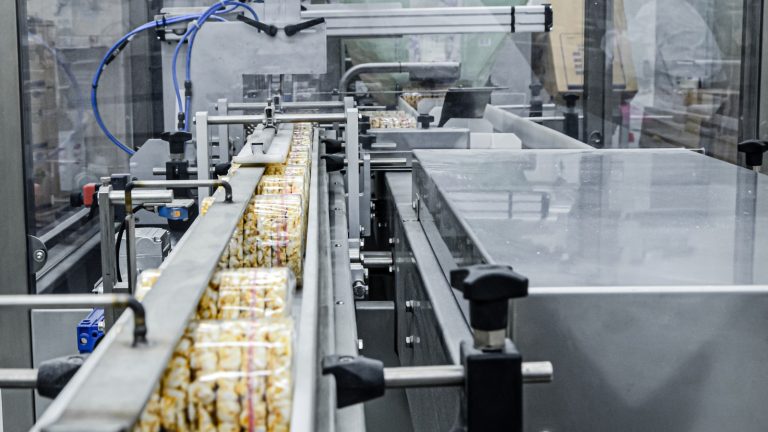
Batch traceability in MES ensures full visibility of ingredients from suppliers to finished products. It enables manufacturers to track every production step, manage recalls quickly, and maintain complete batch genealogy records for compliance and food safety assurance.
Tracing Ingredients from Supplier to Finished Product
A modern food traceability system Singapore relies on complete visibility from raw materials to final goods. MES enables real-time tracking of ingredients, ensuring every input is recorded and verified.
This supports compliance and builds trust across supply chains by linking suppliers, batches, and finished products within a single system.
Batch Genealogy Records for Recall Management
We all know that strong batch traceability is essential for managing product recalls. MES systems build full batch genealogy records, showing how each ingredient flows through production.
If contamination occurs, manufacturers can quickly identify affected batches, reducing recall scope and protecting consumers.
Electronic Batch Records Replacing Paper Documentation
Traditional paper-based logs are being replaced by electronic batch records. These digital records reduce human error and improve audit readiness. MES ensures that every production step is automatically recorded, creating a reliable, tamper-proof history of operations.
Audit-Ready Traceability for SFA Inspections
Regulators expect complete transparency during inspections. MES systems provide instant access to production histories, supporting faster audits and smoother compliance checks.
This improves confidence in manufacturing processes and ensures alignment with food safety MES features Singapore expectations.
Key Feature 2 — Recipe and Formula Management
MES centralises recipe and formula management by storing approved versions, controlling modifications, and ensuring accurate scaling across production runs.
Centralising Approved Recipes and Formulations
MES platforms support structured recipe management by storing all approved formulas in a central system.
This ensures only validated recipes are used during production, reducing variation and maintaining product quality across batches.
Preventing Unauthorised Formula Modifications
Control over formula management is critical in food production. MES restricts access to recipe changes, ensuring only authorised personnel can modify production formulas.
This prevents accidental or unauthorised changes that could impact safety or compliance.
Version Control for Recipe Updates and Revisions
Every recipe update is tracked using version control.
Manufacturers can review historical changes, compare formulations, and ensure consistency. This is especially important in regulated environments where documentation accuracy is required.
Scaling Recipes Across Production Runs Accurately
MES ensures recipes scale correctly across different batch sizes. This improves efficiency in batch management food manufacturing, reducing waste and maintaining consistent taste and quality across production volumes.
Key Feature 3 — Allergen and Contaminant Control
MES manages allergen control by flagging ingredients, enforcing segregation rules, and verifying cleaning procedures between production runs. It ensures allergen risks are minimised and maintains full documentation for regulatory audits and compliance checks.
Flagging Allergen-Containing Ingredients at Intake
Modern food factories must manage strict allergen risks from the moment raw materials arrive.
A strong allergen control manufacturing Singapore strategy begins with automated ingredient screening at intake. MES systems identify allergen risks immediately and link them to product recipes.
This ensures operators are alerted early, reducing contamination risks and improving compliance with allergen management protocols across the entire production lifecycle.
Automated Allergen Segregation Across Production Lines
Separation of allergen and non-allergen products is critical in preventing cross-contamination. MES enforces segregation rules automatically across production lines, equipment, and storage areas. This ensures that shared equipment is properly scheduled and cleaned between runs.
The system supports compliance with strict food safety protocols while improving operational discipline in complex F&B production Singapore environments.
Changeover Cleaning Verification Before Line Restarts
Production changeovers are high-risk points for contamination. MES ensures that cleaning procedures are completed and verified before restarting production lines.
Digital checklists and sensor confirmations replace manual approvals. This reduces human error and supports compliance with hygiene standards.
It also improves efficiency by reducing delays during switching between allergen and non-allergen products.
Allergen Documentation for Regulatory Audit Trails
Regulators require detailed documentation of allergen controls. MES creates a complete audit trail of ingredient handling, production separation, and cleaning verification. This strengthens transparency and ensures manufacturers can demonstrate compliance instantly.
It also improves traceability during investigations, reducing response time and protecting brand trust in sensitive food categories.
Key Feature 4 — Real-Time Quality Control
MES improves quality control by enabling real-time monitoring, statistical process control, and automated deviation alerts. It ensures non-conforming batches are immediately isolated and corrective actions are triggered to maintain product safety and consistency.
In-Line Quality Checkpoints at Every Production Stage
Quality control is no longer limited to final inspection.
MES introduces in-line checkpoints throughout production, ensuring issues are detected early. These checkpoints monitor weight, temperature, and composition in real time. This reduces waste and improves consistency across batches while strengthening overall quality control food systems in manufacturing environments.
Statistical Process Control: Detecting Process Drift
Advanced analytics, such as statistical process control, help detect small deviations before they become major defects. MES continuously analyses production data to identify trends and anomalies.
This allows manufacturers to correct issues early, improving stability and reducing rejection rates.
It also enhances long-term process optimisation across production lines.
Automatic Hold and Quarantine for Non-Conforming Batches
When deviations occur, MES automatically places affected batches on hold. This prevents non-compliant products from reaching distribution channels.
The system isolates suspect batches and triggers review workflows. This supports faster decision-making and reduces risk exposure while ensuring full compliance with internal quality standards.
CAPA Workflows Triggered on Quality Deviations
Corrective and Preventive Actions (CAPA) are essential in food manufacturing. MES automatically triggers CAPA workflows when deviations are detected. This ensures structured problem resolution, documentation, and follow-up actions.
It strengthens continuous improvement practices and reduces recurring production issues over time.
Key Feature 5 — Production Scheduling and OEE
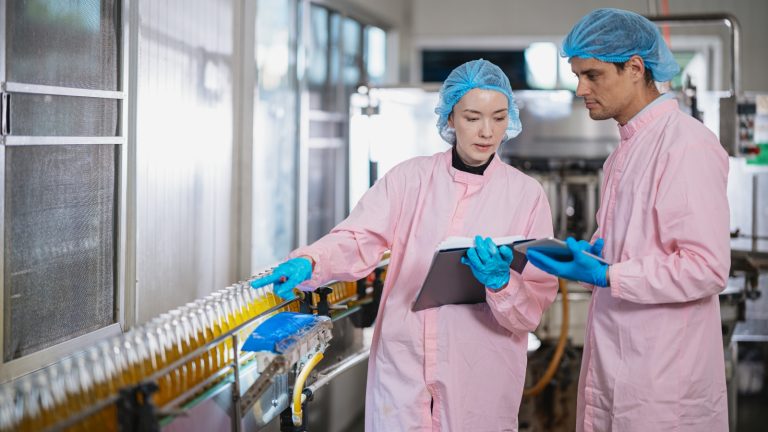
MES improves scheduling by aligning production with demand and tracking equipment efficiency through OEE monitoring. It reduces downtime, optimises changeovers, and helps manufacturers improve overall production performance and resource utilisation.
Dynamic Scheduling Aligned with Demand and Inventory
Production schedules must adapt quickly to changing demand.
MES enables dynamic scheduling based on real-time inventory, orders, and machine availability. This ensures efficient resource allocation and reduces bottlenecks.
In high-volume environments, it significantly improves responsiveness and production flow stability.
Real-Time OEE Tracking Across F&B Production Lines
Overall Equipment Effectiveness is a key performance metric in manufacturing. With OEE food and beverage Singapore, MES provides live tracking of availability, performance, and quality.
This allows managers to monitor efficiency across multiple lines and identify underperforming assets instantly for corrective action.
Changeover Time Reduction Through Planned Sequencing
Efficient sequencing of production runs reduces downtime between batches. MES optimises schedules to minimise cleaning and setup time.
This directly reduces changeover time, improving productivity and lowering operational costs. Smart sequencing also reduces contamination risks when switching between product types.
Downtime Root Cause Analysis by Line and Shift
MES captures detailed downtime data to identify root causes of production stoppages. This includes machine failure, material shortages, and operator delays.
When analysing this data, manufacturers can implement targeted improvements.
It also enhances maintenance planning and supports continuous operational improvement.
Key Feature 6 — Cold Chain and Shelf Life Monitoring
MES monitors temperature across production and storage environments, tracks expiry dates for each batch, and issues alerts for temperature deviations. It ensures product freshness, regulatory compliance, and reduced spoilage risks.
Temperature Monitoring Across Refrigerated Production Zones
Maintaining the correct temperature is essential for food safety. MES integrates with sensors to continuously monitor refrigerated zones. This ensures that storage and production environments remain within safe limits.
Any deviation is detected instantly, reducing spoilage risk and protecting product integrity.
Shelf Life and Expiry Date Tracking Per Batch
Effective shelf life tracking ensures products are distributed within safe consumption periods.
MES tracks expiry timelines for every batch and alerts teams before products reach critical limits. This improves inventory rotation and reduces unnecessary waste in storage and distribution.
Automated Alerts for Temperature Excursions
When temperature thresholds are breached, MES sends automated alerts to operators and supervisors. This allows immediate corrective action, reducing spoilage risk.
It also ensures compliance with cold storage requirements across supply chains, especially for sensitive food categories.
Cold Chain Compliance Documentation for Regulators
Cold chain integrity must be documented for audits and inspections. MES provides full cold chain monitoring records, showing temperature history across production, storage, and transport.
This ensures compliance with regulatory standards and improves transparency in supply chain operations.
How MES Supports HACCP Compliance
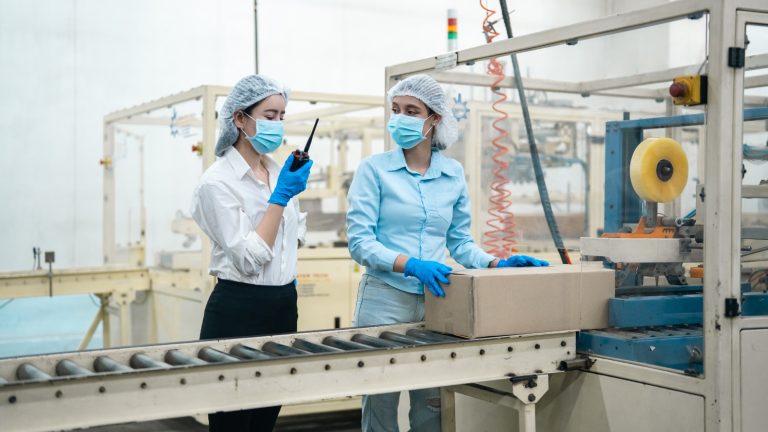
MES supports HACCP by embedding critical control points into workflows, enabling real-time monitoring, triggering alerts for deviations, and maintaining digital records.
Embedding HACCP Critical Control Points Into Workflows
MES integrates HACCP compliance directly into production workflows.
Critical control points are defined within system processes to ensure they are followed consistently. This reduces reliance on manual checks and strengthens food safety discipline across operations.
Real-Time Monitoring at Each CCP Stage
Each critical control point is continuously monitored using MES dashboards and sensors. This ensures deviations are detected immediately.
It improves reaction time and reduces risks associated with delayed detection of safety issues.
Automated Alerts When CCP Limits Are Breached
When control limits are exceeded, MES triggers instant alerts. This enables rapid intervention before unsafe products proceed further in the production chain. It significantly strengthens compliance and reduces risk exposure.
Digital HACCP Records Replacing Manual Logbooks
Traditional paper logs are replaced with digital systems, improving accuracy and accessibility. These records support audits and reduce administrative workload.
They also ensure long-term data integrity for regulatory review.
How MES Integrates With ERP and Other Systems
MES integrates with ERP, SCADA, and IIoT systems to synchronise production data, capture real-time machine information, and centralise operational visibility.
ERP Syncing Material, Inventory, and Order Data
MES integrates with ERP systems to synchronise production planning, inventory levels, and customer orders. This ensures alignment between business operations and shop floor execution.
It reduces delays and improves supply chain coordination.
SCADA Feeding Live Equipment Data Into MES
Integration with SCADA integration systems allows MES to receive real-time machine data. This improves visibility into equipment performance and production conditions.
It also supports faster decision-making on the shop floor.
IIoT Sensors Streaming Temperature and Flow Data
Using IIoT food sensors, MES collects live environmental and process data. This enhances monitoring accuracy and supports predictive maintenance strategies.
It also improves compliance with quality and safety standards.
Unified Production and Compliance View for Managers
Integrated systems provide managers with a single dashboard for operations and compliance. This improves decision-making, reduces data silos, and enhances overall factory efficiency.
How Digital Twin Enhances F&B Production
Digital twin technology simulates production processes, tests recipe changes, and predicts quality outcomes before physical execution.
Simulating Recipe Changes Before Physical Production
A digital twin food system allows manufacturers to test recipe changes in a virtual environment before applying them on the production floor.
This reduces costly errors and improves consistency. It also helps engineers evaluate ingredient substitutions, ensuring product quality is maintained without disrupting live operations or risking compliance issues.
Testing Line Configurations and Scheduling Scenarios
Digital simulation tools enable manufacturers to experiment with different production layouts and schedules. This helps identify the most efficient configuration for equipment, labour, and materials.
When testing scenarios virtually, companies reduce downtime risks and improve planning accuracy, especially in complex food contract manufacturing environments.
Predicting Quality Outcomes Under Process Variations
Digital twin models can simulate how changes in temperature, speed, or ingredient ratios affect final product quality. This predictive capability improves decision-making and reduces trial-and-error in production.
It also enhances consistency across batches and strengthens quality assurance systems in regulated environments.
Reducing Trial Waste Through Virtual Production Testing
When they test production conditions virtually, manufacturers significantly reduce physical trial batches. This supports food waste reduction goals and improves sustainability performance.
It also lowers material costs and supports environmentally responsible manufacturing practices aligned with modern industry expectations.
What Business Outcomes MES Delivers for F&B

MES improves production efficiency, increases OEE, reduces recalls, speeds up batch release, and lowers waste.
- Significant OEE Improvement Across Production Lines
Manufacturers using MES experience improved equipment performance through better visibility and control.
In OEE food manufacturing, companies can quickly identify inefficiencies and optimise machine utilisation. This leads to higher productivity, fewer stoppages, and improved overall plant efficiency across production lines.
- Faster Batch Release Through Automated Quality Checks
Automated quality verification reduces the time required for batch approval. MES eliminates manual checks and speeds up compliance validation.
This ensures products move faster from production to distribution while maintaining strict safety and quality standards.
- Fewer Product Recalls With End-To-End Traceability
Strong food traceability systems reduce recall risks by enabling quick identification of affected batches. MES provides complete tracking across the supply chain.
It ensures faster response times and minimises financial and reputational damage during incidents.
- Reduced Food Waste and Energy Consumption
MES helps optimise resource usage, leading to lower waste and improved efficiency. By tracking production performance and energy usage, manufacturers can reduce operational costs and support energy management food initiatives aligned with sustainability goals.
Why Choose Cerexio MES for F&B Manufacturing?
Cerexio MES is a robust Manufacturing Execution System in Singapore that is designed for regulated food environments, supporting full compliance with SFA, HACCP, ISO 22000, and GMP standards. It offers AI-driven analytics, digital twin integration, and real-time production control trusted by Singapore manufacturers.
Recognised as Singapore’s Leading MES Provider
Cerexio is widely adopted across the region for advanced manufacturing solutions. Our platform is designed specifically for regulated industries, making it a strong choice for manufacturers seeking reliable MES food beverage Singapore solutions with proven local expertise.
Full HACCP, SFA, ISO 22000, and GMP Compliance
Cerexio MES supports full compliance with SFA Singapore, HACCP compliance, ISO 22000 food safety, and GMP food manufacturing standards. This ensures manufacturers meet all regulatory requirements while maintaining operational efficiency and audit readiness across production environments.
AI-Powered Diagnostics and Real-Time Event Scheduling
Our system includes intelligent analytics that detect production issues early and optimise scheduling automatically. This improves responsiveness, reduces downtime, and enhances decision-making through real-time insights across factory operations.
Digital Twin, EBR, ERP, and IIoT Fully Integrated
Cerexio platform integrates advanced technologies such as electronic batch records, ERP integration, food, and IIoT food sensors into a single platform. This unified system provides complete visibility and control across production, quality, and compliance processes.
Trusted by Singapore F&B Manufacturers Since 2008
With years of industry experience, Cerexio has supported digital transformation across multiple factories. Its solutions are widely used in modern F&B production Singapore environments, helping manufacturers improve efficiency and compliance over time.
Cerexio- For Compliant Manufacturing
Ready To Modernise Your F&B Production?
Digitalisation in the industrial world has already begun, and it is time for your manufacturing company to take the next step toward digital transformation.
Consult Cerexio F&B Manufacturing Specialists
You can engage our Cerexio experts to assess production challenges and identify improvement opportunities. This helps tailor MES solutions to your specific operational needs and compliance requirements.
Book a free demo today.
Explore Cerexio MES Food Manufacturing Features
Your organisation can review system capabilities designed for traceability, quality control, and production optimisation. These features support full visibility across your manufacturing operations and help reduce operational risks.
Implement Compliant, Smart F&B Production Today
You cannot hide from the truth that adopting a modern manufacturing execution system MES enables manufacturers to achieve better efficiency, stronger compliance, and improved sustainability outcomes. It also ensures readiness for future regulatory and industry changes.
FAQs About MES Food Beverage Singapore
MES food beverage Singapore is a manufacturing execution system that manages, monitors, and controls food production in real time. It tracks batches, enforces quality rules, ensures compliance with SFA and HACCP standards, and integrates production data across machines, operators, and enterprise systems for full operational visibility.
MES food beverage Singapore improves food safety by embedding HACCP controls, monitoring critical points in real time, and generating digital compliance records. It reduces human error, ensures traceability, and supports strict SFA inspections by maintaining accurate, audit-ready production and hygiene documentation across all processes.
Yes, MES food beverage Singapore enables full batch traceability by tracking ingredients from suppliers to finished goods. It builds batch genealogy records, allowing manufacturers to quickly identify affected products during recalls, reduce response time, and limit financial and reputational damage through precise data visibility.
MES integrates with ERP systems for inventory and order alignment, while SCADA feeds live machine data into production monitoring. This integration ensures real-time visibility, improves decision-making, and creates a unified system connecting business planning with shop-floor execution and quality control processes.
MES food beverage Singapore improves production efficiency by optimising scheduling, reducing downtime, and increasing OEE. It automates changeovers, monitors equipment performance in real time, and identifies bottlenecks quickly, helping manufacturers improve throughput, reduce waste, and maintain consistent production quality across all lines.