
Imagine walking into your factory and discovering that nearly 40% of your production capacity is hiding in plain sight, not in new machines, but in fixing inefficiencies you did not even know existed. That is exactly what modern manufacturers are uncovering with Overall Equipment Effectiveness OEE. According to recent industry studies, the average plant still operates at just 60–65% OEE, leaving massive room for improvement without new capital investment.
This article breaks down how OEE works and how modern MES systems turn it from a rough estimate into a real-time decision-making engine.
We will explore
- What Is OEE and Why Does It Matter in Manufacturing?
- How Is OEE Calculated: The Three-Factor Formula Explained?
- What Is Availability and How Does Downtime Destroy It?
- What Is Quality and How Do Defects Erode Your OEE Score?
- What Is the World-Class OEE Benchmark and How Do Industries Compare?
- Why Does Manual OEE Tracking Fail to Capture Reality?
- How Does MES Software Automatically Track OEE in Real Time?
- What Specific MES Capabilities Enable Accurate OEE Calculation?
- What Improvement Strategies Does Automated OEE Tracking Enable?
- FAQs About Overall Equipment Effectiveness OEE
What Is OEE and Why Does It Matter in Manufacturing?
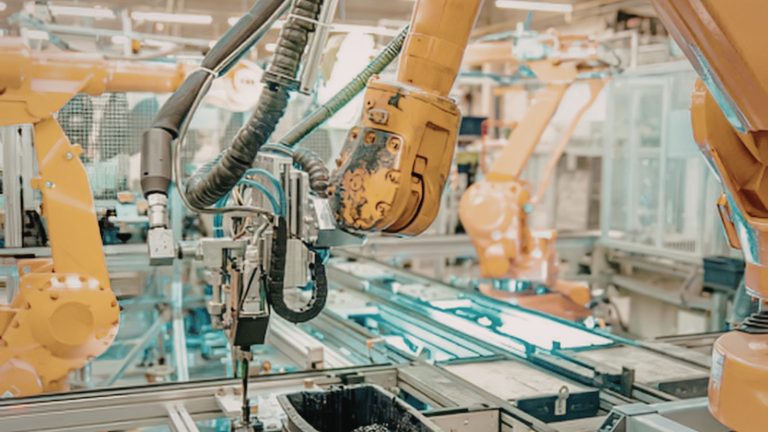
OEE is a simple yet powerful metric that shows how well your equipment performs relative to its full potential. It combines availability, speed, and quality into one clear number. This makes it one of the most trusted ways to measure manufacturing efficiency.
Key Takeaways
- Overall Equipment Effectiveness OEE reveals hidden inefficiencies and shows how effectively machines convert time into quality output.
- Even small losses in availability, performance, and quality can significantly reduce overall productivity.
- Manual tracking misses critical data, while MES systems enable accurate, real-time visibility into production performance.
- Improving OEE can unlock 15–20% more capacity without investing in new equipment.
Defining OEE As The Gold Standard For Measuring Equipment Productivity
Overall Equipment Effectiveness OEE is widely known as the ultimate productivity measurement tool in manufacturing. It shows how much of your planned production time is truly productive.
How is this unique?
Instead of tracking isolated metrics, it combines them into a single percentage. This makes it easier for managers to see the real performance of machines and lines without confusion.
OEE Quantifying How Effectively Equipment Converts Potential Time Into Quality Output
OEE measures how well machines turn time into usable output. It compares planned production time against what is actually produced as good parts.
This gives a clear view of how much time is lost due to inefficiencies.
By tracking this, companies can understand the gap between potential and actual performance and act faster.
The ‘Hidden Factory’ Concept: Unlocking 40%+ Untapped Capacity In Existing Assets
The idea of the hidden factory explains that most factories already have extra capacity. It is just hidden behind inefficiencies like delays, waste, and rework.
Since this improves OEE, your company can unlock this hidden value. Instead of buying new machines, you can improve what you already have and increase output at less cost.
Why OEE From TPM Methodology Remains Relevant In Industry 4.0 Manufacturing
OEE comes from ‘TPM Total Productive Maintenance’, which is a system focused on improving equipment reliability. Even in modern smart factories, this method still works because machines still face downtime and defects.
Today, digital tools enhance the TPM framework, making it easier to track and improve performance continuously.
How Is OEE Calculated: The Three-Factor Formula Explained?
OEE is calculated using three core factors: availability, performance, and quality. These elements work together to show the real efficiency of a machine.
The Core Formula: OEE = Availability × Performance × Quality
The OEE calculation formula is simple: OEE equals availability multiplied by performance multiplied by quality.
These three factors represent uptime, speed, and output quality. Together, they give a full picture of machine efficiency. Even small losses in any factor can significantly reduce the final OEE.
OEE = Availability x Performance x Quality
Why Multiplying Percentages Reveals Compound Losses Invisible In Isolation
Multiplying the three factors shows how losses combine. For example, small losses in availability performance quality may seem harmless alone.
But when multiplied, they create a bigger impact.
This helps manufacturers understand that fixing multiple small issues can lead to large improvements in total efficiency.
Understanding Why ‘Pretty Good’ Scores In Each Factor Still Yield Disappointing OEE
OEE is calculated using three core factors: availability, performance, and quality. These elements work to
A machine might have 90% availability, 90% performance, and 95% quality. These look good individually. But when combined, the final OEE drops significantly. This happens because each loss builds on the other.
It shows why focusing on all three areas is important instead of improving just one.
gether to show the real efficiency of a machine.
What Is Availability and How Does Downtime Destroy It?

Availability measures how often a machine is ready to run when it should be. It focuses on downtime and how it reduces production capacity.
Formula: Availability = Actual Production Time ÷ Planned Production Time
Availability is calculated by dividing actual production time by planned production time. This shows how much time machines are actually running.
If machines stop often, availability drops. This directly reduces output and efficiency, making it one of the most critical OEE factors.
Availability = Actual Production Time ÷ Planned Production Time
Planned Stops (Changeovers, Breaks, Maintenance) Excluded From Denominator
Not all downtime counts as loss. Planned events, such as breaks or maintenance, are excluded.
However, activities like setup changeovers still affect production efficiency if they take too long. Managing these planned stops efficiently helps improve overall performance without disrupting operations.
Unplanned Stops (Breakdowns, Material Shortages, Power Failures) As Availability Killers
Unexpected issues, such as equipment breakdowns, can stop production completely. These unplanned events are major causes of downtime losses.
They reduce machine uptime and create delays across the production line. Reducing these disruptions is key to improving availability and overall efficiency.
Typical Availability Losses: 30–50% Of Total OEE Losses (Largest Single Category)
Availability losses are often the biggest contributor to low OEE. Many factories lose 30–50% of efficiency due to downtime. This includes both major failures and small interruptions.
If they can address these issues, companies can see immediate improvements in output without major investments.
What Is Quality and How Do Defects Erode Your OEE Score?
Quality measures the number of products that meet standards without rework or rejection. Even small defect rates can have a big impact on OEE.
Formula: Quality = Good Parts ÷ Total Parts Produced
Quality is calculated by dividing good parts by total output, including defective parts. This shows how much of the production is usable. A lower quality score means more waste and rework. Improving quality helps increase efficiency and reduce costs.
Quality = Good Parts ÷ Total Parts Produced
Startup Defects: Scrap During Ramp-Up Phase After Changeovers Or Stoppages
Startup defects occur when machines restart after downtime or adjustments.
During this phase, products may not meet quality standards. This leads to waste and an increased scrap rate. Reducing these early-stage errors helps improve both quality and overall production efficiency.
Production Defects: Scrap During Steady-State Regular Production Runs
Even during normal operations, production rejects can occur. These defects reduce output quality and increase costs. Continuous monitoring and process control help reduce these issues.
Fixing root causes ensures stable and consistent production quality over time.
The Deceptive 2% Problem: 200 Scrapped Parts Daily At 10,000/Day Production Rate
A 2% defect rate may seem small. But in large-scale production, it adds up quickly.
For example, producing 10,000 units daily means 200 defective items. Over time, this creates significant waste.
Likewise, small improvements in quality can lead to big gains in efficiency and profitability.
What Is The World-Class OEE Benchmark And How Do Industries Compare?

OEE benchmarks help manufacturers understand how their performance compares to industry standards and identify realistic improvement targets.
85% OEE As Discrete Manufacturing World-Class Standard (90% A × 95% P × 99% Q)
The world-class OEE benchmark is set at 85%, based on 90% availability, 95% performance, and 99% quality. This standard comes from early TPM Total Productive Maintenance studies and is still used today.
It represents a highly efficient operation with minimal losses and strong process control across all production stages.
Industry-Specific Benchmarks: Food & Beverage 55–65%, Automotive 75–85%, Electronics 70–80%
Different industries have different OEE ranges due to product complexity and process variation. Food and beverage plants often run at 55–65%, while automotive manufacturers can reach 75–85%.
Electronics production usually falls between 70% and 80%. These benchmarks help companies set realistic goals and measure improvement based on their sector.
Why ‘World-Class’ From 1980s TPM Literature Remains Relevant Today
Although the concept is decades old, it still applies because machines and processes face similar challenges. Downtime, defects, and inefficiencies still exist.
Modern tools have improved visibility, but the core idea remains valid. The TPM framework continues to guide manufacturers toward higher efficiency and better asset utilisation.
Most Plants Operating At 60–65% OEE Leaving Massive Improvement Opportunity
Most factories still operate far below the 85% benchmark. Running at 60–65% means there is a large gap in efficiency.
This gap represents lost production time and revenue. By focusing on OEE improvement, companies can increase output without investing in new equipment, making it a cost-effective strategy.
Why Does Manual OEE Tracking Fail To Capture Reality?
Manual tracking methods often fail because they rely on human input, which is prone to errors, delays, and missing data.
Paper-Based Logging Prone To Underreporting Minor Stops And Speed Losses
Paper logs depend on operators to record events manually. This often leads to missed entries, especially for minor stops and speed losses.
These small issues happen frequently but are rarely recorded. Over time, this creates a gap between reported and actual performance, making OEE data unreliable.
Operator Memory Gaps Missing 20–40% Of Brief Stoppage Events
Operators cannot remember every short interruption during a shift. Studies show that up to 20–40% of small stoppages go unrecorded. These gaps distort OEE calculations and hide real problems.
Without accurate data, managers cannot identify patterns or take effective action.
End-Of-Shift Retrospective Data Collection Introducing Reporting Bias
When data is recorded at the end of a shift, it is often based on memory or estimates. This leads to reporting bias, where events are either forgotten or misrepresented. As a result, OEE scores may appear better than they actually are, delaying improvement efforts.
No Visibility Into Root Cause Patterns Or Loss Category Distribution
Manual systems lack the ability to analyse data deeply. They cannot show trends or identify recurring issues. Without tools like Pareto analysis, it becomes difficult to understand which problems have the biggest impact.
This limits the ability to drive meaningful improvements.
How Does MES Software Automatically Track OEE In Real Time?

MES systems automate OEE tracking by collecting and analysing production data directly from machines without human intervention.
Machine Controllers And Sensors Capturing Every Cycle, Stop, And Reject Automatically
Modern MES systems connect directly to machines using sensors and controllers. They capture every production event, including cycles, stops, and defects.
This eliminates manual input and ensures accurate data collection. It also supports real-time equipment monitoring, allowing managers to see performance instantly.
Real-Time State Monitoring Logging Running, Idle, Stopped, And Down States
MES continuously tracks machine states, including running, idle, stopped, and down. This gives a complete view of machine activity. It helps identify inefficiencies and understand how time is used.
This level of visibility is not possible with manual tracking methods.
Automatic Categorisation Of Losses Against the Six Big Losses Framework
MES software automatically classifies production losses using the Six Big Losses framework. These include breakdowns, setup losses, and quality issues.
By organising data this way, manufacturers can quickly identify problem areas and prioritise improvements.
Sub-Second Data Granularity Revealing Micro-Stoppages Invisible To Operators
MES systems collect data at very high speed, often in milliseconds. This allows them to detect micro-stoppages that humans cannot see.
These small interruptions may seem insignificant, but they can add up over time. Identifying and fixing them improves overall efficiency.
What Specific MES Capabilities Enable Accurate OEE Calculation?
MES systems enable accurate OEE calculation by capturing real-time production data across availability, performance, and quality metrics.
Planned Production Time Configuration Accounting for Scheduled Breaks and Maintenance
Modern MES platforms define planned production time by automatically excluding scheduled breaks, preventive maintenance, and planned shutdowns.
This ensures availability is calculated against actual productive time rather than total calendar time.
By aligning schedules with shop-floor operations, manufacturers avoid inflated downtime figures and achieve more precise OEE measurements that reflect true operational efficiency.
Ideal Cycle Time Baselines from Machine Nameplate Specs or Engineering Standards
MES software uses predefined ideal cycle times derived from machine nameplate specifications or validated engineering benchmarks. These baselines allow performance to be measured accurately by comparing actual output speed against optimal capacity.
When they standardise cycle times across machines, manufacturers can quickly detect inefficiencies, speed losses, and deviations that directly impact overall equipment effectiveness.
Good/Bad Part Counting via Quality Inspection Integration or Vision Systems
Accurate quality tracking is achieved through integration with inspection systems and machine vision technologies.
MES automatically records good and defective parts in real time, eliminating manual entry errors.
This ensures precise quality rate calculations within OEE while enabling immediate detection of defects. Plus, the latter reduces scrap rates and improves first-pass yield across production lines.
Downtime Reason Code Tagging (Breakdown, Material, Changeover) for Root Cause Analysis
MES platforms classify downtime using predefined reason codes such as breakdowns, material shortages, or changeovers. Operators or automated systems tag events as they occur, creating structured datasets for analysis.
This allows manufacturers to identify recurring issues, prioritise corrective actions, and perform root cause analysis that directly improves availability and overall OEE performance.
What Improvement Strategies Does Automated OEE Tracking Enable?
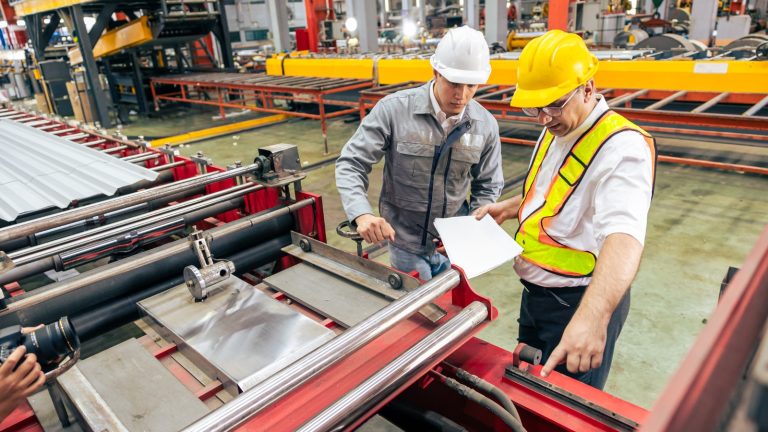
Automated OEE tracking enables data-driven improvement strategies that reduce downtime, improve speed, and enhance product quality.
Predictive Maintenance Reducing Unplanned Downtime 30–45% (Documented ROI)
With real-time machine data, MES systems support predictive maintenance by identifying early signs of equipment failure. Advanced analytics forecast breakdowns before they occur, allowing timely interventions.
This approach significantly reduces unplanned downtime—often by 30–45%—while extending asset lifespan and lowering maintenance costs, delivering measurable return on investment.
SMED Methodology Cutting Changeover Times from 45 Minutes to 15 Minutes (Case Study)
Automated OEE insights highlight inefficiencies during changeovers, enabling manufacturers to implement Single-Minute Exchange of Dies (SMED) practices. By separating internal and external setup tasks and standardising procedures, companies can reduce changeover times dramatically—for example, from 45 minutes to 15 minutes—improving availability and production flexibility.
Quick Response Teams Addressing Minor Stops Within Minutes vs Hours
MES systems detect micro-stoppages and alert response teams instantly. Instead of minor issues escalating into major downtime, quick response teams can intervene within minutes.
This reduces cumulative performance losses, improves machine uptime, and ensures production flow remains uninterrupted throughout shifts.
Continuous Improvement Kaizen Events Targeting Data-Identified Bottlenecks
Data collected through automated OEE tracking provides clear visibility into bottlenecks and inefficiencies.
Manufacturers can use this data to drive Kaizen events focused on continuous improvement. By targeting high-impact problem areas, teams can systematically enhance productivity, reduce waste, and sustain long-term operational excellence.
Why Choose Cerexio MES for Comprehensive OEE Monitoring?
Cerexio MES delivers advanced tools and intelligent insights for real-time, end-to-end OEE monitoring and optimisation.
Interactive Dashboards Calculating Real-Time OEE with Six Big Losses Breakdown
Cerexio MES is a robust Manufacturing Execution System in Singapore that provides interactive dashboards that calculate real-time OEE while breaking down the Six Big Losses.
This gives operators and managers instant visibility into availability, performance, and quality issues, enabling faster decision-making and more effective production management.
AR/VR Virtual Factory Tours Pinpointing Production Malfunctions and Suboptimal Lines
Cerexio MES integrates AR and VR capabilities to create virtual factory environments where users can visualise production lines and identify inefficiencies.
These immersive tools help pinpoint malfunctions, bottlenecks, and underperforming assets, making troubleshooting faster and more intuitive.
AI-Powered Predictive Models Ensuring Assets Perform at Best All Time
The platform leverages AI-driven predictive models to monitor machine health and optimise performance continuously. By analysing historical and real-time data, Cerexio ensures assets operate at peak efficiency, reducing unexpected failures and maximising throughput across the factory floor.
Mobile App and Smart TV Visualisation of OEE Levels Across Production Lines
Cerexio MES extends visibility beyond control rooms through mobile apps and smart TV dashboards. Stakeholders can monitor OEE metrics across multiple production lines in real time, ensuring alignment, faster response times, and improved collaboration across teams.
Cerexio-For Manufacturing Perfection
Ready to Transform Manual OEE Tracking into Automated Intelligence?
Automating OEE tracking with MES transforms raw production data into actionable intelligence for measurable productivity gains.
Schedule a Cerexio MES Demo to See Real-Time OEE Monitoring in Action
Manufacturers can experience the full capabilities of Cerexio MES by scheduling a live demo. This allows teams to explore real-time OEE tracking, dashboard functionality, and analytics tools in a practical, hands-on environment.
Call for a free demo today.
Discover How Manufacturers Unlock 15–20% Additional Capacity Without CAPEX
By optimising existing resources through accurate OEE insights, companies can unlock 15–20% additional production capacity without investing in new equipment. This makes MES a cost-effective solution for scaling operations and improving profitability.
Implement Industry 4.0 OEE Tracking for Data-Driven Productivity Excellence
Adopting Industry 4.0-enabled MES solutions allows manufacturers to transition from manual tracking to fully automated, data-driven operations. This shift enhances decision-making, boosts efficiency, and positions organisations for long-term competitive advantage in modern manufacturing.
FAQs About Overall Equipment Effectiveness OEE
Overall Equipment Effectiveness OEE is a manufacturing metric that measures how efficiently equipment is used by combining availability, performance, and quality into one score. It is used to identify production losses, improve machine efficiency, and increase output without adding new equipment. Manufacturers rely on OEE to track productivity and drive continuous improvement initiatives.
Overall Equipment Effectiveness OEE is calculated by multiplying three factors: availability, performance, and quality. Availability measures uptime, performance tracks speed, and quality measures defect-free output. The formula is: OEE = Availability × Performance × Quality. This calculation helps manufacturers understand the combined impact of all production losses.
A good OEE score depends on the industry, but 85% is considered world-class for most manufacturing sectors. Many factories operate between 60–65%, which shows there is room for improvement. A higher OEE score indicates better machine utilisation, fewer defects, and reduced downtime across production processes.
OEE is important because it gives a clear picture of how well equipment is performing. It helps identify losses caused by downtime, slow production, and defects. By improving OEE, manufacturers can increase efficiency, reduce waste, and boost profitability without investing in new machinery.
MES software improves OEE tracking by collecting real-time data directly from machines. It automatically records downtime, speed losses, and quality issues without manual input. This ensures accurate measurement, faster problem detection, and better decision-making, helping manufacturers quickly improve overall productivity.