TL;DR
- AR and VR have evolved far beyond entertainment into powerful hands-on manufacturing diagnostic tools.
- Manufacturers use immersive technologies to plan, test, and optimise factory operations in real time.
- AR and VR cut employee training duration by up to four times compared to conventional methods.
- Event-driven factory planning becomes significantly more accurate and responsive with AR and VR capabilities.
- Cerexio’s MES 4.0 and WMS 4.0 bring battle-tested AR and VR capabilities to manufacturers globally.
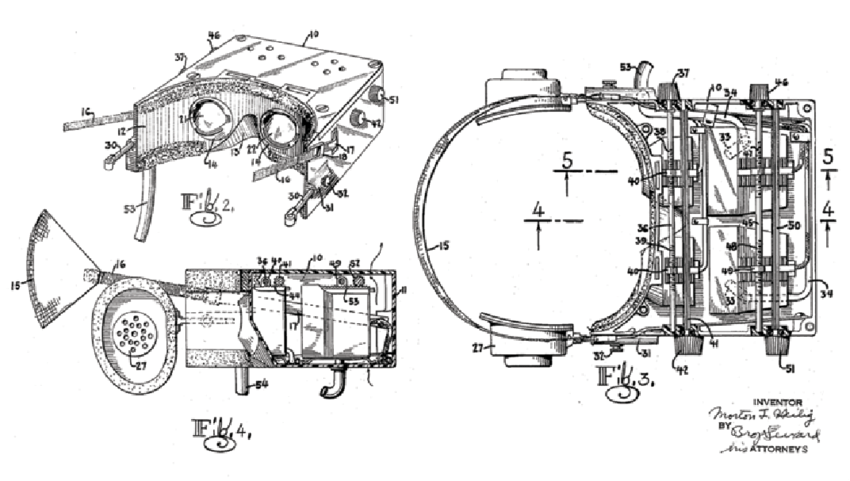
Since the first Head-Mounted Display Virtual Reality device, known as the Telesphere Mask, was patented in the 1960s, VR and the later-emerging AR technology have remarkably shaped how humans interact with both digital and physical environments.
The Telesphere Mask displayed stereoscopic 3D images through a wide-scaled vision system paired with stereo sound, and it set the foundation for what would eventually become one of the most transformative technology categories in modern industry.
What began as a source of entertainment gradually found its way into mental health treatment, navigation systems, national security and defence, open-ended exploration, marketing, and ultimately the manufacturing world.
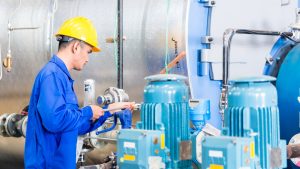
Today, AR and VR are no longer research-level manufacturing technologies. They are hands-on, ready-for-business visualisation platforms that allow manufacturing experts to gain real-like representational experiences when inspecting, diagnosing, and analysing complex manufacturing processes.
If you are a manufacturer considering whether AR and VR capabilities could optimise your manufacturing centre, this article will give you a comprehensive understanding of exactly where and how these technologies deliver value.
Are AR and VR Actually Relevant for Manufacturing Operations?
AR and VR are not just relevant for manufacturing. They are becoming a competitive necessity for manufacturers who want to make faster, smarter, and more future-proof operational decisions.
While VR technology has existed for several decades, its practical application within manufacturing environments is a more recent development. Early adopters in the manufacturing realm have already gained a significant edge. By enabling realistic, updated perspectives into their operations, these manufacturers can pinpoint root causes of inefficiencies and visualise actual operational and functional standards across their facilities with a clarity that traditional methods cannot provide.
The growing trend of globalised and digitised manufacturing environments has made this need even more urgent. Real-time information powered by IIoT and data technologies is now essential for gaining meaningful insights across product development life cycles. Manufacturers need visualisation across design, engineering, setup planning, event-driven production scheduling, smart machining, smart assembly, critical resource allocation, and agile task collaboration across every node of the manufacturing centre.
AR and VR technologies are uniquely positioned to optimise all of these functions simultaneously. No other visualisation technology currently rivals their ability to serve the full spectrum of modern manufacturing needs in one immersive platform.
Here are the key instances where AR and VR have enabled manufacturers to achieve manufacturing excellence.
Are AR and VR Actually Relevant for Manufacturing Operations?
AR and VR are not just relevant for manufacturing. They are becoming a competitive necessity for manufacturers who want to make faster, smarter, and more future-proof operational decisions.
While VR technology has existed for several decades, its practical application within manufacturing environments is a more recent development. Early adopters in the manufacturing realm have already gained a significant edge. By enabling realistic, updated perspectives into their operations, these manufacturers can pinpoint root causes of inefficiencies and visualise actual operational and functional standards across their facilities with a clarity that traditional methods cannot provide.
The growing trend of globalised and digitised manufacturing environments has made this need even more urgent. Real-time information powered by IIoT and data technologies is now essential for gaining meaningful insights across product development life cycles. Manufacturers need visualisation across design, engineering, setup planning, event-driven production scheduling, smart machining, smart assembly, critical resource allocation, and agile task collaboration across every node of the manufacturing centre.
AR and VR technologies are uniquely positioned to optimise all of these functions simultaneously. No other visualisation technology currently rivals their ability to serve the full spectrum of modern manufacturing needs in one immersive platform.
Here are the key instances where AR and VR have enabled manufacturers to achieve manufacturing excellence.
How Do AR and VR Strengthen Engineering and Testing in Manufacturing?
AR and VR give manufacturers the ability to design, test, and stress-test factory environments virtually before committing to any physical change, dramatically reducing the risk and cost of real-world modifications.
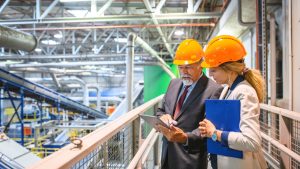
Manufacturers can use AR and VR to gain hands-on experience in designing, altering, testing, and trialling new or modified factory floor layouts. This allows them to understand performance standards under simulated delays and substandard operational conditions before those changes are ever implemented in the physical environment.
This capability serves as a powerful examination tool for assessing manufacturing excellence after significant operational changes. It also provides a means of evaluating the safety and security standards for in-house employees within those changed environments.
When combined with simulation technology, AR and VR can generate realistic perspectives on potential injuries, threats, or hazards that employees might face under specific conditions. This allows manufacturing leaders to proactively design safer, healthier, and risk-minimised environments for their workforce before a single physical change is made on the floor.
How Do AR and VR Improve Event-Driven Factory Planning and Resource Allocation?
AR and VR allow manufacturing leaders to align internal performance and operations against real-time events on the factory floor, making planning more responsive, accurate, and efficient at every level.
Mass-producing manufacturing centres face relentless pressure to meet critical production demands faster, more accurately, and on time. Falling short on any of these fronts directly impacts efficiency, productivity, and profitability targets.
This is precisely what makes AR and VR two of the most reliable visualisation tools for forward-thinking manufacturing practitioners. Plant operators can use these technologies to calibrate operating systems to meet the requirements of personalised or critical production orders in real time.
Beyond that, AR and VR empower operators to commission workstations dynamically, direct resource streams with precision, diagnose the demands of automated process schedulers, and prioritise workflows to meet urgent operational requirements as they arise. The result is a factory planning process that is not just reactive but genuinely intelligent and event-driven.
Can AR and VR Genuinely Improve Staff Training in Manufacturing Environments?
AR and VR can reduce the duration of manufacturing employee training by up to four times compared to conventional training methods, making them one of the most impactful HR tools available to manufacturers today.
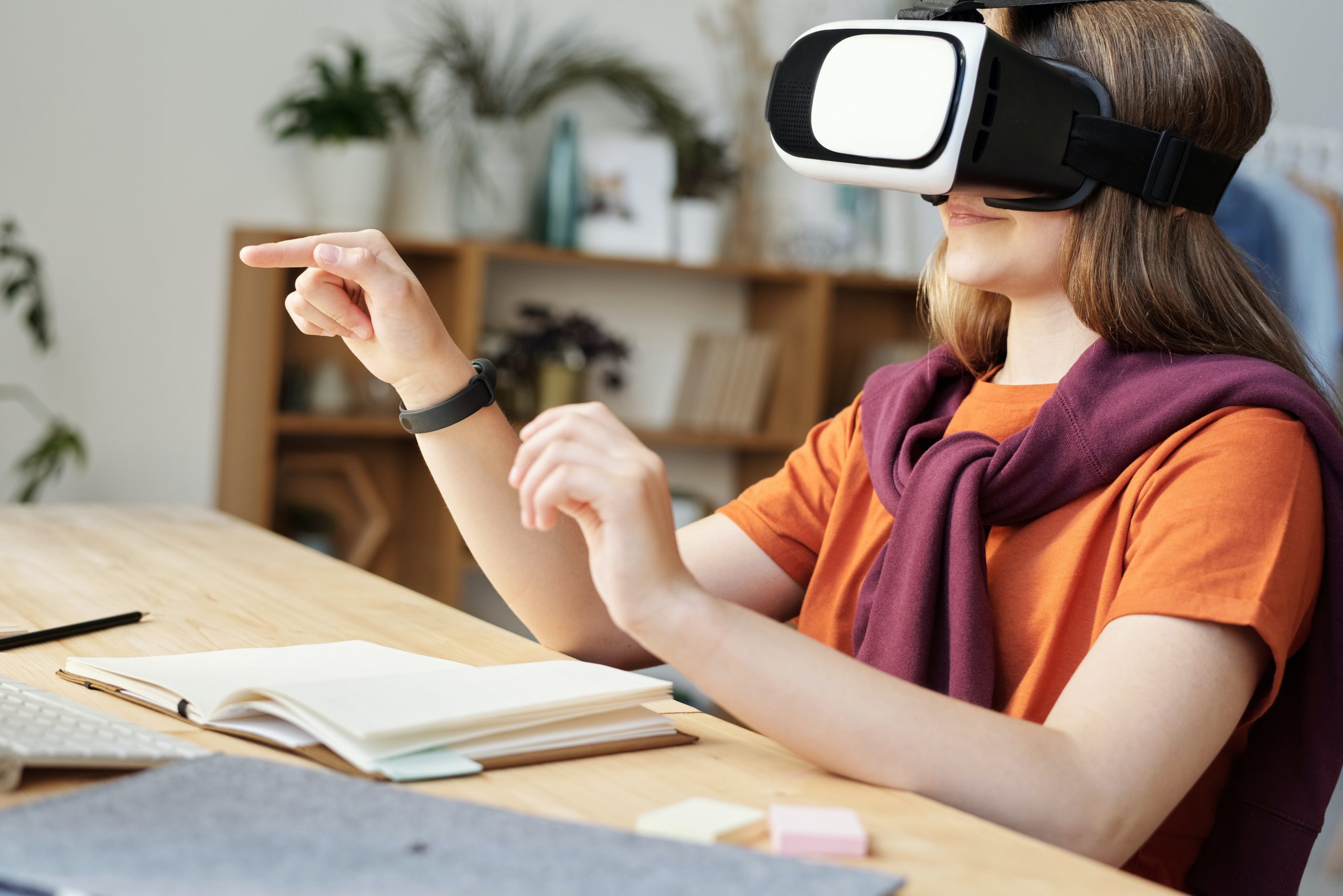
Many forward-looking manufacturers are already investing in VR and AR technologies to virtualise working environments and allow employees to perform under simulated pressure. This trains workers to operate more efficiently and agilely during critical operations and peak production hours, without exposing them or real equipment to any risk in the process.
The benefits extend well beyond speed of training. Faster and more effective employee preparation means that HR resources can be deployed sooner and more strategically across the manufacturing centre. Importantly, AR and VR-based training also has a measurable impact on employee retention. The technology attracts new workers by offering a modern, engaging onboarding experience, while simultaneously simplifying ongoing training processes for existing employees as operations evolve.
How Does Cerexio Enable AR and VR Capabilities for Manufacturers?
Cerexio stands as one of the most capable Manufacturing Technology Suite Enablers with integrated AR and VR capabilities across its solutions.
The Cerexio Manufacturing Automation Platform, along with its patented technology packages Cerexio MES 4.0 is fully compatible with AR and VR capabilities. Together, they empower manufacturers to make informed, data-driven decisions without being limited by the constraints of traditional visualisation methods.
These modernistic AR and VR-enabled solutions give manufacturing managers the ability to manage, control, and oversee their entire manufacturing facility through an intuitive, macro-scale virtual lens from anywhere in the world, at any point in time.
Conclusion
AR and VR have moved well past the stage of being emerging technologies that manufacturers are merely curious about. They are active, proven platforms that reshape how manufacturing centres are engineered, planned, staffed, and continuously improved.
From stress-testing factory layouts before implementation to training employees four times faster than traditional methods, the practical value of these technologies is no longer theoretical. It is measurable, repeatable, and accessible right now.
For manufacturers in Singapore, Australia, and beyond who are ready to harness these capabilities, Cerexio’s MES 4.0 solution provides the AR and VR-enabled platform needed to visualise, manage, and optimise manufacturing facilities with precision and confidence. Connect with Cerexio today to explore what immersive manufacturing technology can do for your operation.
FAQs
Virtual Reality (VR) immerses the user in a fully computer-generated environment, allowing them to interact with a virtual representation of a factory floor or process without any physical exposure. Augmented Reality (AR) overlays digital information and models onto the real-world environment, enabling manufacturers to visualise data, instructions, or simulations directly over physical machinery and workspaces. Both serve distinct but complementary roles in manufacturing diagnosis and optimisation.
The foundations of VR technology date back to the 1960s with the patenting of the Telesphere Mask, the first Head-Mounted Display device. However, its practical application within manufacturing environments is a much more recent development. Early adopters in the manufacturing sector began seriously integrating AR and VR capabilities within the last decade, and those who moved early have already gained a measurable competitive advantage over their peers.
AR and VR deliver measurable value across several core manufacturing functions including engineering and plant design testing, event-driven production planning and resource allocation, employee training and onboarding, safety assessment, and real-time operational monitoring. Each of these functions benefits from the ability to visualise complex scenarios in an immersive, risk-free environment before decisions are committed to in the physical world.
Research and real-world manufacturing adoption have demonstrated that AR and VR can reduce employee training duration by up to four times compared to conventional training methods. By virtualising working environments and simulating high-pressure operational scenarios, employees develop the skills and confidence needed for critical manufacturing situations significantly faster and more effectively than through classroom or on-the-job training alone.
AR and VR are widely regarded as predecessors to even more advanced immersive technologies, including Mixed Reality (MR) and Extended Reality (XR), both of which are expected to have a significant impact on manufacturing in the coming years. While it is too early to predict a complete AR and VR-based revolution across the entire manufacturing world, the technology has clearly moved beyond hype. A growing number of manufacturers are actively adopting AR and VR to gain better virtual perspectives of their physical operations, powered by big data and real-time analytics.