
Since we entered the 2026, in this era, manufacturing is no longer just about machines and materials. Since 2010, with the emergence of AI and Machine Learning adoptions, it is about intelligence, speed, and precision. In such a competitive world, discrete manufacturing powers industries that build cars, smartphones, aircraft, and appliances, products you can count, track, and trace.
How does it work? Why does it matter more than ever? And how is technology transforming it into a smart, data-driven ecosystem?
Well, we have answers for all your questions. This article breaks down everything you need to know, from core processes and industry applications to advanced digital strategies shaping the future of manufacturing.
We will explain
- What Is Discrete Manufacturing?
- What Are the Key Characteristics of Discrete Manufacturing?
- How Does Discrete Manufacturing Differ From Continuous Manufacturing?
- What Are the Main Types of Discrete Manufacturing?
- What Industries Rely on Discrete Manufacturing Processes?
- What Are the Core Processes in Discrete Manufacturing?
- What Challenges Do Discrete Manufacturers Face?
- How Does Digital Transformation Revolutionise Discrete Manufacturing?
- What Role Does MES Play in Discrete Manufacturing?
- How Do Industry 4.0 Technologies Transform Discrete Manufacturing?
- What Are the Benefits of Digitalisation in Discrete Manufacturing?
- How to Implement Digital Transformation in Discrete Manufacturing?
- FAQs About Discrete Manufacturing
What Is Discrete Manufacturing?
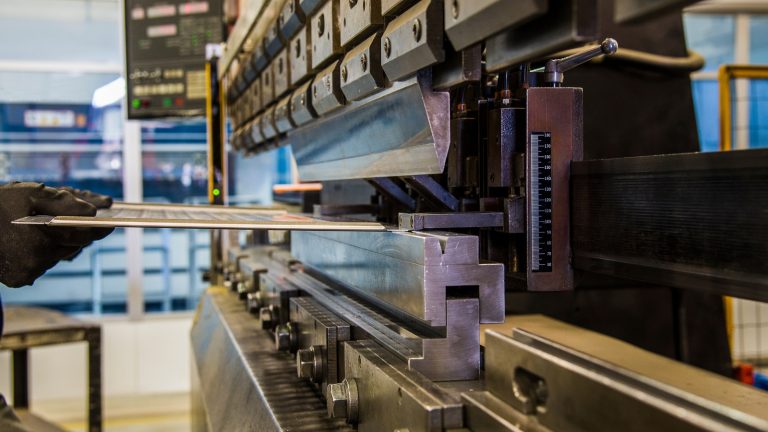
Discrete manufacturing is the production of distinct, countable products that can be individually tracked throughout the manufacturing lifecycle.
Key Takeaways
- Discrete manufacturing produces countable, traceable products built through structured assembly processes.
- Flexibility, customisation, and strong quality control define successful discrete operations.
- Digital tools like MES, IoT, and AI significantly improve visibility, efficiency, and traceability.
- Industry 4.0 technologies transform factories into data-driven, smart manufacturing environments.
Defining Discrete Manufacturing as the Production of Countable Products
Discrete manufacturing refers to producing countable units such as cars, laptops, or appliances. Each item is separate and identifiable.
So, what is its uniqueness? Unlike liquids or gases, these products exist as physical objects that can be tracked individually. This structure allows better traceability, quality checks, and customisation.
Every finished item remains measurable and distinct throughout production and distribution.
Understanding Distinct, Individual, and Identifiable End Products
In this model, manufacturers produce individual products that have unique part numbers or serial codes. Each finished good is built from separate components and can be repaired or replaced independently.
To put it simply, this individuality improves traceability, warranty management, and after-sales service. Every product remains identifiable from raw materials to customer delivery.
How Discrete Manufacturing Differs From Process Manufacturing
Unlike process manufacturing, which produces goods in bulk (like chemicals or beverages), discrete manufacturing processes focus on assembling separate parts into finished products.
This is exactly when items can be disassembled back into components. In contrast, process-based goods cannot return to their original ingredients. This structural difference influences tracking systems, cost control, and operational design.
What Are the Key Characteristics of Discrete Manufacturing?
Discrete manufacturing is defined by countable production units, assembly-driven workflows, and products that can be disassembled into original components.
Production of Separate Units That Can Be Counted and Tracked
Every product in a discrete operations system exists as separate, countable units. Manufacturers assign serial numbers, barcodes, or RFID tags to enable material tracking and lifecycle visibility.
This structure supports compliance, warranty tracing, and recall management. Since each item is separate, companies gain strong control over quality and customer satisfaction.
Assembly-Based Processes Combining Multiple Components
You know that production typically revolves around product assembly, where multiple parts come together to form a finished good.
These parts are organised using a bill of materials, which lists every required component. Structured workflows ensure correct sequencing and part alignment. This assembly-driven model defines most modern manufacturing environments.
Products That Can Be Disassembled Into Original Parts
A core feature of discrete production is reversibility. Finished goods can be taken apart into original components without losing material identity.
This supports repairs, refurbishments, and sustainability initiatives. It also simplifies recycling and maintenance processes.
The ability to disassemble improves lifecycle management and long-term asset value.
How Does Discrete Manufacturing Differ From Continuous Manufacturing?
The difference between discrete and continuous manufacturing lies in unit-based assembly versus uninterrupted bulk production flow.
Discrete: Individual Units vs Continuous: Bulk Flow Production
In continuous vs discrete manufacturing, the key distinction is output structure.
Continuous manufacturing produces goods in a constant flow, like oil refining or paper mills. On the other hand, discrete production focuses on separate finished goods.
Since products are individual, scheduling, costing, and traceability differ significantly between the two systems.
Flexibility and Customisation in Discrete Manufacturing
As we can see, discrete operations provide strong manufacturing flexibility, allowing changes in design, features, or configurations. This is the point where companies can offer custom colours, specifications, or modular upgrades without redesigning entire production lines.
This makes discrete systems ideal for industries where personalisation and rapid model updates are common.
When to Choose Discrete Over Continuous Manufacturing Methods
If you wonder the right time, choose discrete production when products require assembly, customisation, or detailed tracking.
Industries producing vehicles, electronics, or machinery benefit most. Continuous systems work better for high-volume, uniform materials. If traceability, product variation, and lifecycle service are priorities, discrete models provide superior operational control.
What Are the Main Types of Discrete Manufacturing?
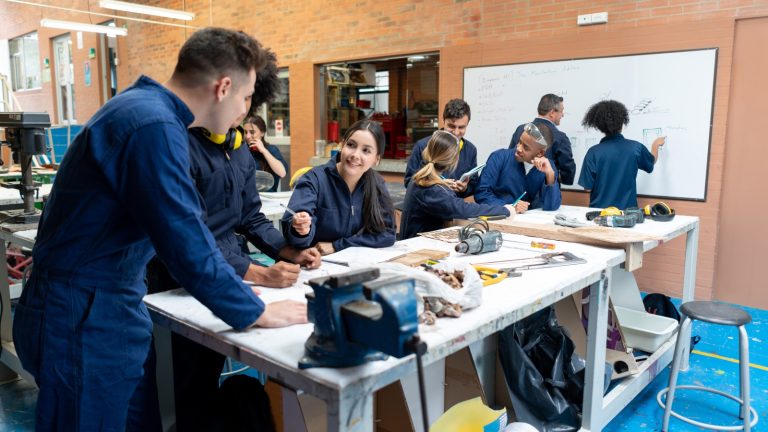
The primary types of discrete manufacturing include repetitive, job shop, batch, and assembly line production methods.
- Repetitive Discrete Manufacturing for Standardised Products
Did you know that repetitive production focuses on building standardised goods in large quantities? Lines operate continuously but still produce separate units.
This model is common in automotive manufacturing, where structured workflows ensure consistent output. While efficient, repetitive systems still maintain individual product traceability.
- Job Shop Manufacturing for Custom Orders and Small Batches
When it comes to job shop manufacturing, it specialises in custom manufacturing and low-volume production.
Each order may follow a different route through machines or workstations. This setup provides flexibility for unique designs but requires strong coordination and skilled labour.
It suits industries requiring precision and specialised builds.
- Batch Production for Seasonal or Medium-Volume Products
In relation to batch production, the latter creates goods in defined groups rather than a continuous flow.
Manufacturers produce a set quantity before switching to another product. This method balances flexibility and efficiency, making it useful for seasonal goods or mid-volume items.
- Assembly Line Manufacturing for High-Volume Production
Assembly line production organises workers and machines into sequential stations. Each station performs a specific task before passing the unit forward.
As you can see, this method supports large-scale output with predictable cycle times. It is widely used in electronics and the vehicle industries.
What Industries Rely on Discrete Manufacturing Processes?
Industries such as automotive, electronics, aerospace, and consumer goods depend heavily on structured discrete manufacturing systems.
Automotive Industry: Cars, Trucks, and Vehicle Assembly
As one of the main beneficiaries, the automotive sector relies heavily on automotive manufacturing techniques. Vehicles consist of thousands of components assembled in precise order.
This is why strong quality systems, supplier coordination, and real-time tracking are essential. Each car remains individually identifiable through VIN numbers and lifecycle data.
Electronics and Technology: Smartphones, Computers, Semiconductors
You will notice that modern electronics production requires exact assembly of circuit boards, chips, and microcomponents.
This is because products must meet strict tolerances and performance standards. Rapid innovation cycles demand flexible lines and agile supply chains. In such a context, traceability ensures defect detection and warranty protection.
Aerospace and Defence: Aircraft, Satellites, Military Equipment
We are all aware that the production of aerospace components involves complex engineering and regulatory compliance. Every part must meet safety and durability standards. High-value equipment requires detailed documentation and lifecycle traceability.
Even minor defects can lead to severe consequences, making process discipline critical.
Consumer Goods: Furniture, Appliances, Toys, and Apparel
Consumer industries manufacture a wide range of assembled goods. These products require design adaptability, cost control, and fast distribution cycles.
Manufacturers must balance style trends with operational efficiency while maintaining quality consistency.
What Are the Core Processes in Discrete Manufacturing?
Core discrete production includes component fabrication, sub-assembly, final assembly, inspection, and distribution preparation.
Component Fabrication and Part Manufacturing
Production begins with machining, moulding, stamping, or cutting raw materials into parts. These components must meet exact design specifications before moving forward.
Precision tools and calibrated equipment ensure dimensional accuracy. Apart from that, strong inventory management practices help avoid shortages or overstocking during part creation, keeping operations stable and cost-efficient.
Sub-Assembly Creation and Modular Production
In this stage, smaller parts are combined into modules such as engines, circuit boards, or mechanical frames. Why is it necessary?
Modular production improves scalability and simplifies workflow balancing. Structured documentation ensures every module aligns with design standards before advancing to final assembly.
Final Assembly, Testing, and Quality Inspection
Final assembly integrates all modules into the finished product. This stage involves detailed quality control checks to verify safety, performance, and compliance standards.
This marks the stage where automated inspection tools and human verification reduce error rates. Every product undergoes performance testing before approval, ensuring customer satisfaction and regulatory alignment.
Packaging, Labelling, and Distribution Preparation
Once approved, products move to packaging and labelling.
At this juncture, accurate serialisation ensures traceability during shipping and retail handling. Efficient warehouse coordination supports fast dispatch and delivery.
At this stage, digital systems track each item’s movement from the factory floor to end customer.
What Challenges Do Discrete Manufacturers Face?
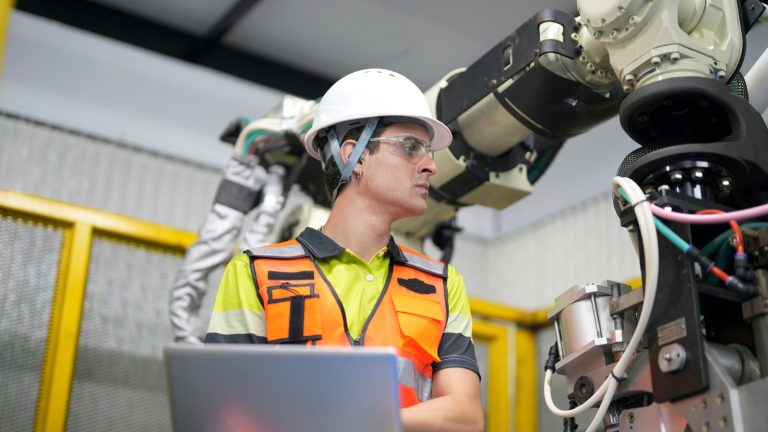
Discrete manufacturers struggle with complex product structures, inventory balance, customisation demands, and maintaining quality across configurations.
Managing Complex Bill of Materials and Supply Chains
You know that products normally require hundreds or thousands of components organised through a detailed bill of materials. However, managing supplier coordination, version control, and engineering updates becomes challenging.
Small changes in part design can affect multiple assemblies. Without centralised systems, errors and delays quickly multiply across the production network.
Balancing Inventory Levels With Production Flexibility
Manufacturers must maintain stock for components while preserving agility. Too much inventory increases costs; too little causes delays.
Flexible production lines require careful coordination between procurement, warehousing, and operations to avoid bottlenecks and maintain service levels.
Meeting Customer Demands for Customisation and Speed
Modern buyers expect personalisation without longer delivery times. Offering configurable products increases complexity in planning and assembly.
This is where companies must respond quickly while preserving cost efficiency and operational accuracy.
Maintaining Quality Across Variable Product Configurations
When products come in multiple models and options, quality assurance becomes more demanding, right?
Each configuration must meet the same standards. Without integrated monitoring tools, variation increases the risk of defects and compliance issues.
How Does Digital Transformation Revolutionise Discrete Manufacturing?
Digital tools convert manual factories into connected, data-driven environments that improve speed, accuracy, and visibility.
From Manual Processes to Data-Driven Smart Factories
It is obvious that traditional paperwork and manual tracking limit visibility. Today, digital transformation enables factories to operate as connected ecosystems.
Sensors, cloud platforms, and integrated software convert raw operational data into actionable insights. This shift turns conventional plants into a smart factory environment where decisions are faster and more accurate.
Real-Time Visibility Across Production and Supply Chain
Advanced dashboards provide real-time monitoring of machines, work orders, and inventory status. With this in hand, managers instantly detect delays or inefficiencies.
This transparency improves coordination between departments and suppliers, strengthening responsiveness and operational reliability.
Predictive Analytics for Proactive Decision-Making
Using data models, manufacturers can apply predictive maintenance to identify equipment failures before breakdowns occur.
Instead of reacting to downtime, companies schedule servicing proactively. This reduces interruptions and stabilises throughput. Predictive analytics also supports demand forecasting and resource planning.
What Role Does MES Play in Discrete Manufacturing?
MES acts as the digital backbone connecting shop floor operations with enterprise systems for real-time control and traceability.
Real-Time Production Tracking and Shop Floor Visibility
An MES platform provides complete visibility into machine performance, operator activity, and order progress. It synchronises operations from raw material intake to finished goods.
Plus, MES for discrete manufacturing ensures every task is digitally recorded and monitored for compliance and efficiency.
Bill of Materials Management and Version Control
MES software manages engineering updates, revisions, and approvals. It ensures production teams always use the latest design specifications. This reduces costly errors caused by outdated documentation and prevents rework.
Quality Assurance and Traceability Across Batches
The system records inspection results, serial numbers, and production data. Such a level of traceability simplifies audits and regulatory compliance.
If a defect is detected, manufacturers can trace affected units quickly and isolate issues before widespread impact.
Work Order Management and Production Scheduling
MES integrates work instructions, labour allocation, and production scheduling in real time.
It optimises resource allocation and reduces idle time. Digital scheduling tools adapt quickly to design changes or urgent orders, improving responsiveness across operations.
How Do Industry 4.0 Technologies Transform Discrete Manufacturing?
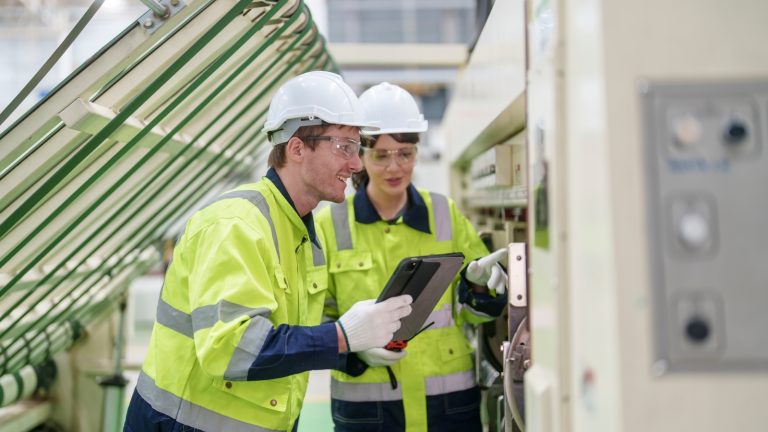
Advanced connectivity, automation, and intelligent analytics enable faster, smarter, and more adaptive production systems.
IoT Sensors for Machine Connectivity and Condition Monitoring
As you can see, modern equipment uses IoT sensors to collect temperature, vibration, and performance data. These sensors connect machines through cyber-physical systems, enabling instant diagnostics.
Also, continuous data collection improves uptime and supports operational optimisation strategies.
AI and Machine Learning for Production Optimisation
Through AI automation, algorithms can analyse production patterns and detect inefficiencies. Machine learning systems recommend adjustments for improved output and reduced waste. This supports production optimisation while minimising human error and manual oversight.
Digital Twin Technology for Virtual Simulation and Testing
A digital twin creates a virtual replica of physical production lines. Engineers test new layouts, configurations, or product changes in simulation before implementation.
This reduces risk and accelerates innovation without disrupting real operations.
Robotics and Automation for Flexible Assembly Operations
Collaborative robots support repetitive or precision-intensive tasks. Automation enhances safety and consistency while enabling rapid configuration changes.
Over time, integration of robotics supports the transition toward autonomous manufacturing, where systems self-adjust to demand fluctuations.
What Are the Benefits of Digitalisation in Discrete Manufacturing?
Digital tools significantly improve uptime, efficiency, customisation capability, and traceability across operations.
- 40% Reduction in Production Downtime Through Predictive Maintenance
Data-driven diagnostics have the power to reduce unexpected breakdowns. Predictive servicing schedules improve machine lifespan and reliability. With our experience, we have seen that companies report major downtime reductions when implementing connected monitoring systems.
- 30% Improvement in Operational Efficiency and Throughput
Automation, analytics, and integrated planning systems streamline workflows. Reduced manual tasks to free workers for higher-value activities. In the meantime, digital insights improve coordination between supply chain and production, increasing throughput and consistency.
- Enhanced Product Customisation With Mass Production Efficiency
It is evident that smart systems balance personalisation with cost efficiency. Manufacturers offer variable product configurations without sacrificing scale. This blend of customisation and productivity strengthens competitiveness.
- Complete Traceability for Quality Control and Compliance
Digital records document every stage of production. From raw materials to final shipment, data remains accessible for audits or recalls.
Strong traceability enhances regulatory compliance and customer trust.
How to Implement Digital Transformation in Discrete Manufacturing?
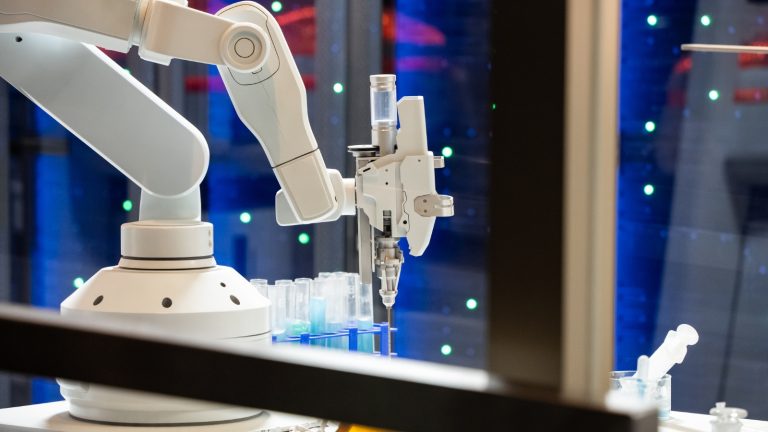
Successful implementation requires phased planning, system integration, and continuous optimisation.
Phase 1 – Assessing Current Processes and Digital Readiness
Begin by evaluating workflows, equipment capability, and data maturity. Identify gaps in visibility and performance tracking.
Then, establish measurable goals for improvement before technology investment.
Phase 2 – Implementing MES for Shop Floor Integration
This is where you can deploy a centralised manufacturing execution system to bridge enterprise planning and shop floor control. This establishes operational visibility and structured workflows. Early wins build organisational confidence and adoption momentum.
Phase 3 – Deploying IoT Sensors and Connectivity Infrastructure
In this phase, install connected sensors and integrate machines into centralised platforms. Ensure cybersecurity measures protect data integrity.
Connectivity forms the foundation for advanced analytics.
Phase 4 – Leveraging AI Analytics and Continuous Optimisation
After stabilising data streams, apply intelligent analytics to improve output and cost control. Continuous improvement cycles refine performance and unlock new productivity gains.
Why Choose Cerexio MES for Discrete Manufacturing?
Cerexio delivers intelligent manufacturing systems such as MES-Manufacturing Execution System, designed for agility, traceability, and performance optimisation.
Industry 4.0-Powered MES With AI, IoT, and Digital Twin Capabilities.
CerexioMES supports Industry 4.0 discrete manufacturing with integrated analytics, IoT connectivity, and simulation tools. The platform enables manufacturers to transition toward smart discrete manufacturing systems without disrupting operations.
Flexible Production Support for Variable Product Configurations
Our MES system adapts to high product variation and rapid engineering changes. It supports scalable operations while preserving quality consistency.
Real-Time Quality Control and Comprehensive Traceability Systems
CerexioMES ensures full traceability from raw material intake to product delivery. Its real-time insights improve compliance, safety, and customer satisfaction.
Ready to Transform Your Discrete Manufacturing Operations?
As a manufacturer, you must understand that digital intelligence is no longer optional; it is the foundation of competitive manufacturing.
Schedule a Consultation With Cerexio Discrete Manufacturing Experts
You can connect with our experienced consultants to assess operational readiness and roadmap planning. Tailored strategies align technology investment with measurable outcomes.
Call for a free demo today.
Implement Smart Manufacturing Solutions for Competitive Advantage
Future-ready factories combine automation, analytics, and connectivity into unified ecosystems. With the right platform, manufacturers transition confidently toward sustained growth and innovation.
Cerexio-Smart Manufacturing For Enhanced Profits.
FAQs About Discrete Manufacturing
Discrete manufacturing is the production of separate, identifiable physical products that can be counted, tracked, and assembled from individual components. Each item has a unique identity, making it suitable for industries like automotive, electronics, aerospace, and consumer goods manufacturing.
Discrete manufacturing produces individual finished goods that can be disassembled into parts, while continuous manufacturing creates products in bulk flow, such as chemicals or liquids. Discrete systems offer greater customisation, traceability, and flexibility compared to continuous production models.
The main types of discrete manufacturing include repetitive manufacturing, job shop manufacturing, batch production, and assembly line production. Each type varies based on production volume, customisation level, and workflow complexity, allowing manufacturers to match operations with market demand.
An MES system provides real-time visibility into shop floor operations, production scheduling, quality control, and traceability. It connects machines, workers, and enterprise systems, enabling faster decision-making, reduced downtime, improved compliance, and better overall manufacturing performance.
Digital transformation improves discrete manufacturing by integrating IoT sensors, AI analytics, predictive maintenance, and smart factory systems. These technologies reduce downtime, increase efficiency, enhance customisation, and provide complete traceability, helping manufacturers stay competitive in modern markets.