
Today’s sophisticated manufacturing environment means that it takes more than conventional cutting tools to create intricate parts out of hard materials. And this is where manufacturers cannot proceed further without EDM (Electro Discharge Machining). More commonly known as electrical discharge machining, this process allows manufacturers to form complex shapes in very hard materials while maintaining tight tolerances.
Unlike milling or turning, EDM- Electro Discharge Machining is a non-traditional machining process that removes material using precisely controlled electrical sparks. Since there is no contact between the tool and workpiece, the method dispenses with cutting force, yet at the same time affords excellent precision machining.
Some of the other industries that rely on the EDM process are aerospace, medical device manufacturing, automotive, tool and die, as well as press tools and plastic moulds.
If you are wondering how EDM works, why it is ideal for hard metal machining, or how modern CNC systems control spark erosion with micron-level precision, this comprehensive article explains everything in detail.
What is EDM (Electro Discharge Machining)?
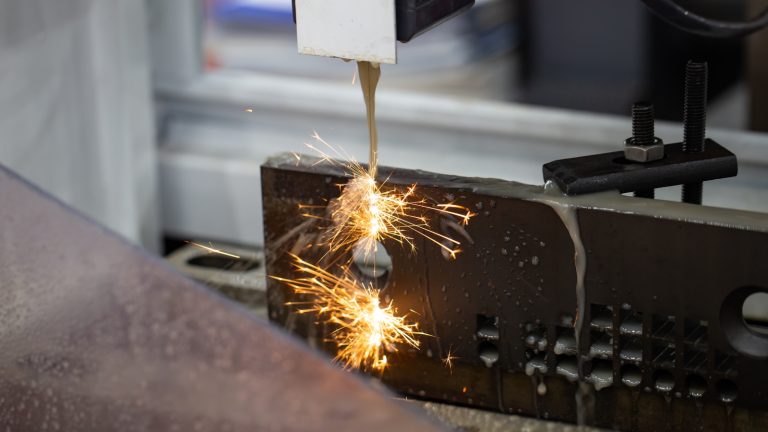
EDM electro discharge machining, is a thermal-based manufacturing method that removes material from electrically conductive materials using controlled spark discharges. Commonly referred to as spark erosion machining, this process uses electrical energy instead of mechanical cutting force to shape components.
The principle behind electrical discharge machining is straightforward. When two conductive materials are separated by a small gap and immersed in an insulating liquid, a high-voltage pulse creates a spark between them.
This spark generates extremely high temperatures that melt and vaporise microscopic portions of the workpiece surface. This phenomenon is called thermal erosion.
Since this is a non-traditional machining process, the hardness of the material does not affect machinability. Plus, any electrically conductive material can be cut using the EDM process. It would be an interesting fact that the Asia Pacific region is the largest and fastest-growing market for EDM.
That is what makes EDM electro discharge machining such a useful process for hard metal machining, such as tool steel, carbide, titanium, and superalloys used in aerospace manufacturing.
Key Takeaways
- EDM- Electro Discharge Machining is a process that precisely removes electrically conductive materials by controlled electrical sparks.
- It uses electrodes, dielectric fluid, and CNC automation to create complex shapes.
- Die-sinking, wire-cutting, and hole-drilling EDM machines are inspired by various industrial needs.
- EDM serves important purposes for aerospace, medical, automotive, and precision tooling because of its level of accuracy and versatility.
How Does EDM (Electro Discharge Machining) Work?
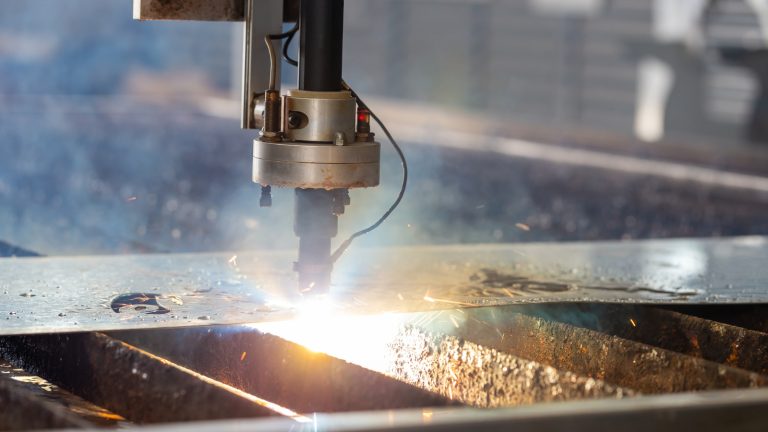
How does EDM work step by step? Knowing this also helps explain why this process produces extremely precise results. The EDM process requires spark generation, the managed removal of material, dielectric insulation against short circuiting, and advanced automation solutions to maintain stability.
The Role of the Electrode and Workpiece
The main elements in EDM, electro discharge machining, are the tool electrode and the conductive workpiece. This is where a graphite or copper tool electrode is formed into the desired final shape.
The object to be worked on must be made of metallic conductive materials, as the electricity has to pass from one negative pole through the working power.
The electrode is kept very close to the workpiece, and a fine, controlled spark gap is maintained. The electrode does not come into contact with the material at all.
Instead, the voltage increases across that gap until a spark physically arcs from one to the other. A minute portion of the workpiece surface is removed with every pulse.
While all electrodes wear down with use, modern EDM machine systems adjust automatically with servo-controlled accuracy. This guarantees uniform size tolerance throughout the whole EDM process, even if a complicated cavity is produced or a fragile shape is made.
Spark Generation and Material Removal
The characteristic of electrical discharge machining is the generation of sparks. At a critical voltage, the insulating fluid begins to break down between the electrode and the workpiece, forming a conductive plasma channel.
The spark gap can transmit a strong spark in this channel.
Also, the temperature in the plasma channel can exceed 10,000°C. The heat causes small amounts of the material to melt and vaporise. With the cessation of the spark, the molten material cools very quickly and is expelled as spatter.
This cycle repeats thousands of times per second. However, the material removal rate depends on current intensity, pulse duration, and spark frequency.
Since it is possible to control this process digitally, EDM electro discharge machining achieves superior precision machining results compared to many conventional methods.
Dielectric Fluid and Its Function
A critical element in the EDM process is the dielectric fluid, typically specialised oil or deionised water. The insulation that the fluid provides can block other possible directions.
In the meantime, the ionisation that does take place then tends to stabilise the spark and cool down the machining zone.
Eroded particles are washed away by the dielectric fluid after each spark, ensuring unstable discharges and surface finish longevity. In this context, the removal of debris is crucial for achieving uniform machining accuracy and preventing excessive thermal damage to both the electrode and workpiece.
Furthermore, dielectric control is even more essential in advanced micro-machining. Stable fluid flow exerts a great impact on spark distribution uniformity and final surface finish quality in EDM electro discharge machining processes.
CNC Control and Precision Automation
Modern systems rely on the CNC EDM machine working principle, which incorporates servo motors, sensors, and digital pulse generators. The spark gap is continuously monitored by the servo control , and electrodes are positioned with real-time correction.
If the clearance becomes too close, then the electrode is withdrawn from the gap to prevent short-circuits. If it gets too wide, it moves slightly to ensure a consistent spark. This automatic feedback ensures the maximum spark frequency and stable machining conditions.
On the basis of these smart controls, EDM electro discharge machining fits into automated manufacturing.
This way, manufacturers enjoy repeatable precision machining, reduced labour-hours interference, and stable performance in the whole high-volume production.
Types of EDM Machines Used in Manufacturing
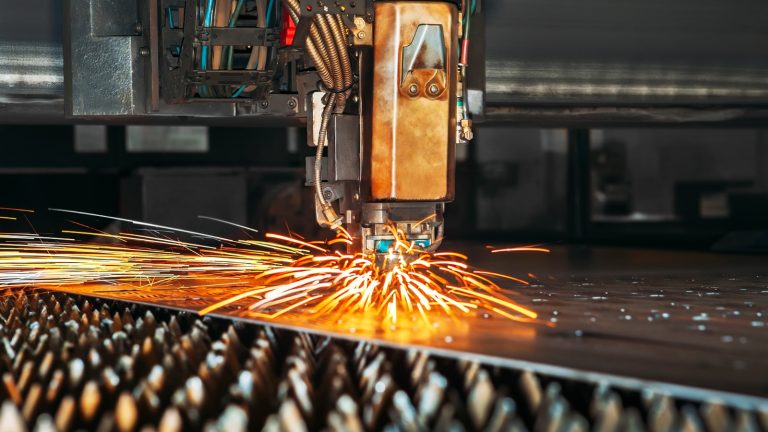
In industrial production, you will notice they employ three types of EDM machines most commonly. Manufacturers use each EDM machine for different applications in the field of electrical discharge machining.
Die-Sinking EDM (Ram EDM)
Die-sinking EDM is used to produce cavities on the inside of a workpiece. The electrode corresponds to the negative of the shape of the eventual part. In the EDM process, controlled sparks gradually remove materials to various complex geometries.
This method is widely used in mould and die manufacturing. Since there is no mechanical cutting force, die-sinking EDM is highly effective for hardened tool steels and precision moulds.
While electrode wear occurs naturally, advanced CNC compensation ensures dimensional stability and high precision machining performance throughout production.
Wire EDM
Wire EDM utilises a thin wire that is fed through the workpiece, accompanied by de-ionised water, and which serves as an electrode to cut conductive materials. If you are weighing wire EDM vs die sinking EDM, remember that you need the former to create complex shapes and sharp internal angles.
In this, the wire never makes contact with the workpiece, in contrast to electrical discharge machining. Instead, sparks are created across a regulated spark gap.
Aerospace sub-contractors, tooling and stamping die manufacturers, and those producing complex components are typical users of wire EDM. Its fine tolerance makes it perfect for precise micro machining and other precision tasks.
Hole-Drilling EDM
Hole drilling EDM, also known as fast hole EDM, is used for small or deep holes using specially shaped brass tube electrodes. A tubular electrode permits dielectric fluid to flow through the center of the electrode so as to remove debris during machining.
This type of EDM machine is frequently used in aerospace manufacturing, especially for turbine blade cooling holes. Its ability to perform accurate hard metal machining with high aspect ratios makes it invaluable for precision engineering environments.
Advantages and Limitations of EDM -Electro Discharge Machining
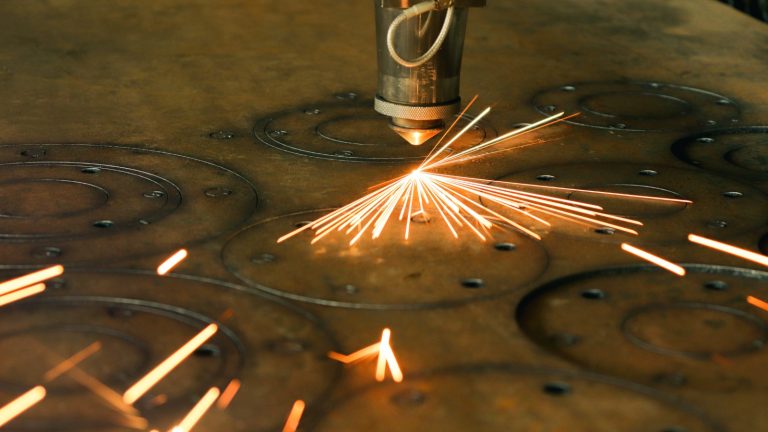
The key advantages of EDM machining are machining materials too hard for cutting, making very complex geometries easily, and not having to use a large cutting force. The operation is magnetically non-contact, as it cuts purely by spark erosion, so delicate components can be machined without distortion.
Another significant advantage is exceptional precision machining capability. With this, tight tolerances and smooth surface finishes are consistently achievable.
The EDM process also allows the creation of internal cavities that would be impossible to produce with traditional tools.
However, limitations exist. With conductive materials, the process only operates, but the material removal rate can be slower than milling. It is also important to control electrode wear to achieve accuracy.
Despite these limitations, EDM electro discharge machining has assumed its place as a workhorse of high-end manufacturing.
Applications of EDM in Manufacturing
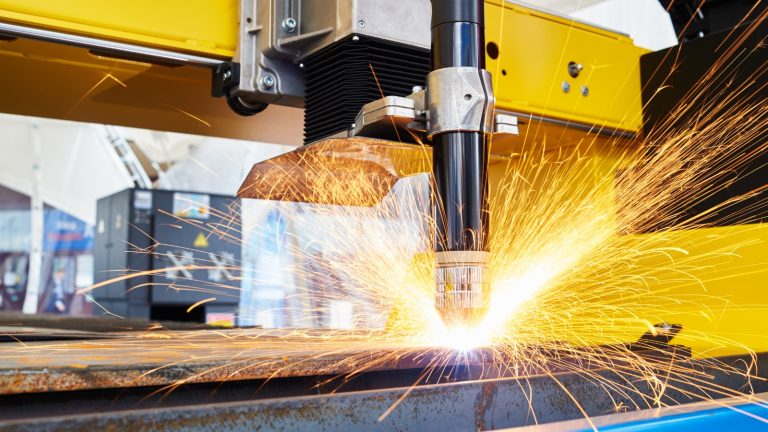
Applications of EDM in manufacturing areas include aerospace, medical, automotive, and electronics. Care for a turbine blade or the fuel system in this kind of precision component made with EDM for aerospace components.
The technical and medical manufacturing industry has adopted EDM on account of the need for ultra-precise micro machining along with fragile contour components. The EDM process is relied upon by automobile manufacturers for mold production and precision tooling.
It is unmistakable that EDM is growing in high-tech industries throughout the world, as it allows for precision machining of hardened materials.
Boost Your EDM Operations with Cerexio MES and Industry 4.0
Cerexio MES is a straightforward Manufacturing Execution System in Singapore that increases your EDM efficiency by integrating with Industry 4.0 technologies, resulting in great benefits! Features include real-time monitoring of all EDM machines, material-removal rates, electrode consumption, and spark efficiency tracking; predictive maintenance based on AI analytics.
With Cerexio MES, your operators can adjust precision machining settings remotely to maintain quality and prevent downtime. Its IoT sensors flow live data into dashboards, which offer the ability to send predictive alerts and track energy consumption.
With the digitalisation of the EDM process, Cerexio MES delivers high productivity with greater precision and perfectly aligns with an automated production line to make your manufacturing smarter and more efficient.
Connect with us for a free demo.
Cerexio-Gain Optimal Manufacturing Efficiency.
The Enduring Importance of EDM in Advanced Manufacturing
EDM, electro discharge machining, is one of the most advanced and reliable manufacturing technologies available today. EDM process removes material by controlled spark erosion instead of mechanical cutting, allowing machinists to manufacture hardened metals and complex shapes with extremely tight tolerances.
From reactor to plasma channel that derived gram machinery, the reasons are why this technology is crucial for aerospace, medical, and tooling industries.
With increasing accuracy and automation requirements in industry, EDM will be a fundamental piece of the solution for future precision machining and advanced manufacturing development.
FAQs About Electro Discharge Machining
EDM (Electro Discharge Machining) is a non-traditional machining process that removes material from electrically conductive workpieces using controlled electrical sparks. It is ideal for hardened metals and complex geometries, providing high precision without mechanical cutting forces or tool stress.
In EDM, an electrode and conductive workpiece are separated by a spark gap and immersed in dielectric fluid. High-voltage pulses create sparks that melt and vaporise microscopic material. This cycle repeats rapidly, allowing precise shaping of intricate or hardened components without physical cutting.
The main types of EDM machines are die-sinking EDM, wire EDM, and hole-drilling EDM. Die-sinking creates cavities, wire EDM cuts profiles, and hole-drilling EDM produces small, deep holes. Each type serves specific precision machining needs in industries like aerospace, automotive, and tooling.
EDM allows machining of extremely hard metals with high precision and complex shapes. It produces minimal mechanical stress, achieves smooth finishes, and enables intricate internal cavities. The process ensures repeatable quality and supports advanced manufacturing applications, including aerospace, medical, and mould production.
EDM is widely used in aerospace for turbine components, medical devices for surgical tools and implants, automotive for mould and die production, and electronics for micro parts. Its ability to machine hardened metals with precision machining makes it essential across high-tech industrial sectors.