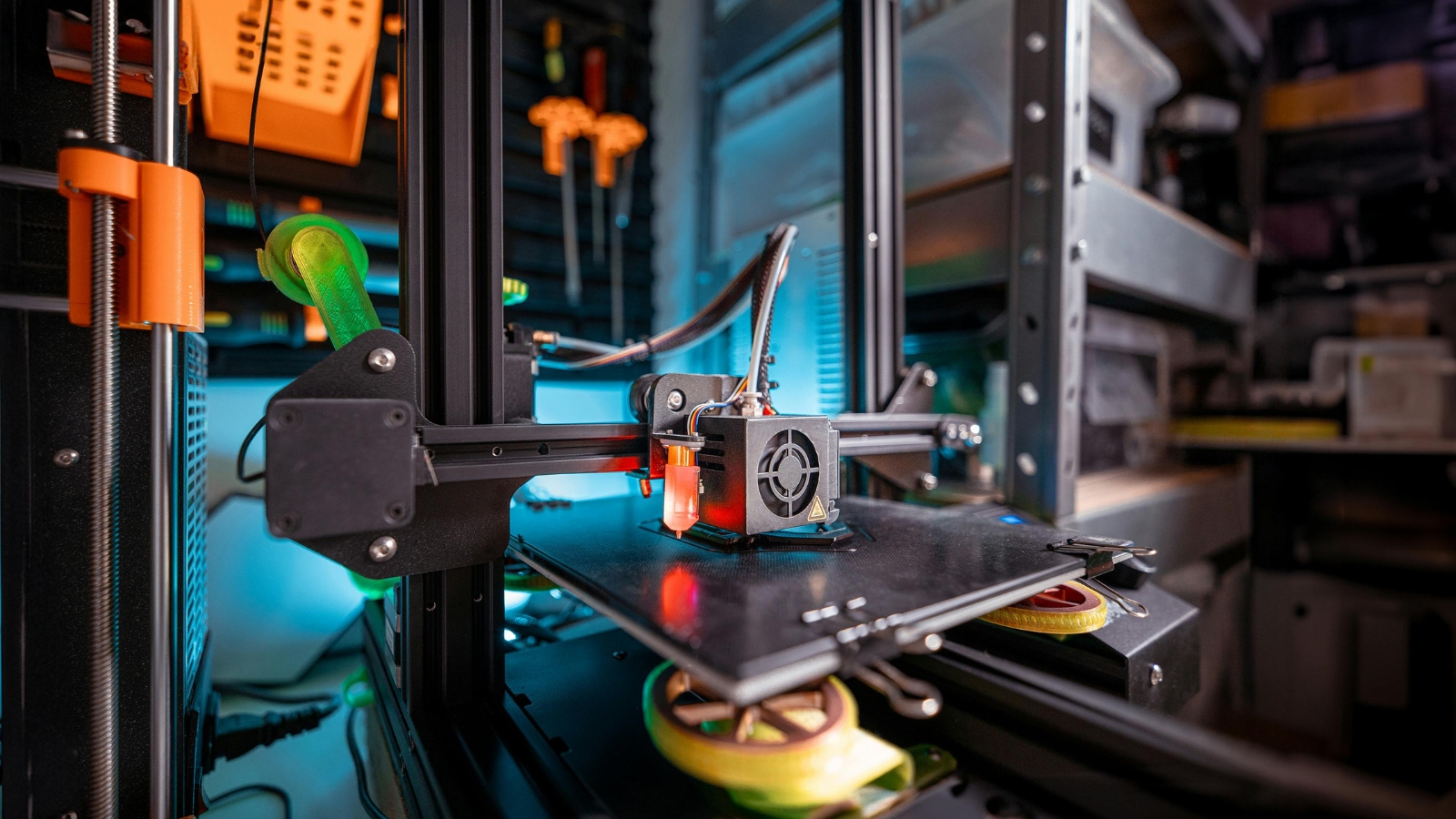
Factory automation signifies the process of bringing in technology, machines, and smart software targeting to make production smoother and faster. The whole point of the latter concept is pretty simple as it covers every aspect of getting more workload done within a short time, reducing costs significantly, keeping up the product quality up to par, and enhancing efficiency within your manufacturing facilities.
Do you know the fun fact? When manufacturers around the world use automation, they really do not have to rely so much on people doing every little task. Machines are the ones who handle the boring, repetitive stuff with way more accuracy and speed. Sometimes, it can be just one machine taking care of a single job. Other times, the entire factory runs almost on its own, barely needing anyone to step in.
In this article, we focus mainly on industrial automation, exploring its types, the importance of factory automation, and how it actually plays out on the factory floor. No matter which party in the manufacturing realm you belong to, whether you are a factory executive, a production manager, or an engineer, you really need to get what automation can do for you. When you are aware of the different types of factory automation, what they cost, and the real benefits means you can boost efficiency, cut down on errors, and make your whole operation tougher and more reliable. Are you ready?
The article explores
What is Factory Automation-Overview and Importance

Factory automation revolves around the theory of using various robotics, software solutions and computer systems to accomplish tasks that would normally require human labour. This covers everything from material handling, assembly, and machining to quality control, packaging, and shipping.
For example, imagine a partially automated manufacturing facility. In there, humans can still conduct product assembly while automated machines can execute cutting or quality inspections.
Beyond that, when it comes to fully automated factories, you can use robots and cognitive systems to control production and perform self-diagnosis. Plus, you can even alter processes in real time based on sensor data.
Factory Automation Process
Before we begin, let us share an eye-opening fact with you.
Do you know that global robotic installation has grown to 575,000 units in 2025?
If we look into the evaluation of factory automation, we can see that advanced technologies like robotics, artificial intelligence, IoT, machine learning, and digital twin technologies have all contributed significantly towards the enhancement of the concept.
IoT sensors are there to continuously monitor equipment and ambient factors, providing useful insights to improve productivity and reduce downtime. Manufacturers can use digital twin technology to create a virtual version of their production line to simulate, test, and optimise activities before implementing them in the physical facility. Not to mention that this lowers risk and boosts accuracy.
If you look into the implementation of factory automation, you can notice that it is not restricted to industry. Automation is a concept that can be fitted to any production process, including automotive and electronics, food processing, and medicine.
Types of Factory Automation

The degree of factory automation is highly variable as it depends on budget constraints, manufacturing complexity, production goals and labour availability. You may have noticed that many modern factories around the globe now employ some level of automation.
However, it typically comes under a spectrum ranging from minimal intervention to fully automated systems. This is where your factory needs to opt for the right type of automation.
In a journey where you target achieving the optimal balance between cost, efficiency, and flexibility, the right type is vital.
Manual / Minimal Automation
Even though small-scale automation has the potential to assist with repetitive or physically demanding tasks, we can see that those manual or minimally automated processes still rely heavily on human operators.
From quality inspections, manual product assembly, to minor material handling tasks, you can see the examples.
In order to guarantee consistency and quality, these processes must have significant human expertise, judgement and dexterity.
If you expect to improve safety, reduce operator fatigue and increase throughput slightly, you can opt for minimal automation. Yet, you need to keep in mind that it remains labour-intensive and dependent on human skill.
Single Automated Machines
The developers have designed single automated machines, expecting to automate specific repetitive operations. What exactly are they?
This ranges from inspection, cutting, welding, to packaging. This is when your factory’s operators have to typically feed materials into the machine and remove the finished products.
As you can see, this keeps most of the production line largely manual. However, this type of automation increases productivity and reduces errors for specific tasks for sure.
For example, in electronics manufacturing, a machine has the ability to perform soldering tasks repeatedly with precision, while the operators have to manually assemble the components.
These machines are usually custom-built for the particular task, and they pave the path for high accuracy and reliability.
Automated Production Lines
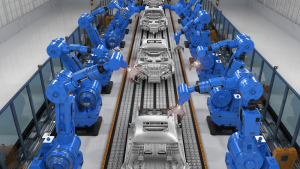
Automated production lines are what have the capacity to include conveyor systems, combine multiple machines, and workstations when creating integrated sequences of production tasks. Each workstation has the responsibility of a particular process, such as cutting, inspection, assembly, or packaging.
Operators will have to primarily monitor the process and conduct maintenance. Also, they can intervene if there are faults.
In the context of consumer goods production, electronics assembly and automotive manufacturing, factories tend to use automated production lines due to their ability to standardise a defined sequence of operations.
As you predict, these systems are powerful enough to reduce variability and increase production speed. Further, they require a limited number of operators to manage large outputs.
Fully Automated (End-to-End)
End-to-end automation is another name for the pinnacle of factory automation. This is where your production facilities can operate continuously without human intervention.
Such factories smoothly carry on with robotic assembly, automated material handling, quality inspections, packaging systems, and inventory management.
In the advanced factories, they leverage AI-driven monitoring, self-adjusting machines and predictive maintenance to maximise uptime and maintain consistent product quality.
The most outstanding quality of the is that these systems can operate 24/7/365, drastically increasing productivity and profitability.
Benefits of Factory Automation

Factory automation is not just about machines taking over; it is absolutely a smart move that pays off in efficiency, safety, and profits. Sure, setting things up can cost a lot at first, but once everything is running, the gains easily make up for it, especially if you are dealing with big production numbers.
Improved Productivity
The real draw is productivity. Automated systems do not get tired, do not need breaks, and do not care about shift changes. They just keep going, pumping out products around the clock.
Take an automotive plant, for example. With a fully automated line, cars roll out day and night, lead times shrink, and there is no need to hire extra hands just to keep up with demand.
Plus, automation speeds up cycle times and cuts down on those annoying bottlenecks that slow everything down. The whole operation runs smoothly.
Improved Quality
Quality gets a big boost, too. People make mistakes; it is just how things are, especially with boring, repetitive jobs or super detailed tasks.
Machines, on the other hand, crank out the same results over and over, with crazy precision. Smart systems can even watch every step in real time, catching and fixing problems right away.
In industries like pharmaceuticals or electronics, where even a tiny error can cause huge issues, automation keeps defects low and reliability high. That is good for your brand and keeps customers happy.
Improved Consistency
Automated processes always deliver uniform outputs, no matter who is running the show, which means the ‘operator variability’. That kind of consistency matters a lot in fields like aerospace, automotive, and medical device manufacturing, where you cannot afford mistakes.
When you standardise production, you cut down on rework, stay on the right side by ensuring compliance with regulations, and deliver predictable results every time.
Reduced Waste
Automation helps cut waste, too. Machines can facilitate precise material handling and optimised process control.
It also sticks to tight plans with improved planning. Since they follow exact instructions, you see less scrap, fewer do-overs, and way less wasted material.
That does not just save money, but it also aligns well with your sustainability initiatives and is better for the environment, too.
Safer Working Conditions
On top of that, automation takes over the dangerous stuff. When it comes to handling hazardous tasks, consider heavy lifting, chemical handling, or working with extreme heat.
With built-in safety systems and emergency shutdowns, plus fewer people in harm’s way, workplaces get a lot safer.
Cost Saving
And when you add it all up, automation means lower long-term costs. Productivity goes up, downtime and mistakes go down, and companies spend less on labour.
Sure, the upfront investment can be steep, but higher output, better quality, safer conditions, and lower operating costs all add up to bigger profits and a quicker payback in the end.
Cost of Implementation

Implementing factory automation always comes with a significant initial investment. This talks about the purchase of specialised equipment, robotics and software systems.
The truth is that the cost depends on the complexity of the production process. You also need to focus on the level of automation desired and the need for customisation.
Since you wish to ensure that the automation is adaptable, future-proof and scalable, your automation system requires expertise to align with the increased production demands.
This is where you have to employ experienced automation engineers, as they help optimise your system design, leveraging existing technologies where possible to control costs.
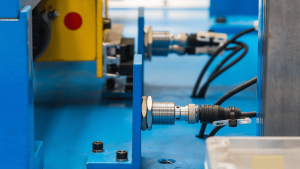
Plus, integration of sensors, IoT devices, and AI-driven monitoring comes with the upfront expense, but they ensure long-term operational efficiency.
Operator training is another critical cost you may neglect. You must prepare your human supervisors, and they have to be upskilled to monitor, maintain, and troubleshoot automated systems. This may involve technical courses, certifications, or hiring skilled personnel.
It may feel like a long list, but in the end, you can ensure that factory automation delivers measurable long-term benefits, including higher output, reduced waste, consistent product quality, and improved safety.
Cerexio MES to Support your Factory Automation
Real-Time Production Visibility and Control
Cerexio MES is a comprehensive manufacturing execution system that gives you a live window into your machines, workflows, and production numbers. You spot bottlenecks right when they happen, automate your decisions on the fly, and keep things running without any hiccups.
The dashboards update in real time, so you can react fast, make sharper calls, and keep your automated lines moving smoothly.
Intelligent Workflow Automation and Scheduling
With Cerexio MES, you do not have to juggle task lists or worry about who is handling what. Smart algorithms take care of task sequencing, resource allocation, and production scheduling.
The system keeps cycle times steady, cuts down on manual work, and helps your equipment, operators, and automated lines work together seamlessly for peak efficiency.
Integrated Quality and Performance Management
Quality checks, traceability, and performance analysis all happen automatically with Cerexio MES. Our system taps into sensors and machine data across your factory floor, catching issues early and cutting out human errors.
You get real-time feedback and continuous improvement, which is exactly what you need in a highly automated manufacturing setup.
Call for a free demo today.
Opting for Factory Automation for Maximum ROI

In the contemporary production domain, do not consider factory automation as a fancy add-on because it has become the backbone for any manufacturer that wants to keep up, run smoothly, and bounce back from challenges.
When you bring in smart tech, automation, and data-driven systems, you are not just speeding things up. You get more done, crank out better products, keep workers safer, and save money in the long run, all the way from start to finish on the factory floor. In short, if you expect maximum ROI, hold hands with factory automation without delay.
Cerexio- Where Factory Automation Done Smoothly
FAQ about Factory Automation
No, small and medium-sized enterprises (SMEs) can also benefit from this. Scalable solutions like collaborative robots (cobots), modular systems, and cloud-based automation make automation accessible, cost-effective, and adaptable for businesses of any size.
Costs vary widely based on project scope, technology, and customisation. Initial investment includes equipment, integration, design, and training, but long-term gains in productivity and cost savings often make it financially worthwhile.
Common systems include Programmable Logic Controllers (PLCs), Distributed Control Systems (DCS), human-machine interfaces (HMIs), vision systems, and robotics.
Yes — many automation projects involve integrating new technology with existing machinery. Choosing a partner who supports system compatibility, retrofitting, and modular upgrades is key.
Automation handles hazardous, physically demanding or repetitive tasks, reducing human exposure to risk. Safety is further enhanced by built-in shutdowns, sensors, and monitoring systems to detect anomalies.