
If you expect to gain maximum profits, you must have a thorough understanding of the costs you have to bear first, especially if you’re trying to learn how to find the total manufacturing cost for your business.
In the manufacturing industry, applying the right total manufacturing cost formula and considering all fixed costs, variable costs, and supply chain influences is the first step to calculating profits, losses, and improvement areas with accuracy.
Many newcomers wonder how to calculate total manufacturing cost, sometimes assuming it’s a complex or lengthy process. The truth is, once you know how to calculate total manufacturing costs using several straightforward stages from factoring in indirect manufacturing costs, indirect materials, and the number of units produced, the results become clear and actionable.
This article covers everything about the five steps to calculate manufacturing cost, from selecting the best manufacturing cost formula to evaluating the cost of goods manufactured and production costs in real time throughout your production facilities.
We will uncover
- What is Manufacturing Cost?
- How to Calculate Manufacturing Cost-Formula and the Essential Steps
- What are the Five Steps to Calculate Manufacturing Cost?
- Total Manufacturing Cost Formula
- Direct Manufacturing Cost Vs. Indirect Manufacturing Cost
- Common Mistakes in Calculating Manufacturing Costs
- Cerexio Solution to Accurately Calculate Manufacturing Cost
- Calculate Manufacturing Cost to Put the Stamp on Profits
- FAQ about Manufacturing Cost
What is Manufacturing Cost?

A manufacturing cost signifies all of the expenses related to creating a good or service, including the resources used in the process, the supply chain, and manufacturing processes across production facilities. In this case, labour, materials, and overhead all contribute to production expenses.
In further depth, the categories are as follows:
Labour Costs
These consist of both direct and indirect labour expenses. Employee pay, whether on the manufacturing line or leading a team on the floor, is considered direct labour expenses. Indirect labour may involve the expenses incurred by the individuals who transport the raw materials to the production site or handle indirect manufacturing costs not tied directly to specific products.
Material Costs
When it comes to material costs, all of the materials required to make the items are included in the material prices. Direct material costs comprise the parts and raw materials required to manufacture the completed product; you calculate direct material costs as part of the manufacturing cost formula. Plus, indirect material expenses include items such as containers and pallets required to properly store raw materials or other indirect materials essential for the production process.
Overhead
All expenses that are not related to personnel or supplies are considered overhead costs. Rent, utilities, equipment fees, service charges, and other indirect expenses all factor into manufacturing overhead and must be calculated as part of the total manufacturing cost.
Now let’s look at what a typical manufacturing cost includes:
Well, it is indeed a long list. Wages and salaries of workers actively involved in product production and indirect expenses that support manufacturing processes, including factory managers, industrial engineers, equipment operators, and quality assurance.
How to Calculate Manufacturing Cost-Formula and the Essential Steps

There is a specific formula manufacturers utilise to calculate manufacturing costs:
Manufacturing cost = Raw materials + Labour costs + Allocated manufacturing overhead
How to Calculate Total Manufacturing Cost Using the Formula and Essential Steps

If you want to know how to find the total manufacturing cost for your business, it starts with applying the right formulas and understanding each cost component, like fixed costs, variable costs, and the accurate cost of goods manufactured.
If you wish to calculate total manufacturing costs, you first need to add up all direct material costs, direct labour costs, and manufacturing overhead, including any indirect materials or labour that support the supply chain.
If you know how to calculate total manufacturing cost, it simply ensures you can analyse production efficiency and make informed business decisions for every unit produced.
There is a specific formula manufacturers utilise to calculate manufacturing costs, sometimes called the total manufacturing cost formula or manufacturing cost formula:
Manufacturing cost = Raw materials + Labour costs + Allocated manufacturing overhead
Batch Cost Scenarios and Scalable Production Calculations
Beyond the basic formula, manufacturing environments often require flexible calculation methods, especially where indirect manufacturing costs or indirect materials play a role:
- Batch Production Cost Formula:
Batch Manufacturing Cost = (Total Raw Materials + Total Labour + Total Overhead) / Number of Units in Batch
- Scaled Production Formula:
For scalable production, multiply the standard cost per unit by the number of units produced:
Total Scalable Cost = (Cost per Unit) x (Number of Units Produced in Timeframe)
- Variable vs. Fixed Costing:
Some manufacturers also break down unit costs further:
Total Cost = Variable Costs (change with output) + Fixed Costs (constant regardless of activity)
Let’s clarify this through an example:
A manufacturer produces batches of 1,000 units, with $12,000 in raw materials, $7,000 in labour, and $5,000 in overhead per batch.
Batch cost = ($12,000 + $7,000 + $5,000) / 1,000 = $24 per unit produced.
Five Steps to Calculate Manufacturing Cost

Step 1- Calculate the Raw Material Cost
First, figure out how much each raw item will cost, including total manufacturing cost direct materials by considering inventory changes in your supply chain. You can use the following formula to find this:
Cost of raw materials = Beginning inventory + Purchases added – Ending inventory
Let’s get an example to simplify how it works.
Consider that the initial raw material’s total cost is $20,000. Then your company decides to purchase another set of raw materials worth $25,000. So, the worth of the new raw materials bundle is equal to $45,000. After working on a production cycle, you find you have $15,000 worth of raw materials in hand. This number indicates that the total cost of the raw materials is $22,000.
This is how it goes:-
Cost of raw materials = $20,000 + $25,000 – $15,000 = $30,000
Step 2- Determine the Cost of Labour
Next, figure out the overall labour expenses, including both direct and indirect labour. The labour expenses for material handlers, production line workers, factory managers, maintenance staff, sanitation staff, and bookkeepers engaged in the production process or supporting production facilities should be added.
Further, wages and salaries paid to workers engaged in the production process may also fall under this category, and it is essential to separate these from indirect expenses elsewhere in the supply chain.
Calculate labour just for the time of production you are considering.
For instance, suppose the following wages and salaries are incurred during a production cycle:
- Material handlers: $8,000
- Production line workers: $20,000
- Factory managers: $10,000
- Maintenance staff: $5,000
- Sanitation staff: $3,000
- Bookkeepers engaged in production-specific activities: $4,000
The total cost of labour would be calculated as follows:
$8,000 + $20,000 + $10,000 + $5,000 + $3,000 + $4,000 = $50,000
This amount represents the total labour cost specifically attributed to the production process and not general administrative activities. Not to mention that this would help you accurately calculate the total manufacturing cost.
Step 3- Calculate the Overhead Expenses of Production
Then, verify the company’s overhead expenses throughout a manufacturing cycle. This might include property taxes, insurance for the building and equipment, depreciation, utilities, and other costs required to operate production facilities. To calculate manufacturing overhead, ensure all indirect expenses and production-related costs are included.
For example, suppose a company incurs the following overhead expenses during a manufacturing cycle:
- Property taxes: $2,500
- Insurance for building and equipment: $1,800
- Depreciation of equipment: $4,200
- Power and utilities: $3,000
- Other miscellaneous overhead costs: $1,500
Adding these together gives a total overhead expense of $13,000 for the cycle. This total will be used along with labour costs and material costs to calculate the overall production cost.
Step 4- Estimate the Overall Cost of Manufacturing
In this stage, you need to add up all of the expenses from phases one, two, and three to get the total manufacturing cost. The company’s general and administrative expenses, which are indirect expenses not part of manufacturing processes, are not included in the calculation. This ensures you only account for costs directly related to specific products and the production process.
Office rent, executive salaries, office supplies, and administrative pay are examples of general and administrative expenses. You need to exclude these when calculating the cost of goods manufactured.
Let’s take an example. Assume if the material costs for producing a batch of items amount to $10,000, labour costs total $5,000, and production overhead comes to $3,000, then the overall production cost—reflecting total manufacturing cost—would be calculated as follows:
Material Costs ($10,000) + Labor Costs ($5,000) + Overhead ($3,000) = Overall Production Cost ($18,000)
This excludes any indirect administrative expenses, ensuring the calculation pertains strictly to the production costs.
Direct Manufacturing Cost Vs. Indirect Manufacturing Cost
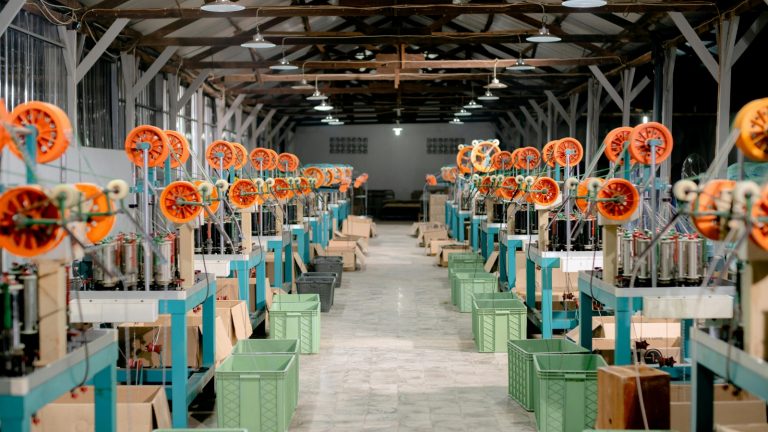
If you can link the cost to a particular product, that is the main criterion to decide how direct and indirect production expenses vary. For instance, the direct raw materials used to create a product are included in the direct manufacturing cost. Commissions and labour payments may also be included. On the other hand, fixed expenses, including space leasing fees, quality control expenses, and personnel wages, are examples of indirect manufacturing costs.
Common Mistakes in Calculating Manufacturing Cost

If you wish to keep your production pricing, budgeting, and profitability at top levels, you must take care of the precise calculation of manufacturing cost in the first place. Still, a lot of businesses make mistakes that might skew their cost estimates and result in bad business choices. These are a few of the most frequent errors we see in calculating manufacturing cost:
Ignoring Hidden Expenses
Do not think all of your expenses and the costs you bear are visible all the time. This means you have another layer of hidden manufacturing cost! Having said that, did you take the cost of modest equipment repairs, trash disposal, and upkeep into your account? If you take each of these costs separately, it may not seem to be a huge number. However, when you combine them, you will notice that it has a big effect on the overall cost of production. This is why these expenses are too important. Underestimating them or not giving them the proper weight will end up impacting your pricing and lower profit margins.
Inaccurate Overhead Allocation
Accurately allocating overhead expenses like electricity, factory rent, and equipment depreciation is frequently difficult. Some businesses could divide overhead equally among their goods without taking resource utilisation into account. This misallocation can skew profitability assessments and company decisions by making some items look more expensive and others less expensive than they actually are.
Merging Manufacturing and Administrative Costs
Including general administration costs in manufacturing cost calculations, such as marketing, executive incentives, or office wages, is another frequent error. Only costs directly related to production should be covered by manufacturing costs. Inflating manufacturing costs by including non-production expenditures might result in overpriced goods or inaccurate assessments of production efficiency.
Ignoring Variations Particular to a Product
Another common mistake is to treat all items as though they use resources equally. Materials, labour, and machine time may vary depending on the product. Pricing strategies may be impacted, and the cost per unit may be distorted if these variances are ignored.
Cerexio Solution to Accurately Calculate Manufacturing Cost

Cerexio is presenting a robust Manufacturing Execution System that comes with an embedded financial planning model. Using this feature, your company can calculate manufacturing costs with 100% accuracy. Your workers do not have to keep an eye on all the expenses around the clock, as the financial data capturing, migrating, analysing and reporting is in good hands with Cerexio. This is an outstanding method for manufacturers to boost their profits through better financial understanding.
Calculate Manufacturing Cost to Put the Stamp on Profits

Gaining profits in the manufacturing world relies on one theory: you need to know how to find the cost of goods manufactured. With accurate calculation methods, you take the first step forward to maximise profitability 10 times better and faster.
FAQ about Manufacturing Cost
The quickest method for how to find the total manufacturing cost is using the standard formula. You need to sum your direct material costs, direct labour expenses, and all factory overhead for a specific period. This gives you a clear and immediate production cost overview.
The essential total manufacturing cost formula is: Direct Materials + Direct Labour + Manufacturing Overhead. To accurately calculate total manufacturing costs, you must combine these three core expense categories. This formula is the foundation for all production cost analysis and financial reporting.
Knowing how to calculate total manufacturing cost precisely is vital for setting correct product prices, managing budgets, and maximising profitability. Accurate calculations prevent underpricing and ensure you have a true understanding of your business’s financial health and operational efficiency.
No, you should not include non-production expenses like marketing or administrative salaries. The total manufacturing cost formula only includes expenses directly tied to the production process, such as factory labour, raw materials, and factory-related overhead. Mixing costs will distort your results.
No, you should not include non-production expenses like marketing or administrative salaries. The total manufacturing cost formula only includes expenses directly tied to the production process, such as factory labour, raw materials, and factory-related overhead. Mixing costs will distort your results.
To find the total manufacturing cost, you must identify three key elements: direct materials (the raw components), direct labour (wages for production workers), and manufacturing overhead (all indirect factory costs). Summing these provides your total production expense for the period.
Businesses should regularly calculate total manufacturing costs, ideally on a monthly or quarterly basis. Frequent calculations help you quickly spot cost trends, address inefficiencies, and make timely, informed decisions to maintain financial control and adapt to market changes effectively.