
The world’s digital economy runs on semiconductor chips with a CGR of 8.6%, yet producing them has become one of the most complex industrial processes ever created. As demand for faster processors and smaller devices grows, manufacturers worldwide are asking one critical question: How is AI improving chip production in modern factories?
The truth is that AI is improving chip production by analysing manufacturing data, detecting wafer defects, optimising semiconductor processes, and predicting equipment failures. This is where machine learning algorithms help semiconductor fabs increase chip yields, reduce manufacturing costs, and accelerate innovation in modern semiconductor manufacturing.
Today, AI in semiconductor manufacturing is transforming everything from design to testing. With advanced analytics and automation, AI in chip production enables smarter decisions across the entire semiconductor manufacturing process, making chip fabrication faster, more reliable, and significantly more efficient.
Let’s dive deep into exploring how AI is improving chip production.
Why AI Is Becoming Essential in Modern Chip Production
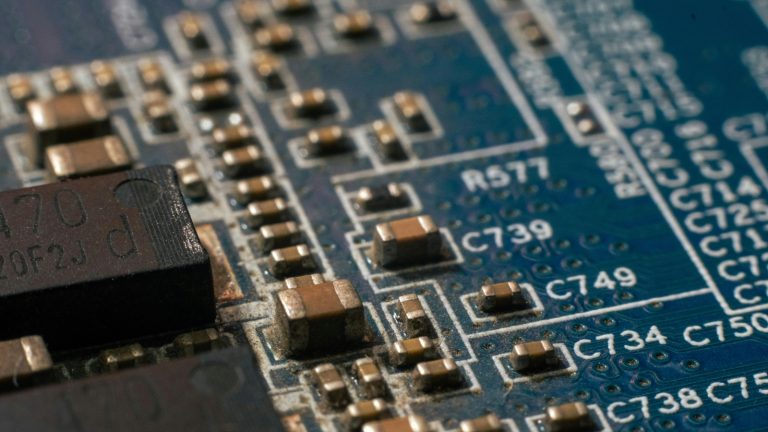
AI in semiconductor manufacturing is becoming essential because modern chip production generates massive data and requires extreme precision. By applying machine learning in chip manufacturing, manufacturers can analyse complex processes, detect inefficiencies, and optimise production conditions to improve chip quality, reduce costs, and accelerate semiconductor innovation.
Key Takeaways
- AI transforms chip production by optimising design, detecting wafer defects, and improving yields.
- Predictive maintenance and digital twins reduce downtime and enhance manufacturing efficiency.
- Smart, AI-driven factories enable faster innovation and lower operational costs.
- The future of semiconductor manufacturing is fully autonomous, data-driven, and powered by AI.
The Rising Complexity of Semiconductor Manufacturing
Modern chips are built at extremely small scales known as advanced semiconductor nodes, where billions of transistors are placed on a single wafer.
As wafer fabrication becomes more intricate, traditional optimisation methods struggle to manage the complexity. This is why AI in semiconductor manufacturing and machine learning in chip manufacturing are increasingly used to analyse manufacturing variables and improve production accuracy.
The Data Explosion Inside Semiconductor Fabs
Did you know that a modern semiconductor facility generates enormous volumes of data? Thousands of sensors monitor temperature, pressure, vibration, and chemical flows during production.
Through semiconductor manufacturing data analytics, AI systems can detect patterns humans cannot see. This allows AI in chip production to optimise performance and detect problems before they affect large batches of wafers.
Pressure to Increase Chip Yield and Reduce Costs
We all can see that producing chips is expensive, and even tiny defects can reduce yields dramatically. Manufacturers therefore rely on AI yield optimisation semiconductor models to identify inefficiencies and improve semiconductor yield improvement across fabrication stages.
With intelligent analytics, AI semiconductor manufacturing platforms help fabs maximise usable chips while reducing material waste and operational costs.
Faster Innovation Cycles in the Semiconductor Industry
You may have noticed that competition between chip manufacturers is intense, and product lifecycles are becoming shorter every year.
This rapid pace has pushed artificial intelligence in the semiconductor industry to the forefront of innovation. By supporting AI-driven manufacturing insights, companies can accelerate design iterations, optimise production workflows, and bring advanced processors to market faster.
How Is AI Improving Chip Production?
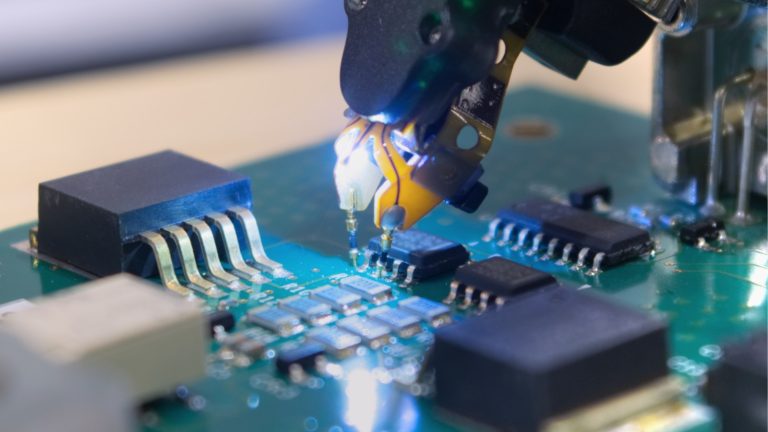
AI improves chip manufacturing by analysing fabrication data, detecting wafer defects, predicting equipment failures, and optimising production parameters. Through AI in chip production, semiconductor manufacturers increase yields, reduce operational costs, and achieve more efficient and reliable AI semiconductor manufacturing processes.
AI-Driven Chip Design Optimisation
One of the earliest stages where AI chip design optimisation delivers value is during chip architecture planning.
Designing advanced processors requires complex placement and routing of billions of transistors. With AI semiconductor manufacturing tools, engineers can automatically test thousands of design possibilities within minutes.
What is more, using machine learning chip fabrication models, AI systems analyse layout patterns and predict which designs will deliver the best performance and energy efficiency. These insights enable intelligent chip fabrication strategies that shorten design cycles and improve final product performance.
As a result, AI in chip production begins influencing efficiency even before physical manufacturing starts.
AI for Wafer Defect Detection
Can you imagine that tiny defects during fabrication can ruin entire wafers? This makes chip defect detection one of the most critical tasks in semiconductor manufacturing.
Through AI wafer defect detection, computer vision algorithms scan wafers using high-resolution imaging systems.
These models recognise microscopic irregularities faster than human inspectors. By identifying problems early, AI in semiconductor manufacturing prevents defective chips from moving through later stages of production.
It is evident that this form of AI-enhanced semiconductor production improves quality control while helping manufacturers reduce costly rework and wasted materials.
Predictive Maintenance for Semiconductor Equipment
Semiconductor factories rely on highly specialised machinery that must operate continuously and precisely. With AI predictive maintenance semiconductor systems, machine learning algorithms monitor equipment health using semiconductor equipment monitoring data such as vibration, temperature, and power usage.
Instead of waiting for machines to fail, AI predicts when components are likely to degrade.
This is where your maintenance teams can schedule repairs before breakdowns occur. This approach reduces downtime and supports AI-powered semiconductor manufacturing environments where production remains stable and efficient across long manufacturing cycles.
AI-Powered Process Optimisation
Manufacturing chips involves hundreds of tightly controlled steps. Even minor variations can affect yield.
Through machine learning in chip manufacturing, AI models continuously evaluate semiconductor process control variables such as chemical concentrations, temperature fluctuations, and deposition rates.
Using AI-driven process control, factories can adjust parameters in real time to maintain optimal conditions. This dynamic optimisation improves consistency across smart wafer production lines.
Over time, the system learns which combinations of variables deliver the best outcomes, enabling continuous semiconductor process optimisation and improved manufacturing efficiency.
Smart Lithography Enhancements Using AI
Lithography is one of the most critical and expensive stages in chip production. Did you know?
It involves projecting circuit patterns onto silicon wafers. Advanced photolithography optimisation techniques powered by AI help engineers refine pattern accuracy at nanometer scales.
By analysing large datasets from lithography equipment, AI in semiconductor manufacturing can recommend adjustments that reduce pattern distortions. This form of AI manufacturing analytics helps maintain precision as chips become smaller and more complex.
As a result, AI semiconductor manufacturing improves pattern quality while reducing the number of defective wafers produced during lithography.
AI-Based Supply Chain Optimisation
Chip production depends on a complex global network of suppliers that provide specialised chemicals, silicon wafers, and manufacturing equipment.
With semiconductor supply chain management platforms powered by AI, manufacturers can forecast demand more accurately.
Through predictive analytics, AI in chip production evaluates market trends, production schedules, and supplier constraints. This ensures that materials arrive at the right time without causing production bottlenecks.
Such optimisation improves smart chip manufacturing systems by maintaining steady production flows even when global supply conditions fluctuate.
AI for Semiconductor Testing and Quality Assurance
Before chips reach customers, they undergo rigorous testing to verify reliability and performance. Through chip testing automation, AI systems analyse electrical signals and detect performance anomalies faster than manual testing methods.
This approach enables AI-enhanced semiconductor production by identifying faulty chips early in the quality assurance stage. Advanced algorithms can also perform failure analysis to determine why chips malfunction.
As you can see, AI in semiconductor manufacturing improves product reliability while reducing testing time and operational costs.
Digital Twin Technology in Chip Manufacturing
A major breakthrough in modern manufacturing is the use of digital twin semiconductor manufacturing systems. These are virtual models of entire semiconductor fabs that simulate production conditions.
By analysing historical and real-time data, AI can replicate how a manufacturing line behaves under different scenarios.
This allows engineers to test process changes without disrupting actual production. Through AI-powered semiconductor manufacturing, digital twins enable safer experimentation, faster optimisation, and reduced manufacturing risks.
AI-Powered Yield Prediction
Yield prediction plays a crucial role in maintaining profitability in chip manufacturing. Using AI yield optimisation semiconductor algorithms, manufacturers analyse historical production data to forecast wafer outcomes before fabrication is complete.
This predictive capability allows engineers to identify potential issues early in the production cycle. By adjusting parameters proactively, companies achieve better semiconductor yield improvement across batches. Such predictive intelligence is central to AI in chip production, enabling manufacturers to maximise the number of functional chips produced from each wafer.
Autonomous Semiconductor Factories
The long-term vision for semiconductor manufacturing is the creation of smart semiconductor factories where AI manages most operational decisions. These facilities rely on AI semiconductor fabs that integrate robotics, sensors, and automation systems.
Through fab automation, AI platforms coordinate machines, materials, and workflows across the factory floor.
These automated chip factories operate with minimal human intervention, improving efficiency and reducing operational errors.
As the technology evolves, AI in semiconductor manufacturing will enable fully autonomous production environments capable of adapting to changing demand and manufacturing conditions.
The Future of AI in Semiconductor Manufacturing
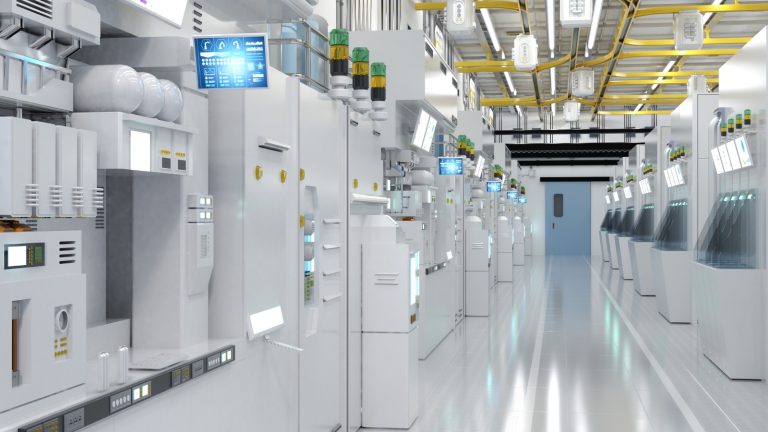
The future of AI in semiconductor manufacturing involves fully intelligent factories where AI continuously optimises production. Using predictive analytics, automation, and AI-driven manufacturing, semiconductor fabs will improve efficiency, accelerate chip innovation, and enable next-generation processors designed for artificial intelligence, quantum computing, and advanced digital technologies.
- AI-Driven Self-Optimising Semiconductor Fabs
In the future, semiconductor factories will become fully adaptive environments. Using advanced analytics, AI semiconductor fabs will continuously evaluate production data and automatically refine processes.
These systems will represent the next generation of intelligent manufacturing, where machines learn from every wafer produced.
- Integration of AI With Industry 4.0 Technologies
The future of AI in semiconductor manufacturing will also depend on its integration with Industry 4.0 technologies such as IoT sensors, robotics, digital twins, and predictive analytics.
These tools work together to create AI-powered semiconductor manufacturing ecosystems capable of real-time decision-making and autonomous optimisation.
- AI Enabling Next-Generation Chips
Beyond manufacturing efficiency, artificial intelligence in the semiconductor industry will help develop entirely new chip architectures.
AI will support the creation of processors designed specifically for AI workloads, quantum computing systems, and neuromorphic chips. These innovations will redefine AI in chip production and enable breakthroughs in computing performance.
Real-World Applications of AI in Chip Production
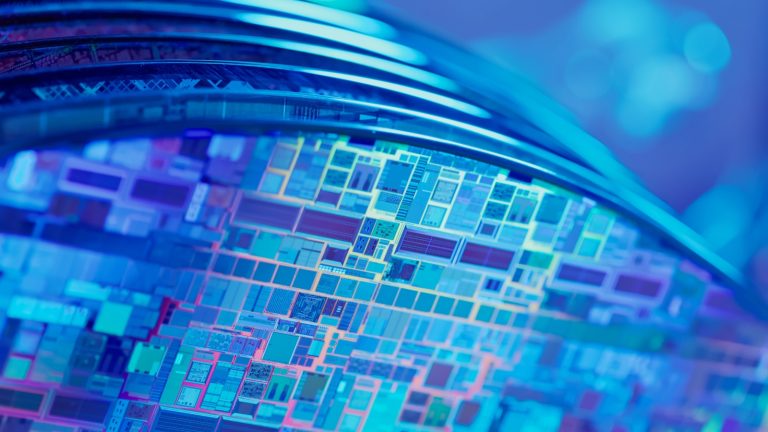
Leading semiconductor companies, such as TSMC, Intel, and NVIDIA, already use AI-driven platforms to optimise chip layouts. These advanced analytics tools can evaluate thousands of circuit designs in minutes, allowing engineers to identify the most efficient architectures before physical fabrication begins, saving time and costs and reducing errors.
AI Detecting Wafer Defects
Samsung Electronics has implemented AI-powered computer vision systems in its fabs to detect wafer defects at the microscopic level.
By identifying irregular patterns early, these systems prevent faulty chips from moving through production, improving semiconductor yield improvement and reducing material waste.
Predictive Maintenance in Action
Intel employs predictive maintenance solutions powered by AI across its semiconductor fabs.
Sensors and machine learning algorithms anticipate equipment failures before they occur, minimising downtime and ensuring consistent production output, which enhances AI predictive maintenance semiconductor capabilities.
AI Optimising Chip Layouts
Leading semiconductor companies, such as TSMC, Intel, and NVIDIA, already use AI-driven platforms to optimise chip layouts.
These advanced analytics tools can evaluate thousands of circuit designs in minutes, allowing engineers to identify the most efficient architectures before physical fabrication begins, saving time, costs, and reducing errors.
Transforming Chip Production with Cerexio’s AI-Driven MES
Cerexio Industry 4.0-driven MES utilises AI in semiconductor manufacturing to optimise every stage of chip production. From real-time monitoring of wafer fabrication to predictive maintenance of equipment, the system analyses massive datasets to detect anomalies, improve yields, and streamline workflows.
Cerexio software platform’s AI-powered process control ensures faster, more reliable chip production while reducing defects and downtime.
With Cerexio MES, your manufacturing company can achieve smarter, fully data-driven semiconductor operations and accelerate innovation.
Connect with us for a free demo.
Cerexio-Chip Production Is On Point.
Smarter, Faster, and Efficient: AI in Chip Manufacturing
So, how is AI improving chip production in today’s semiconductor industry? The answer lies in its ability to transform every stage of manufacturing. From AI chip design optimisation and AI wafer defect detection to predictive maintenance, digital twins, and autonomous factories, artificial intelligence enables smarter decision-making across the entire production lifecycle.
Through AI in semiconductor manufacturing, your company can achieve higher yields, lower operational costs, and faster innovation cycles. As AI semiconductor manufacturing technologies continue evolving, the industry will move closer to fully autonomous smart semiconductor factories capable of producing advanced chips at unprecedented efficiency.
Ultimately, how is AI improving chip production will remain a central question as the semiconductor industry enters a new era of intelligent manufacturing powered by data, automation, and machine learning.
FAQs About AI In Chip Production
AI in chip production improves efficiency by analysing manufacturing data, detecting wafer defects, predicting equipment failures, and optimising processes. These capabilities allow semiconductor fabs to increase chip yields, reduce production costs, and maintain consistent manufacturing performance across complex fabrication stages.
AI in semiconductor manufacturing is essential because modern chip fabrication generates massive datasets and requires extreme precision. Machine learning models analyse these datasets to optimise production parameters, improve quality control, and accelerate innovation in advanced semiconductor manufacturing environments.
Through AI wafer defect detection, computer vision systems scan silicon wafers for microscopic irregularities. These AI models recognise abnormal patterns earlier than manual inspection methods, enabling faster chip defect detection and preventing faulty chips from progressing through later production stages.
Machine learning in chip manufacturing helps analyse manufacturing variables, optimise process parameters, and predict equipment failures. By learning from historical production data, machine learning models enable continuous semiconductor process optimisation and improved chip yields across fabrication cycles.
Yes. Many experts believe AI semiconductor fabs will eventually evolve into autonomous production environments. With robotics, fab automation, and predictive analytics, future smart semiconductor factories will operate with minimal human intervention while maintaining high levels of manufacturing precision and efficiency.
AI improves semiconductor yield by analysing manufacturing data to identify process inefficiencies and defect patterns. Using predictive analytics and AI yield optimisation semiconductor models, manufacturers can adjust fabrication parameters and significantly increase the number of functional chips produced per wafer.