
Simply following your gut is not enough in a manufacturing business climate of volatility, speed, and disruption, where the expected annual growth rate is 1.44% in 2026. Superior industrial organisations focus on a single theory: they optimise monitoring, performance goal management, and play through rigorous measurement and intelligent play.
From product innovation to operations, the single measure of success or failure is visibility into results. When production performance information is organised, actionable, and aligned with goals, your decision-making becomes faster and more confident.
This guide discusses how today’s manufacturing organisations can optimise monitoring performance and goal management to a new level with sophisticated frameworks, intelligent tools, and time-tested best practices for turning insight into healthy growth.
We will explore
- Why Performance Optimisation Matters More Than Ever
- What Is Performance Monitoring and Goal Management?
- Why Is Optimising Performance Monitoring Essential for Success?
- What Are Key Performance Indicators (KPIs) and Why Do They Matter?
- How to Select the Right KPIs for Your Organisation
- What Is the SMART Framework for Goal Setting?
- How to Build Effective Performance Monitoring Dashboards
- What Tools and Software Optimise Performance Tracking?
- How Does Automated Reporting Improve Goal Management?
- How to Align Individual, Team, and Organisational Goals?
- How to Overcome Common Performance Monitoring Challenges?
- What Role Does AI and Predictive Analytics Play?
- Industry-Specific Applications of Performance Monitoring
- Step-by-Step Framework to Implement Optimised Performance Monitoring
- FAQs About Performance Monitoring and Goal Management
Why Performance Optimisation Matters More Than Ever
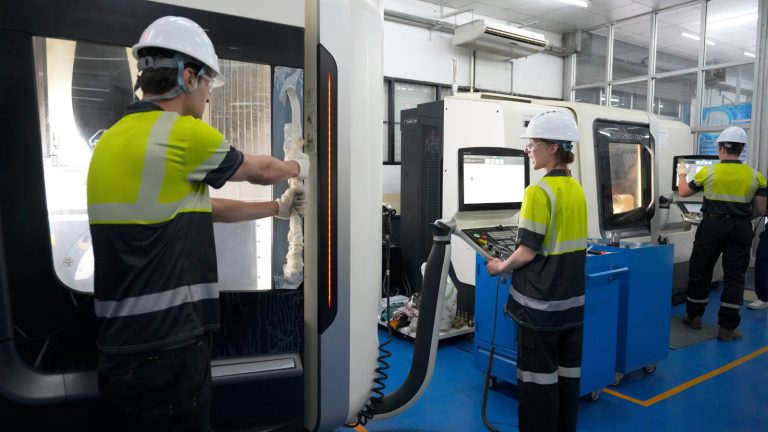
Given the decision-making in today’s dynamic environments, optimising performance is critical, as organisations need to be data-driven rather than gut-feeling-driven.
Key Takeaways
- Enhanced performance monitoring and goal management in manufacturing make data actionable and enable clear decisions when needed.
- Clear KPIs ensure that goals are aligned with the industrial business strategy and the way work gets done.
- Automation and dashboards increase visibility, accuracy, and accountability.
- Continuous reviews build a culture of self-improvement and growth that endures.
The Shift Toward Data-Driven Decision-Making
Manufacturing businesses today are relying on data-driven decisions to minimise uncertainty and improve process outcomes. Leaders are no longer responding to results; they are using patterns, signals, and measurable outcomes to inform strategic decisions.
This transition enables quicker reaction times, more robust accountability mechanisms, and better focus on resources. Companies that enable the integration of analytics into day-to-day activities achieve uniformity across functional walls.
Furthermore, they reduce bias in decision-making and increase confidence in management decisions that affect performance optimisation and long-term robustness.
The Growing Complexity of Modern Business Environments
Today, increasing operational complexity, fueled by digital transformation, global competition, and regulatory pressure, makes the job of modern manufacturing enterprises much harder and riskier than ever. Do you agree?
With more teams, systems, and workflows generating greater volumes of data, it was becoming harder to monitor progress without some sort of structure. However, something is absent in this context: centralised visibility, which industrial leaders so desperately need to understand cause-and-effect dynamics across functions.
The new, optimised monitoring frameworks help simplify complexity by linking operational signals to their respective outcomes, enabling manufacturers to operate at scale without losing control.
The outcome is obvious. Such a structured approach provides clarity, minimises inefficiencies, and enables decision-making in ever-changing manufacturing environments.
How Structured Monitoring Drives Sustainable Growth
Structured monitoring transforms production data into actionable intelligence that drives sustainable growth. This way, organisations do not have to manage metrics linked to strategy reactively. Instead, they can manage for measurable impact.
However, continuous monitoring keeps teams aligned with organisational goals, catches risks ahead of time, and verifies outcomes on an unbiased basis. In the long run, this discipline enables better management of resource allocation, more consistent execution , and greater accountability for results.
With monitoring, growth becomes repeatable rather than random.
What Is Performance Monitoring and Goal Management?
Performance monitoring and goal management outline how a manufacturing organisation monitors outputs and progress and maintains alignment with goals and objectives.
Defining Performance Monitoring in the Modern Business Context
The term performance monitoring implies an organised method of comparing activities, outputs, and outcomes against established standards. It draws on real-time functional operational signals, captured through performance measurement practices.
Whereas in the past you may have relied on static reports, modern monitoring now offers greater visibility, accuracy, and responsiveness. The best practice does this through early identification of results, understanding of their drivers, and preemptive actions taken by the leader before things spiral out of control.
As you can see, this discipline provides the basis for sustainable performance management and control in complex industrial organisations.
Understanding Goal Management Frameworks and Methodologies
It is in goal management that ambition meets execution. This is where the frameworks set the tone for how objectives are cascaded, communicated, tracked, and reviewed between levels.
Well-structured methodologies clarify target setting, ownership, and timeframes. If the goals are measurable and clearly visible, you can create a situation in which the teams know the priorities and execution becomes laser-focused.
Apart from that, having a strong framework also enables alignment of strategy and day-to-day operations, so that every initiative contributes to achieving this goal rather than being an isolated activity.
The Critical Connection Between Monitoring and Achieving Objectives
Those two systems are tied together: goal management and monitoring. While goals outline the direction to target, monitoring ensures we move closer to key outcomes.
When you only track once in a while, the goals are not so much actionable as aspirational. It can support evidence, highlight discrepancies, and enable corrective action before failure.
This closed loop improves accountability systems, alignment, and confidence in execution. Also, aligning monitoring with goal frameworks increases the likelihood of reliably achieving strategic outcomes by an order of magnitude.
Why Is Optimising Performance Monitoring Essential for Success?
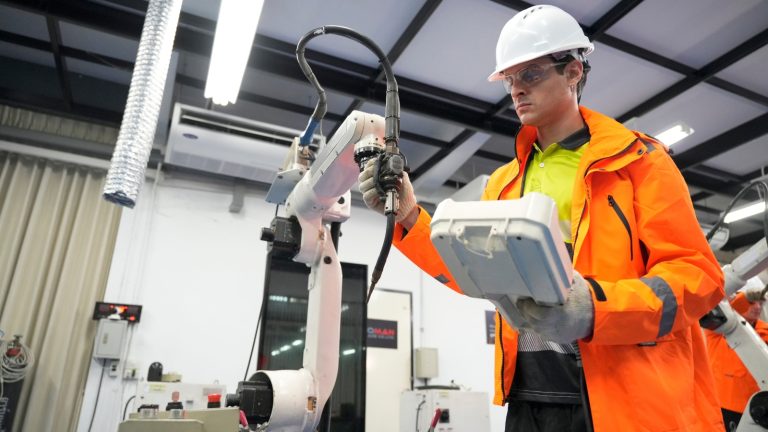
Optimised performance monitoring is essential because, with this strategy, manufacturing organisations are no longer reacting to oversight but are controlling performance.
The Business Impact of Effective Performance Tracking
Better performance tracking helps improve decision quality, operate more efficiently, and become more strategic. When they can see how initiatives stack up against goals, investments become sharper and risks more manageable.
Furthermore, clear tracking builds trust, strengthens accountability, and accelerates execution. As organisations mature, they achieve greater operational efficiency and less waste, while yielding better results.
This is where performance visibility also enables manufacturing teams to self-correct, ensuring that actions are constantly realigned with results.
How Poor Monitoring Leads to Missed Opportunities and Inefficiencies
The truth is that weak surveillance masks insight and delays action. Without real-time information, manufacturing companies cannot see the writing on the wall or seize new opportunities.
At this juncture, disjointed reporting leads to more manual work, slower decision cycles, and fosters reactive management. It also has poor visibility, which muddies substantial outcome measurement and understanding of what, in fact, goes into success.
These inefficiencies add up over the long term, sapping competitiveness and eroding trust in leadership decisions.
Real-Time Visibility as a Competitive Advantage
With real-time visibility, your manufacturing business can react faster than your competitors. Real-time insights provided to leaders enable them to identify deviations, course-correct, and take advantage of opportunities as they unfold.
This responsiveness speeds up execution time and reduces risk.
With up-to-date measurements from monitoring systems, you can move from reactive analysis to proactive control, gaining greater agility and confidence in your decisions as an organisation.
What Are Key Performance Indicators (KPIs) and Why Do They Matter?
KPIs translate strategy into tangible terms for execution and accountability. Let’s explore this occurrence.
Understanding KPIs as Measurable Business Metrics
Key performance indicators are measurable values used to assess the achievement of strategic and operational organisational goals. They direct attention to what is most important by connecting manufacturing activities and outcomes.
Good KPIs prioritise, allow you to measure objectively, and take the pain out of metric analysis across teams.
When the right measures are well defined and displayed, they establish a common language for success and are leveraged to drive disciplined execution across the organisation.
The Difference Between KPIs, Metrics, and Goals
Metrics, KPIs, and goals play different roles. This means that metrics are numbers that measure activities or outputs, categorised and compiled in reports and tables as KPIs (Key Performance Indicators).
In the meantime, business objectives are what KPIs measure (desired results). Mixing up these ingredients dilutes focus and responsibility.
At this point, we can easily refer to them as measurements because they are clearly distinct and serve a purpose in your manufacturing business. This transparency means your teams cannot waste time on vanity metrics and must focus on lead indicators of success.
How KPIs Drive Accountability and Strategic Focus
KPIs create visibility by explaining what success looks like and how it can be measured. They bolster accountability systems by specifying who owns what and by stipulating standards of performance.
This indicates that when KPIs are linked to strategic objectives, manufacturers know where their efforts fit into the bigger-picture success. This type of focus clarifies your vision, reduces uncertainty, and gives you a threshold for what to choose against.
Therefore, it is clear that KPI-led execution, over time, reinforces strategic discipline and performance consistency.
How to Select the Right KPIs for Your Organisation
Selecting the right KPIs demonstrates that measurements give shape to a strategy, rather than adding noise or confusion.
- Aligning KPIs With Strategic Business Objectives
There are measures that must be directly tied to manufacturing business objectives, not simply to operational actions. This alignment starts with translating strategic priorities into measurable results over which teams may have influence.
When signals reflect strategy, conversations about performance stay rooted in outcomes, not inputs, this integration facilitates strategic alignment between the teams and eliminates siloed reporting.
It is evident that manufacturing companies that closely link KPIs to strategy develop understanding, discipline in execution, and an ability to better assess initiatives, and that they are contributing in the long term.
- Balancing Leading and Lagging Indicators
A balanced KPI framework is a set of leading and lagging indicators that complement each other to make informed decisions. Leading indicators indicate future performance, while lagging indicators confirm results.
This is when relying too heavily on lagging data slows corrective action and reduces agility. By combining the two, you get more accurate performance tracking and proactive management of both.
Such an approach will help identify areas for early intervention, increase confidence in forecasting, and optimise resource prioritisation before the point of no return.
- Avoiding the Trap of Tracking Too Many Metrics
Monitoring too many metrics is distracting and derails focus. With all indicators to keep track of people, the organisation gets lost and loses sight of execution due to administrative overhead.
This engenders metric analysis paralysis and diminished accountability. This is why smarter businesses restrict KPIs to those that affect the bottom line.
When leaders prioritise relevance over volume, they give the gift of clarity and speedier decisions, which in turn bring a greater sense of ownership. Less is more when it comes to KPIs; they will be much stronger, and engagement will remain high if you focus on them.
- Reviewing and Refining KPIs Over Time
It is true that KPIs will change as strategies, markets, and operations shift.
Periodic review keeps indicators up to date and actionable. Refinement is used to remove outdated metrics and incorporate new knowledge from trend analysis or operational changes.
Real-time continuous performance improvement and ongoing feedback help ensure reality is reflected.
What Is the SMART Framework for Goal Setting?

The SMART approach offers a systematic way to set clear, measurable, and attainable goals.
Specific, Measurable, Achievable, Relevant, Time-Bound Goals
SMART goal-setting framework to make goals tangible and achieve them. Tangible objectives eliminate ambiguity, and parameters make it quantifiable.
Realistic, relevant goals balance ambition with capability, and timely targets foster a sense of urgency. Collectively, these components enable rigorous goal-tracking tools and reduce ambiguity in execution.
Teams can track progress more effectively during execution cycles.
Extending to SMARTER With Evaluate and Review Components
SMARTER expands the framework by adding the Evaluate and Review stages. These elements focus on reflection, learning, and responsiveness.
Continuous scrutiny keeps progress true to its ideals, and review allows trimming according to the performance yardstick. This work extends the feedback loop and supports adaptive execution.
This way, SMARTER turns static goal setting into a dynamic process that adapts goals if certain conditions change or performance insights update.
Implementing SMART Criteria for KPI Targets
Using SMART to inform KPI targets can lead to greater consistency and accountability. This is where clear goals create expectations and remove ambiguity .
Quantifiable benchmarks facilitate objective assessment, and time-specific targets help bolster execution discipline. This enables better progress monitoring and helps keep KPIs actionable rather than aspirational.
KPI targets aligned with SMART promote mutual understanding and strengthen ownership, enabling systematic performance reviews.
How to Build Effective Performance Monitoring Dashboards
Building effective performance monitoring dashboards includes designing intuitive visual dashboards, customising for different views, integrating and unifying multiple data sources, and avoiding common mistakes.
Designing Intuitive Visual Dashboards for Real-Time Insights
Real-time dashboard analytics empower decision-makers to detect problems at once and act with confidence. Good design aids data visualisation and protects users from spending time on what instead of why.
Plus, the use of intuitive dashboards lowers cognitive load and helps improve enterprise-wide decision-making speed.
Customising Dashboard Views for Different Stakeholder Roles
Role-based dashboards define visibility by responsibility, thereby increasing team productivity.
Such customisation increases adoption. Also, it ensures that monitoring systems align with real decision-making rather than just generic reporting.
Integrating Multiple Data Sources for Unified Monitoring
Unified dashboards present data from ERP, CRM, finance, and operational systems on a single, integrated dashboard. This helps to achieve a more consistent, integrated approach to reporting and move away from fragmented reporting.
And centralised visibility enables performance dashboards that reflect the enterprise as a whole rather than isolated silos.
Avoiding Common Dashboard Design Mistakes
Common dashboard mistakes include busy visuals, inconsistent metrics, and unclear thresholds. Such concerns erode trust and make the platform less usable. The rhythm of effective dashboards revolves around relevance, consistency, and interpretability.
Not over-indicating ensures clarity and provides real-time insights without distraction.
What Tools and Software Optimise Performance Tracking?
ERP systems, dedicated KPI tracking platforms, business intelligence tools, automation, continuous monitoring, and cloud-based tools optimise performance tracking.
ERP Systems With Integrated Performance Management Modules
ERP solutions with integrated performance modules have centralised measurement across operations. These are financial, operational, and strategic systems that enable integrated monitoring.
ERP system integration minimises separation and increases the consistency of performance measurement.
Dedicated KPI Tracking Platforms and Business Intelligence Tools
Specialised solutions cater only to KPI visibility, analytics, and reporting capabilities. Such KPI tracking systems also offer advanced analytics, drill-down tools,s and visualisations.
When used with business intelligence tools, they help drill into trends and drivers of performance.
Automation Features for Continuous Monitoring and Alerts
It eliminates manual data manipulation and ensures you remain in control of your data at all times. Automated alarms indicate to ‘stakeholders’ when thresholds are exceeded, facilitating a more rapid intervention.
It enhances automated reporting and helps ensure a timely response.
Cloud-Based vs. On-Premise Performance Systems
Cloud-based systems offer scalability, accessibility, and faster time to deployment, while on-premises systems let you retain control and customise.
The decision would be based on security, fit, and operational requirements. When done right, both can enable performance analytics.
How Does Automated Reporting Improve Goal Management?
Automated reporting improves goal management by eliminating manual data collection and compilation, scheduled reporting, and sending real-time alerts.
Eliminating Manual Data Collection and Compilation
Organisations increase the reliability and consistency of performance metric monitoring when they reduce manual intervention.
Automation also increases the faith in data sources. That way, leaders can manage goals and assess progress based on evidence rather than gut feel.
Scheduled Reporting for Consistent Performance Reviews
Performance is reviewed on a scheduled basis rather than retroactively, using standard reporting. Rigid schedules promote the rhythm and discipline of work and reinforce performance reviews at regular intervals.
This repeatability allows for trend comparison, identification of early issues, and intervention dialogue around results.
Real-Time Alerts for Performance Deviations and Anomalies
Real-time alerts for automated performance reporting focus on what matters most.
Rather than going through reports, leaders get clear signals to spur action. These live reminders lead to greater control, reactivity, and goal satisfaction.
How to Align Individual, Team, and Organisational Goals?
Goal alignment ensures every effort contributes directly to enterprise-wide success.
Cascading Objectives From Strategic to Operational Levels
Cascading goals put strategies into actionable priorities at every level. Long-term objectives are divided into departmental goals and individual accountabilities.
It is an approach that provides clarity and drives organisational strategic alignment. When cascading is done well, teams know where they are headed, with minimal duplication and accretion.
Ensuring Every Team Member Understands Their Contribution
Performance clarity improves engagement and ownership. Strong bonds between tasks and results boost team productivity and reinforce purpose.
With visibility into contributions, you can make better decisions and prioritise more effectively.
Linking Performance to Incentives and Recognition
Recognition programs that reinforce measurable outcomes drive consistent performance. When rewards are tied to overall contributions toward organisational goals, behaviours follow the strategy intuitively.
The same transparency also builds trust and fairness.
What Are the Best Practices for Regular Performance Reviews?
Establishing review cadences, conducting data-driven performance reviews, using feedback loops, and developing actionable plans are best practices for regular performance reviews.
- Establishing Review Cadences (Daily, Weekly, Monthly, Quarterly)
Scheduled review cadences keep performance at the forefront and actionable. Short-cycle reviews facilitate operational control, and longer ones are helpful for a strategic overview.
It is even cadence to keep progress in check and surprises at bay. A rhythm of regularly occurring time intervals hardwires accountability, endorses prioritisation, and engrains performance review into everyday work.
- Conducting Data-Driven Performance Discussions
With performance analytics, teams can rely on accurate data to understand why they are doing well or not.
An objective discussion promotes learning rather than finger-pointing. The result is better decisions at all levels because it reinforces confidence.
- Using Feedback Loops for Continuous Improvement
Feedback loops link understanding to action. The review results lead to changes, experimentation, and learning.
This process allows the performance management system to improve rather than sour.
- Turning Insights Into Actionable Improvement Plans
Insights do not count unless they are put into action. This phase is the link between analysis and execution, enabling responsibility.
Structured plans also enhance the measurement of outcomes by connecting the action to the result. Strong follow-through also ensures that performance discussions result in actual growth outcomes rather than static reports.
How to Overcome Common Performance Monitoring Challenges?
Addressing challenges ensures monitoring systems remain effective and trusted.
Managing Data Quality and Accuracy Issues
Poor data quality erodes confidence and decision-making. Consistent definitions, validation procedures, and governance enhance reliability.
This more accurate data fuels performance tracking to ensure insights reflect reality.
Addressing Metric Fatigue and Analysis Paralysis
Metric fatigue happens when teams are bombarded with too many signals whose significance is unclear.
This is where simplification restores focus and effectiveness. Focusing on critical metrics helps to tune performance by bringing the focus onto what really matters.
Ensuring User Adoption and Engagement With Monitoring Systems
Usability, relevance, and trust are dependencies for adoption. Engagement is led by training, role-based views, and leadership buy-in.
When decision-making systems are supportive, they become habitual in use. Robust adoption enhances accountability processes and provides the evidence-based scanning value beyond compliance.
Balancing Short-Term Results With Long-Term Strategy
An overemphasis on near-term results can be detrimental to the strategy. Balanced monitoring involves both short-term implementation and long-term effects.
This equilibrium allows sustainable expansion and efficient allocation of resources.
What Role Does AI and Predictive Analytics Play?

AI and Predictive Analytics play an important role in performance forecasting, trend detection, automated insights, anomaly identification, machine learning for optimised goal recommendations, and ethical considerations for performance monitoring.
AI-Powered Performance Forecasting and Trend Detection
AI studies past and present data to predict the future. Predictive models discover these patterns as they emerge and are used to make proactive decisions.
Prediction supports benchmarking and preparing the business for the change. Likewise, AI-powered intelligence works for better agility and planning certainty.
Automated Insights and Anomaly Identification
AI is always searching for patterns and abnormalities in data. Artificial intelligence brings machine learning and AI to bear on large data sets to scale responses, automated analysis cuts down on manual effort, reliance on domain experts,s and increases speed of response.
This enables real-time visibility and lets leaders operate by exception, not average.
Machine Learning for Optimised Goal Recommendations
Machine learning reviews past performance to suggest achievable goals. Adaptive advice may help people target smarter and with more feasible goals.
Learning models optimise goals on the basis of results, and execution quality gradually increases.
Ethical Considerations in AI-Driven Performance Monitoring
Ethical surveillance means that we can be transparent and fair while using data in a responsible way. Clear governance avoids bias.
Moral design increases trust in performance measurement systems and makes AI work for people instead of over them.
Industry-Specific Applications of Performance Monitoring
Performance monitoring is tailored to each industry and its key operational requirements.
Manufacturing and Operational Efficiency Tracking
Monitoring of production generally relates to both throughput, quality,y and cost control. Organised tracking for easy use and less wastage.
It also allows you to make adjustments more quickly and maintain quality across the output.
Sales and Marketing Performance Measurement
Funnel analytics measures conversion, pipeline health, and revenue contribution. Visibility helps forecast and measure performance more accurately.
That is how insight based on data makes the campaign more effective and revenue more predictable.
HR and Employee Performance Analytics
HR analytics monitors levels of engagement, productivity, and development results. Insight into this can enable fair assessment and workforce planning.
Accountability increases the productivity of your team and encourages the optimisation of skills.
Finance and Profitability Monitoring
Financial surveillance assesses courses of margin, cost containment, and profitability. Systematised monitoring strengthens measurement of results and informs strategic investment choices.
Step-by-Step Framework to Implement Optimised Performance Monitoring

From defining strategic objectives, selecting aligned KPIs, opting for the right tools, to designing dashboards and training teams, it crafts a structured implementation that ensures sustainability and adoption.
- Step 1: Define Strategic Objectives
Clear goals give a sense of purpose and direction. Strategic clarity means you are managing for intent, not activity, in your work.
Likewise, objectives anchor measurement and decision-making.
- Step 2: Select Aligned KPIs
Aligned KPIs are strategy and execution priorities. Selection means that measurement supports outcomes rather than noise. This helps to make the indicators more relevant.
- Step 3: Choose the Right Tools
The choice of tool also impacts scalability and usability. The best KPI software drives visibility, automation , and insight.
- Step 4: Design Dashboards and Reporting Structures
Dashboards translate data into action. Clean design enables performance dashboards that drive decision-making rather than confuse users.
- Step 5: Train Teams and Ensure Adoption
Training builds confidence and consistency. Adoption helps ensure systems are responsive to real decisions and helps augment accountability systems.
- Step 6: Review, Refine, and Continuously Improve
Ongoing refinement ensures relevance. Continuous evaluation supports continuous performance improvement and long-term effectiveness.
Cerexio MES for Performance Monitoring and Goal Management in Manufacturing
Cerexio MES is a robust Manufacturing Execution System powered by Industry 4.0 digital capabilities. Our software supports performance monitoring and goal management in manufacturing by delivering real-time visibility into production, quality, and equipment performance.
Cerexio MES tracks shop-floor data against defined targets, enabling managers to compare actual output with planned goals instantly. By integrating KPIs, alerts, and analytics, Cerexio MES helps manufacturers identify bottlenecks, improve productivity, ensure accountability, and align daily operations with strategic manufacturing objectives for continuous improvement.
Call for a free demo today.
Cerexio-Where You Get Optimal Manufacturing Performance
The Wrap Up: Turning Monitoring Into Measurable Growth
Since you have read the whole article, you may now have a good understanding of how insight becomes a long-term performance advantage with effective measurement.
From Data Collection to Strategic Action
As we discussed, monitoring is successful when intelligence motivates action. Structured systems are drivers that transform data into meaningful decisions. This evolution improves execution and optimises monitoring performance goal management maturity.
Building a Performance-Driven Culture
Culture defines consistency. Clear monitoring promotes ownership and trust. With time, performance culture extends results beyond tools.
Future-Proofing Your Organisation With Intelligent Monitoring
Intelligent systems ensure adaptability for resilience, predictive foresight, and automation help. Businesses with efficient monitoring and performance goal management stay afloat in uncertain futures. The real question is, ‘aAreyou ready for that?
FAQs About Performance Monitoring and Goal Management
Performance monitoring and goal management are the structured processes of tracking results against defined objectives. It helps organisations measure progress, identify gaps, improve accountability, and ensure daily activities remain aligned with strategic priorities and desired outcomes.
Performance monitoring is critical because it provides visibility into whether strategies are working. Without accurate tracking, organisations rely on assumptions. Effective monitoring supports informed decisions, improves efficiency, reduces risks, and ensures resources are focused on achieving measurable business results.
KPIs translate goals into measurable indicators that guide execution. They clarify expectations, enable objective evaluation, and reinforce accountability. When aligned with strategy, KPIs help teams prioritise actions, monitor progress consistently, and stay focused on outcomes that matter most.
Dashboards centralise performance data into visual, easy-to-understand views. They help stakeholders monitor trends, identify deviations, and act quickly. Well-designed dashboards improve decision speed, reduce reporting effort, and ensure performance insights are accessible across all organisational levels.
Automation improves performance monitoring by eliminating manual data handling and ensuring consistent reporting. Automated alerts, scheduled reports, and real-time updates allow faster response to issues, improve data accuracy, and make performance reviews more objective, timely, and action-oriented.