
One economic figure can make or break multibillion-dollar investment decisions! That figure is the Purchasing Managers Index (PMI), which is a closely watched gauge of business conditions across industries.
Through monitoring new orders, production, employment, supplier deliveries and inventories, the PMI isolates emerging trends well in advance of the release of subsequent government statistics such as GDP. It offers investors, policy makers and managers a series of tools to anticipate economic growth or contraction. And a knowledge of the PMI is useful to companies that wish to fine-tune their supply chains, investors who want simply to tweak their portfolios, and analysts forecasting industrial growth. This means not paying attention to the PMI in today’s fast-paced economy could cost you big.
In this article, we cover everything about the ‘Purchasing Managers Index’, its benefits, who uses it, etc.
We will explore
- What Is the Purchasing Managers Index (PMI)?
- How the Purchasing Managers Index (PMI) Function
- Who Needs the PMI?
- What is the Global PMI?
- How Does PMI Information Influence Pricing?
- Is High PMI Reading Good for Your Business?
- Benefits of the Purchasing Managers Index (PMI)
- FAQ about Purchasing Managers Index (PMI)
What Is the Purchasing Managers Index (PMI)?
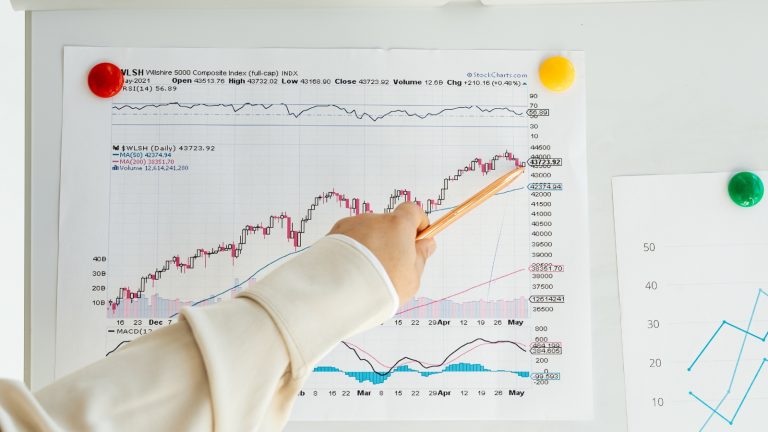
The manufacturing sector’s monthly Purchasing Managers Index (PMI) was designed by the ISM (Institute for Supply Management) in 1948s, which is a non-profit organisation for supply management. ISM also counts the service sector and hospital PMI on a monthly basis.
It is a diffusion index that gets summary information on expanding, constant and contracting market conditions as viewed by purchasing managers.
Key Takeaways
- The Purchasing Managers Index is a monthly survey of supply chain managers of various industries, measuring upstream and downstream activity.
- The Purchasing Managers’ Index ranges between 0 to 100.
- The number above 50 indicates expansion, while below 50 indicates contraction and 50 shows neutral.
How the Purchasing Managers Index (PMI) Function

The manufacturing PMI splits its five major indexes equally between new orders, production, employment, supplier deliveries, and inventories.
The ISM services PMI includes data processed from non-manufacturing sectors like transportation, insurance, construction, and education. Also, the PMI tells your company what the business environment looks like and where the economy is heading.
PMIs arrive at precise numbers based on surveys that are in the ISM Report on Business. Based on an aggregation of surveys sent to senior executives at hundreds of companies in multiple industries and weighted by each industry’s contribution to the U.S. gross domestic product (GDP), it calculates each PMI.
The surveys consist of asking if business conditions are changing, etc. Even better is if they are improving or deteriorating.
The headline PMI ranges from 0 to 100. A PMI above 50 indicates an expansion compared to the previous month. Any PMI reading below 50 signals a contraction, while a PMI score reading of 50 shows a neutral. The farther from 50, the more change involved.
Who Needs the PMI?

Corporate Managers
If you are a corporate manager, you can certainly employ the monthly PMI numbers to drive major decisions regarding future business.
Let’s take an automobile manufacturer, for instance. He can take production decisions based on new orders that induce purchasing decisions regarding auto parts and raw materials.
How much work the manufacturer needs to complete to fill new orders, and to maintain a small amount of inventory on hand at the end of the month, is also driven by existing inventory balances.
Suppliers
A parts supplier or manufacturer can calculate future demand based on the PMI. It must gauge the balance of how much inventory its customers have on hand, which drives the amount of output its customers generate.
Investors
What we are trying to imply is that the PMI is a business cycle indicator for various economic conditions.
The PMI trend direction might indicate changes in the short-term forecast, such as the GDP, industrial production and employment through economic activity and production estimates.
Your manufacturing company can also employ PMI when planning its annual budget, controlling the staffing count and even project cash flow forecast.
What is the Global PMI?
The Global PMI is an economic index calculated by S&P Global based on a survey of more than 28,000 companies worldwide, collectively representing 90% of global GDP.
How Does PMI Information Influence Pricing?

PMI data on supply and demand could change expectations for what prices suppliers can charge. An increase in new orders may compel a manufacturer to raise prices to customers or accept a price hike from a supplier.
If new orders fall, the manufacturer may reduce its prices and demand a reduced price for the parts it buys.
Is High PMI Reading Good for Your Business?
Purchasing Managers’ Index potentially ranges between 0 to 100. If the index reading comes above 50, this translates to an economic expansion. A reading in a value less than 50 signifies economic contraction, with numbers closer to 0 indicative of a higher level of contraction. A reading of 50 indicates no change to the environment.
Benefits of the Purchasing Managers Index (PMI)
Based on our years of experience, we would like to offer you a glimpse of what PMI can do for your business in the following section.
Economic Forecasting
As a forward indicator of economic activity, the PMI allows your manufacturing businesses and your investors to predict expansions or contractions.
It signposts changes in manufacturing, services, and wider economic conditions before official GDP figures are known, allowing for timely decision-making.
Supply Chain Optimisation
Using PMI data, your enterprise in the manufacturing domain can schedule production and control inventory in an efficient manner.
This means your business can track new orders, supplier deliveries, and inventories to regulate procurement, decrease bottlenecks, and hold the necessary stock to meet expected demand.
Investment Decision-Making
Did you know that PMI reads are adopted by many investors around the globe as a guide in their portfolio plans?
The interesting fact is that an increasing PMI frequently indicates growth, whereas a declining PMI points to a contraction. It guides your investors in asset allocation, expectations for the general market, and exposure to manufacturing, services, or the overall global market.
Pricing and Cost Management
PMI affects demand and supply dynamics that have an influence on pricing. In the case of expected changes in the level of received orders, your manufacturing company can adapt prices for products or negotiate terms with suppliers, etc.
That way, you can maintain the profitability and competitive advantage in turbulent market conditions.
Policy and Strategic Planning
PMI insights you receive will serve as information to help your business and governments in planning. PMI trends are beneficial for companies to plan budgets, resource allocations, and make longer-term investment decisions.
In the meantime, policymakers and economists can use them to assess economic health, locate risks and target strategies for sustainable growth and stability.
The PMI provides insight to business decision makers, market analysts, and investors.
How CerexioWMS Can Help with the Accurate Calculation of Purchasing Managers Index
Real-Time Inventory Tracking with IIoT
CerexioWMS is a comprehensive Advanced Warehouse Management System designed for the manufacturing industry. Our software solution is enriched with Industry 4.0 capabilities such as Industrial Internet of Things (IIoT) sensors to see raw materials and end products in real-time. Timely inventory information enables the accurate reporting of the supplier deliveries as well as the production capacity, which are two core parts of the PMI estimates, and also reduces stockouts, overstocking and supply chain vulnerability.
Predictive Analytics for Demand Forecasting
CerexioWMS utilises predictive analytics and AI to track precedent and real-time production data to predict demand.
This indicates forecasts of new orders and inventory needs accurately, allowing manufacturing to operate on true supply and demand conditions; this subsequently improves the logistics between supply and demand, thereby enhancing the accuracy of PMI reports.
Automation and Smart Decision-Making
Cerexio combines robotics, AGV (automated guided vehicle), and machine learning algorithms to enhance the workflow in warehouses. With automated order processing, automated production scheduling, and automated smart replenishment for operational efficiency, the chances of human errors will greatly decline, and accurate data for PMI is delivered, thus positioning the company as an Industry 4.0-savvy leader.
Call for a free demo today.
Cerexio-For a Better Tomorrow in Manufacturing.
FAQ about Purchasing Managers Index (PMI)
The PMI is an indication of the health of the manufacturing and service sectors, published each month. It is meant to provide a sense of whether industries are expanding, contracting or staying the same based on trends in new orders, production, employment and supplier deliveries and inventories.
You can calculate PMI by surveying purchasing managers. Responses on new orders, production, employment, etc., from the survey are weighted and combined into a single index.
The PMI is important for investors because leading investors watch the PMI as a major indicator of potential growth or contraction. Increasing PMI values indicate economic growth and can impact markets, investments, portfolio management decisions, interest rates and expectations of future movements in GDP. A decreasing PMI points to a slowing economy or contraction and can affect investment decisions.
A reading above 50 indicates economic expansion, signalling strong demand, production and employment. A reading below 50 indicates contraction, while a reading at 50 signals no change. The further away from 50, the more solid the expansion or contraction is in place.
PMI can impact companies in various ways. Companies watch PMIs to tweak output, inventory and staffing levels. A higher PMI implies more output and hiring, whereas a lower number might be indicative of cost containment or inventory reduction. It aids managers in the efficient allocation of resources according to market demand.