
Manufacturing is entering a transformative era. While Industry 4.0 introduced digital technologies to the factory floor, the next phase of smart manufacturing is pushing the boundaries of automation, intelligence, and connectivity. Factories are no longer just automated production lines; they are evolving into data-driven ecosystems capable of learning, adapting, and optimising operations in real time.
At the center of this transformation is the rise of the smart factory, where machines, systems, and workers collaborate through technologies such as Artificial Intelligence (AI), Industrial Internet of Things (IIoT), cloud computing, and real-time analytics. These innovations allow manufacturers to make faster decisions, improve operational performance, and achieve new levels of manufacturing efficiency.
Another major shift shaping the future is the emergence of connected manufacturing ecosystems. Production equipment, supply chains, logistics platforms, and enterprise systems are becoming deeply integrated. This connectivity allows organisations to track equipment performance, production schedules, and supply chain conditions across global facilities using real-time data.
As we approach 2026, manufacturers are expected to adopt technologies that move beyond traditional automation toward autonomous, intelligent, and sustainable production systems. From AI-powered predictive maintenance to digital twin simulations and human-robot collaboration, the next generation of manufacturing will fundamentally change how products are designed, produced, and delivered.
We will explore
- What Is Smart Manufacturing and Why It Matters for the Future
- Smart Manufacturing Market Statistics
- Case Study Example: Smart Manufacturing in Action
- ROI of Smart Manufacturing
- Expert Commentary: Industry Perspective
- Industry Benchmarks for Smart Manufacturing Performance
- Key Technologies Powering the Future of Smart Manufacturing
- 10 Smart Manufacturing Trends That Will Shape 2026
- Smart Manufacturing Architecture: How the Smart Factory Ecosystem Works
- The Future Manufacturing Workforce in the Smart Factory Era
- Smart Manufacturing Implementation Roadmap
- Challenges of Smart Manufacturing Adoption
- FAQs About Smart Manufacturing Trends
What Is Smart Manufacturing and Why It Matters for the Future
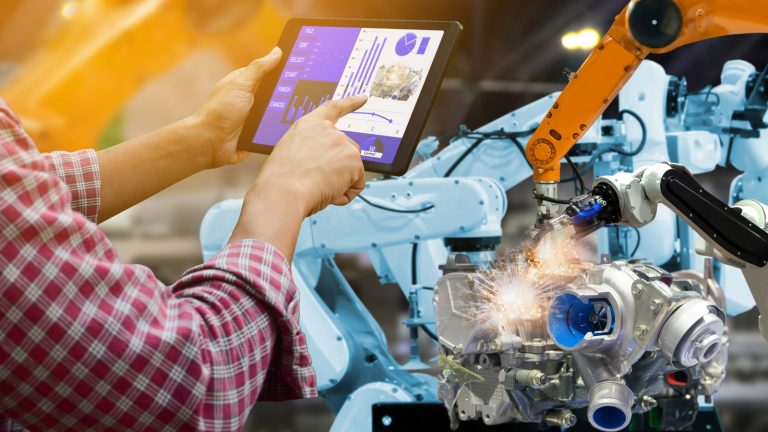
Smart manufacturing integrates advanced digital technologies, such as AI, Industrial IoT, robotics, and real-time data analytics, into production systems to enable factories to monitor operations, optimise processes, and rapidly respond to changing demand, resulting in more efficient, flexible, and sustainable manufacturing.
Key Takeaways
- Smart manufacturing integrates technologies like AI, IIoT, and real-time analytics to create intelligent, connected production systems.
- Emerging trends such as predictive maintenance, digital twins, and autonomous manufacturing are shaping the future of factories by 2026.
- Smart factory technologies improve manufacturing efficiency, product quality, and supply chain visibility through data-driven decision-making.
- Organisations adopting smart manufacturing gain competitive advantages through increased productivity, cost reduction, and more sustainable operations.
Smart Manufacturing Definition in the Industry 4.0 Era
Smart manufacturing refers to the integration of advanced digital technologies with traditional production processes to create intelligent and connected manufacturing environments.
Within the Industry 4.0 framework, smart manufacturing combines physical equipment with digital intelligence to enhance productivity, flexibility, and operational efficiency.
A key component of smart manufacturing is the use of cyber-physical systems, in which physical machines are connected to digital networks to collect and analyse production data. These systems enable factories to monitor equipment performance continuously and optimise manufacturing processes in real time.
You will notice that modern smart factories rely heavily on connected machines and smart sensors embedded throughout production systems. These sensors capture data on variables such as temperature, vibration, machine speed, and energy consumption.
What does happen next? The collected data is then analysed to identify inefficiencies and improve production workflows.
Ultimately, smart manufacturing represents a significant step in the digital transformation of factories, allowing organisations to transition from traditional manufacturing models to intelligent and adaptive production systems.
How Smart Factories Use Real-Time Data and Automation
One of the defining characteristics of a smart factory is its ability to capture and analyse real-time data from across the production environment. In this context, sensors, connected devices, and software platforms continuously monitor production processes and equipment performance.
Through production monitoring systems, manufacturers gain instant insights into machine performance, inventory levels, and product quality. This real-time visibility allows factory managers to identify operational bottlenecks and respond quickly to disruptions.
Moreover, the availability of factory floor data also enables automated workflow management. Production systems can automatically adjust operating parameters, schedule maintenance tasks, and optimise resource allocation based on real-time conditions.
For example, if sensors detect abnormal vibration patterns in machinery, the system can trigger predictive maintenance alerts before equipment failure occurs.
This ability to respond dynamically to production conditions significantly improves operational reliability and efficiency.
From Traditional Automation to Intelligent Manufacturing
Did you notice that traditional industrial automation has long been used to improve efficiency in manufacturing environments? This is where automated machines can perform repetitive tasks such as assembly, welding, and packaging with high speed and precision.
However, automation alone does not create intelligent systems.
The next evolution is intelligent manufacturing, where machines and production systems use artificial intelligence and machine learning to analyse operational data and make decisions autonomously.
These intelligent systems enable self-optimising production processes, where machines continuously adjust their operations to maintain optimal performance. Instead of simply following programmed instructions, intelligent manufacturing systems learn from historical data and adapt to changing production conditions.
This shift toward intelligent manufacturing is driving the emergence of autonomous manufacturing ecosystems. This is where machines, software systems, and human workers collaborate seamlessly to optimise factory performance.
Smart Manufacturing Market Statistics
If you carefully notice, you can witness that the global smart manufacturing market is growing rapidly as manufacturers invest in digital transformation and advanced production technologies.
According to McKinsey & Company, manufacturers implementing smart factory technologies can increase productivity by up to 30% while reducing machine downtime by 50% through predictive maintenance and automation.
Industry analysts also expect massive market expansion. A Deloitte Industry 4.0 report estimates that smart manufacturing solutions could contribute more than $3.7 trillion to global manufacturing output by 2025, driven by efficiency gains and data-driven decision-making.
Meanwhile, adoption rates are accelerating worldwide. The World Economic Forum’s Global Lighthouse Network, which highlights leading smart factories, reports that companies implementing advanced digital technologies have achieved productivity improvements of 20–30% and energy reductions of up to 25% in modern manufacturing environments.
What is more, standards organisations such as NIST (National Institute of Standards and Technology) emphasise that smart manufacturing systems enable factories to respond dynamically to changes in demand, supply chain conditions, and production performance.
As you can see, these statistics highlight how the next generation of smart factories is already transforming industrial productivity.
Case Study Example: Smart Manufacturing in Action
A practical example of smart manufacturing is the automotive sector. A major global automaker implemented AI-driven predictive maintenance and digital twin simulations across its production lines to improve equipment reliability and operational efficiency.
Using data collected from thousands of smart sensors and connected machines, the company developed digital models of critical production equipment. These digital twins allowed engineers to simulate equipment performance under different conditions and predict potential failures before they occurred.
As a result, the manufacturer reduced unplanned equipment downtime by nearly 40% while improving overall equipment effectiveness (OEE) across multiple production facilities. The company also used machine learning algorithms to optimise assembly line scheduling and production planning.
Industry experts at Deloitte’s Smart Factory Initiative note that such implementations demonstrate how integrating IIoT platforms, advanced analytics, and AI technologies can dramatically improve factory performance. The result is not only greater efficiency but also improved product quality and reduced operational costs.
ROI of Smart Manufacturing
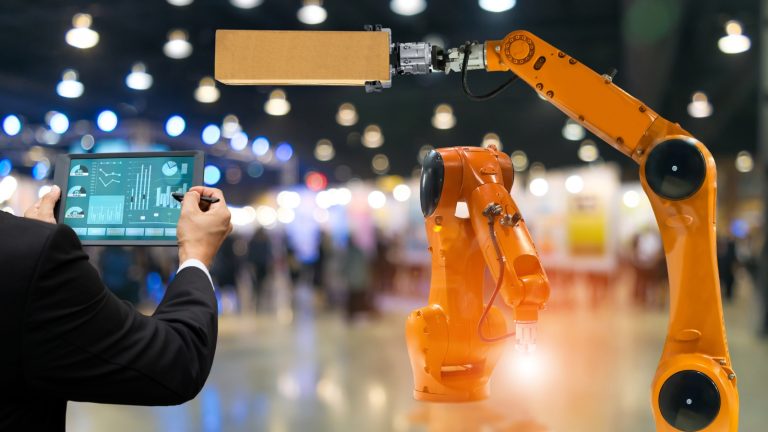
Investing in smart manufacturing technologies can deliver significant financial and operational returns. According to a McKinsey Industry 4.0 analysis, manufacturers that adopt advanced digital technologies such as predictive analytics, robotics, and IIoT platforms often achieve productivity gains between 15% and 30% within the first few years of implementation.
Operational savings come from several sources. Predictive maintenance reduces unexpected equipment failures, while real-time monitoring systems optimise energy usage and resource allocation. Additionally, automation technologies reduce manual labour requirements and minimise costly production errors.
A World Economic Forum report on advanced manufacturing highlights that smart factories can reduce operational costs by up to 20% while improving product quality and supply chain responsiveness.
For organisations facing increasing global competition, the return on investment from smart manufacturing technologies can be a key driver of long-term competitiveness and innovation.
Expert Commentary: Industry Perspective
Industry leaders widely agree that smart manufacturing is becoming essential for competitive advantage.
According to analysts, manufacturers that successfully integrate AI, IIoT, and advanced analytics into their production systems are significantly better positioned to adapt to market disruptions and customer demand changes.
Experts from Deloitte’s manufacturing practice emphasise that the future factory will be built around data-driven decision-making and connected production ecosystems. Rather than operating as isolated production units, factories will function as integrated digital networks that link equipment, workers, and supply chains in real time.
Similarly, research from the World Economic Forum highlights that the most advanced manufacturing facilities are already using digital technologies to achieve greater agility, sustainability, and operational transparency. These insights reinforce the growing consensus that smart manufacturing will define the next era of industrial innovation.
Industry Benchmarks for Smart Manufacturing Performance
Organisations implementing smart manufacturing technologies often measure performance improvements using specific industry benchmarks. These metrics help companies evaluate the effectiveness of their digital transformation initiatives.
Common benchmarks reported in industry studies include:
- 20–30% productivity improvements from advanced automation and AI-driven analytics
- 30–50% reduction in equipment downtime through predictive maintenance systems
- 10–25% reduction in energy consumption through smart energy management technologies
- 15–20% improvement in product quality due to AI-powered defect detection systems
These benchmarks demonstrate the measurable impact that smart manufacturing can deliver across operational efficiency, cost reduction, and sustainability goals.
The truth is that companies that successfully implement connected manufacturing technologies often achieve significant improvements in both production performance and business profitability.
Key Technologies Powering the Future of Smart Manufacturing

Key innovations include Industrial IoT, artificial intelligence, cloud computing, edge computing, digital twins, and collaborative robotics.
Industrial IoT (IIoT) and Connected Devices
The Industrial Internet of Things (IIoT) forms the foundation of modern smart manufacturing systems. IIoT connects machines, devices, and production equipment through digital networks that allow them to exchange operational data.
Through networked sensors, factories can monitor machine performance, track equipment health, and identify potential production issues in real time. This connectivity improves production visibility and enables manufacturers to manage operations more effectively.
AI and Machine Learning in Manufacturing
Artificial Intelligence (AI) and machine learning technologies play a crucial role in analysing manufacturing data and optimising production systems. AI algorithms can detect patterns in operational data and identify opportunities for process optimisation.
These systems enable predictive analytics, allowing manufacturers to anticipate equipment failures, reduce downtime, and improve production quality.
Cloud and Edge Computing
Cloud computing in manufacturing allows companies to store and analyse large volumes of production data across global facilities. Cloud platforms support collaborative workflows and supply chain coordination.
At the same time, edge computing processes data directly on the factory floor, enabling faster decision-making and real-time monitoring of production systems.
Digital Twins and Simulation
A digital twin is a virtual model of a physical machine or production system. Digital twins allow manufacturers to simulate equipment performance and test production scenarios before implementing changes in real-world environments.
These simulations help identify operational inefficiencies and improve asset performance and production optimisation.
Robotics, Cobots, and Advanced Automation
Modern manufacturing increasingly relies on collaborative robots (cobots) that work alongside human workers. These robots assist with tasks such as assembly, inspection, and material handling.
Cobots improve shop-floor intelligence and allow manufacturers to create more flexible and agile production systems.
10 Smart Manufacturing Trends That Will Shape 2026
Smart manufacturing emerging trends, such as AI-driven automation, predictive maintenance, digital twin ecosystems, sustainable manufacturing, and connected supply chains, are transforming how factories operate.
- AI-Driven Autonomous Manufacturing
Production systems will increasingly use AI to create self-optimising production lines capable of adjusting workflows automatically.
- Hyperconnected Smart Factories
Future factories will operate as fully connected ecosystems, where machines continuously share data to improve production coordination.
- Predictive Maintenance Becoming Standard
Predictive maintenance technologies will monitor equipment health and condition monitoring, reducing unexpected downtime.
- Digital Twin Ecosystems
Manufacturers will use digital twin platforms to simulate entire factory operations and optimise asset lifecycle management.
- Edge Computing for Instant Intelligence
Edge computing will enable real-time data processing directly on the factory floor, allowing faster decision-making.
- Sustainable Manufacturing
Manufacturers will implement technologies that support waste reduction, energy management, and carbon tracking.
- AI-Powered Quality Control
Computer vision and AI systems will automatically detect defects and improve product quality.
- Supply Chain Optimisation
Integrated data platforms will improve supply chain visibility and inventory tracking.
- Mass Customisation
Manufacturers will increasingly deliver product personalisation through flexible manufacturing systems.
- Human–Robot Collaboration
Future factories will combine human creativity with robotic precision through collaborative robotics systems.
Smart Manufacturing Architecture: How the Smart Factory Ecosystem Works
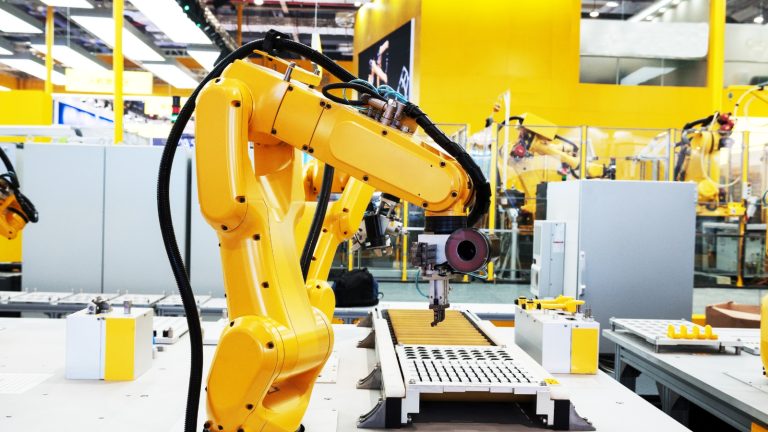
Smart manufacturing architecture typically includes data collection through sensors, IIoT connectivity, AI-driven analytics, and enterprise applications such as ERP and manufacturing execution systems that support real-time production management.
Data Collection Layer: Smart Sensors and Connected Machines
At the foundation of smart manufacturing systems lies the data collection layer, where machines, sensors, and devices gather operational information from the factory floor. Smart sensors monitor variables such as temperature, vibration, energy consumption, and machine performance.
These connected devices continuously transmit data to analytics platforms, enabling manufacturers to monitor production processes in real time.
Connectivity Layer: Industrial IoT Networks
The next layer consists of Industrial IoT (IIoT) networks that connect machines, devices, and production systems.
These networks enable machines to communicate with each other and share operational data across the factory ecosystem. This connectivity creates production visibility across manufacturing facilities, supply chains, and logistics operations.
Intelligence Layer: AI and Manufacturing Analytics
At the intelligence layer, AI-powered analytics platforms process the massive volumes of data generated by smart factories.
Machine learning algorithms analyse patterns in equipment performance, production efficiency, and product quality.
This enables predictive maintenance, automated decision-making, and continuous process optimisation.
Application Layer: ERP and Manufacturing Execution Systems
The top layer of the smart manufacturing architecture integrates enterprise platforms such as ERP for manufacturing and manufacturing execution systems (MES).
These platforms translate factory data into actionable insights that support production planning, inventory management, and supply chain optimisation.
The Future Manufacturing Workforce in the Smart Factory Era
Smart manufacturing is not replacing workers, yet it is transforming their roles. As factories adopt advanced automation and AI technologies, the workforce must evolve alongside these systems.
Instead of performing repetitive manual tasks, workers will increasingly focus on data-driven decision-making, system supervision, and advanced technical operations. Engineers and technicians will manage AI systems, monitor production analytics, and optimise manufacturing processes using digital tools.
According to a World Economic Forum manufacturing report, nearly 50% of factory workers will require new digital skills by 2030 as automation and AI technologies expand across industrial environments.
Future manufacturing roles will include:
- AI production system specialists
- Robotics maintenance engineers
- Industrial data analysts
- Digital twin simulation engineers
This shift toward human-machine collaboration highlights the importance of workforce training and continuous skill development as part of smart manufacturing strategies.
Smart Manufacturing Implementation Roadmap
Implementing smart manufacturing successfully requires a structured strategy. Organisations that approach digital transformation in phases often achieve the best results.
Step 1: Assess Current Manufacturing Infrastructure
Manufacturers must first evaluate their existing production systems, data infrastructure, and automation capabilities. This assessment helps identify gaps that digital technologies can address.
Step 2: Deploy Smart Sensors and Data Platforms
The next step involves installing smart sensors and connecting equipment to IIoT networks. These technologies provide the real-time data foundation required for advanced analytics and automation.
Step 3: Integrate AI and Predictive Analytics
Once operational data is available, manufacturers can implement AI-driven analytics platforms that enable predictive maintenance, quality monitoring, and production optimisation.
Step 4: Implement Digital Twin and Automation Systems
Digital twins allow manufacturers to simulate production processes and test improvements before implementing them in the physical factory.
Step 5: Scale Smart Manufacturing Across Operations
After successful pilot programmes, companies can scale smart manufacturing technologies across facilities and integrate them with supply chain operations.
Challenges of Smart Manufacturing Adoption
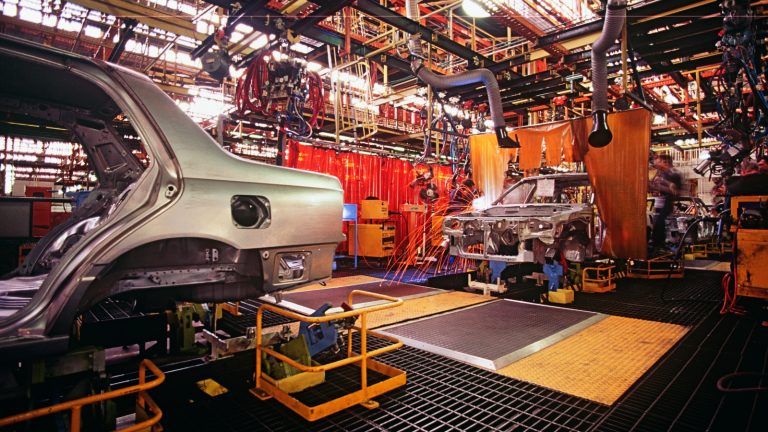
Manufacturers often face issues such as integrating legacy systems, ensuring cybersecurity in connected factories, managing large volumes of data, and developing the workforce skills required to operate advanced digital manufacturing technologies.
- Cybersecurity Risks
Connected manufacturing environments increase exposure to cyber threats.
- Integration Challenges
Legacy systems may be difficult to integrate with modern digital platforms.
- Data Governance
Manufacturers must ensure proper data security and regulatory compliance.
How Cerexio MES Enables Smart Manufacturing Adoption
Cerexio MES supports smart manufacturing by connecting production systems, machines, and operational data into a unified digital platform. Our software platform provides real-time production monitoring, workflow automation, and advanced analytics that help manufacturers optimise processes and improve decision-making.
By integrating with ERP systems and IoT-enabled equipment, Cerexio MES enhances production visibility, quality control, and resource utilisation.
This enables manufacturing organisations to accelerate digital transformation, reduce downtime, and build more agile, data-driven smart factory operations in the modern digital era.
Call for a free demo.
Cerexio-Building A Smarter Future.
The Smart Manufacturing Revolution Ahead
The future of smart manufacturing will be defined by highly connected, intelligent production ecosystems. Technologies such as AI, IIoT, and digital twins are transforming traditional factories into autonomous and adaptive production environments.
Companies that embrace these innovations early will gain significant advantages in productivity, efficiency, and sustainability. As the next generation of smart factories emerges, manufacturing will become more agile, resilient, and capable of meeting the demands of a rapidly changing global economy.
FAQs About Smart Manufacturing Trends
The future of smart manufacturing lies in highly connected factories that integrate AI, Industrial IoT (IIoT), digital twins, and real-time data analytics. These technologies enable automated decision-making, predictive maintenance, and adaptive production systems that improve efficiency, productivity, and supply chain responsiveness.
Artificial intelligence will transform manufacturing by enabling predictive maintenance, automated quality control, and real-time production optimisation. AI systems will analyse factory data, detect defects, predict equipment failures, and support autonomous manufacturing processes with minimal human intervention.
Smart factories are powered by technologies such as Industrial IoT (IIoT), artificial intelligence, robotics, cloud computing, edge computing, and digital twin simulations. These systems collect and analyse real-time production data to improve operational efficiency, product quality, and manufacturing flexibility.
Industry 4.0 refers to the broader digital transformation of industrial production using technologies like AI, IoT, and automation. Smart manufacturing is a core component of Industry 4.0 that focuses specifically on creating intelligent, connected, and data-driven manufacturing systems.
The biggest smart manufacturing trends include AI-driven automation, predictive maintenance, digital twin simulations, sustainable manufacturing technologies, and human–robot collaboration. These innovations enable factories to become more autonomous, efficient, and adaptable to changing market demands.