
As cars and laptops become more sophisticated, the majority of goods that consumers rely on daily are not the output of a single design firm and factory. The truth is that many of those we rely on are built through a supply chain that stockpiles, globalises, and spreads out factories. Instead, they are the product of an extensive industrial division of labour. What is an ‘Original Equipment Manufacturer ’? As supply chains have broadened and brands have privileged closer partnerships with specialised partners, this question has become more pertinent.
An original equipment manufacturer is an unseen contributor, providing some of the essential elements that drive finished goods into the world.
For business owners, buyers, and beginners navigating modern manufacturing, understanding how OEMs work, how they differ from aftermarket and ODM models, and why they matter is essential. That is what we cover in this article.
We will explore
- What Is an Original Equipment Manufacturer?
- How the OEM Business Model Works
- OEM in Manufacturing: Where They Fit in the Supply Chain
- OEM Products and OEM Parts Explained
- OEM vs Aftermarket: What is the Difference?
- OEM Examples Across Major Industries
- Why OEMs Matter in the Modern Economy
- Advantages and Limitations of OEM Products
- FAQs About OEMs
What Is an Original Equipment Manufacturer?
Knowing what an OEM is lays the groundwork for contemporary manufacturing knowledge. In this section, we talk about the fundamental concept of what original equipment manufacturers are, as well as their definition, significance, and relevance, for easy beginners’ understanding of how OEMs vary from other production or supply patterns.
Key Takeaways
- Original Equipment Manufacturers (OEMs) are key players in modern manufacturing and provide precision components across large industrial ecosystems.
- OEMs significantly contrast aftermarket and ODM models in ownership of design, quality control over production, and supply chain grade responsibility.
- Comprehending OEM business models, parts, and industry use cases allows businesses to make better-informed sourcing and replacement decisions.
OEM Meaning Explained in Simple Terms
OEM refers to a company whose products are used as components in another company’s products. Rather than selling to consumers directly, B2B manufacturing of specialised products can help expand a brand’s market reach.
They come with specific technical requirements; these parts are intended to ensure compatibility and reliability. Focusing on individual components rather than end products, OEMs enable efficiency, scale, and continuity across markets while never going truly ‘direct’ with the end user.
What Does OEM Mean in Today’s Business World?
In modern times, you cannot restrict the definition of an Original Equipment Manufacturer (OEM) to factories. Today, OEMs play a critical role in the broader manufacturing ecosystem, driving innovation, moving faster, and reaching more of the world than ever before.
While corporations continue to outsource non-core activities at an increasing rate, OEMs enable brands to focus on design, marketing, and customer experience.
This transformation has made relationships with OEMs more strategic, not just as suppliers but as long-term partners in competitive sectors.
How the OEM Business Model Works
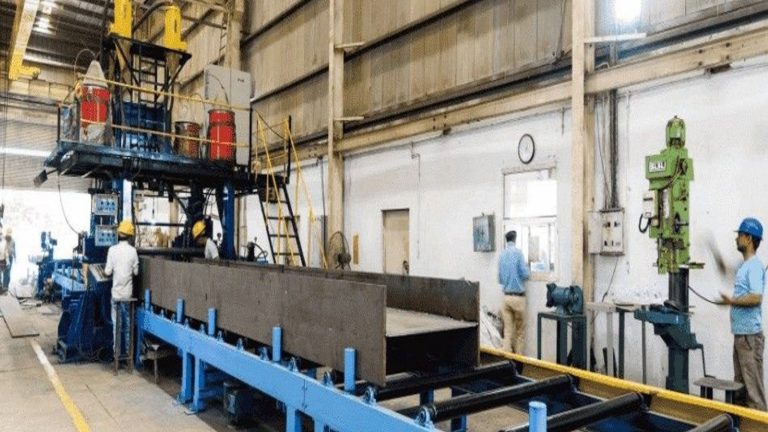
The key to the OEM business model is specialisation, efficiency, and cooperation. This section explains how OEMs function, who they do business with, and how components are sourced from manufacturers and developed into finished products sold in world markets.
OEMs as Component Specialists
The OEM business model revolves around the principle of specialisation, as we mentioned. This indicates that OEMs are generally known as a specialised component supplier with quality, precision, and repeatability in mind.
What is unique? Instead of assembling whole products, they trade in expertise, tooling, and technology for specific parts.
This business model enables OEMs to gain scale, standardise specifications, and comply with strict regulatory or performance requirements requested by their enterprise customers.
OEMs and Value-Added Resellers (VARs)
OEMs rarely work alone. They work closely with a value-added reseller (VAR) that builds end products from OEM parts.
As you can see, VARs rewrite, brand, or package components with additional functionality, then resell them. That partnership guarantees that OEM designs will conform to branding, functionality, and market specifications.
This close coordination also enables both companies to accelerate time-to-market and ensure product quality.
From Component to Finished Product
There is a specific product assembly process from OEM output to the store shelf. OEMs and assemblers who build components to a particular spec and provide them to partners with testing or integration support.
Then a purchasing company constructs, brands, and sells the end product. Such an organised pipeline ensures quality control, traceability, and performance predictability throughout production.
OEM in Manufacturing: Where They Fit in the Supply Chain
If you are in the manufacturing industry, you may know that OEMs are an essential link in these complex manufacturing chains. This section will discuss the contributions OEMs make to supply chains, how they support mass production, and how they enable brands to distribute reliable products efficiently.
OEM Supply Chain Explained
The role of OEMs in global manufacturing networks is significant. This means that OEMs operate within a complex OEM supply chain that encompasses raw material procurement, precision manufacturing, logistics, and compliance.
Moreover, close supply chain partnerships facilitate fewer interruptions, better pricing, and more timely delivery. With supply chains increasingly digital and global, OEM dependability has a direct bearing on overall business resilience.
OEM Components Vs. Finished Goods
OEMs are set up to manufacture OEM components, not consumer-finished products. You can assemble these components later into end-user products by brands or assemblers.
Also, OEMs focus on production excellence; brands focus on customer-facing issues. The outcome is more rapid innovation and higher-quality products in the marketplace.
OEM Products and OEM Parts Explained
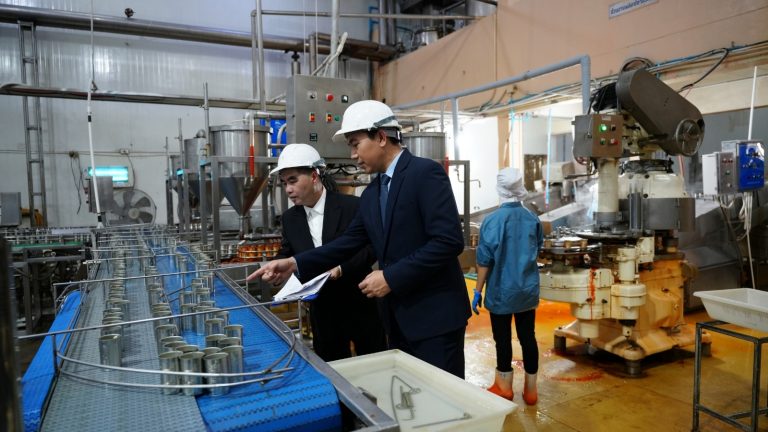
There is a general lack of understanding of OEM products and parts among buyers and companies alike. This section will help you understand what OEM parts are, how OEM standards apply to finished goods, and why they matter across every industry.
What Are OEM Parts?
OEM, or Original Equipment Manufacturer, parts are the same components you use to build a product in the factory and fall under the product, all the way from factory line assembly. These parts are designed for a precise fit, optimal performance, and long life.
A prevailing industry standard holds that OEM parts are of higher quality and more reliable, as the original manufacturer intended and specified. This is why they are the ideal solution for servicing, replacing, and upgrading technical systems – mainly when used in regulated industries, safety-related applications, and high-quality equipment.
Further, businesses require these OEM parts to remain in compliance with warranties and avoid disruptions to their operations. Plus, it is vital to maintain the same high level of quality they have always provided to retain repeat business.
OEM Products in Global Industries
OEMs never really sell finished goods; instead, OEM products are building blocks for products that are distributed around the world. Many of these branded components flow unseen into your cars, electronics, industrial equipment, and technology platforms.
Even so, they indirectly affect the product’s reliability, safety, and performance. OEM contributions fuel innovation, scalability, and quality assurance across markets, especially in electronics, automotive, and heavy machinery, and in these states.
This is where OEMs provide key specialised expertise and precision manufacturing that enable global brands to not only meet performance expectations but also maintain long-term brand reputation and customer trust.
Did you know that with the growth of AI and the demand for advanced technologies, the global original equipment manufacturer (OEM) semiconductor equipment market is expected to reach a record $138.1 billion in 2026?
OEM vs Aftermarket: What is the Difference?
One of the most challenging decisions is choosing between OEM and aftermarket. This article compares the two approaches in terms of quality, cost, dependability, and their applications to facilitate informed decision-making.
Understanding Aftermarket Alternatives
The OEM vs aftermarket debate is about choice and cost. Aftermarket components, however, are developed separately by third-party manufacturers after a product is already on the market and cover more general replacement parts. These alternatives are likely to be cheaper and more widely available, but quality and compatibility may vary from manufacturer to manufacturer’s standards.
OEM vs Aftermarket – Key Differences Explained
OEM parts are built to the original specifications, whereas third-party alternatives aim for compatibility rather than identical mechanics. Frameworks indicate the continuity and alignment of warranties for OEMs, while costs, flexibility, and aftermarket support are essential for their counterparts.
Every choice aims to meet unique user requirements for cost, performance, and application.
Is OEM Better Than Aftermarket?
OEM may be better, and it is a matter of priority. OEM parts offer predictable performance and fit, while aftermarket alternatives may be more innovative or economical.
Comparing use conditions, guarantees, and investment in the future allows buyers to make informed choices.
OEM vs ODM: Two Similar but Very Different Models
OEMs and ODMs are where the boundaries blur. Many people do not understand the difference between OEM and ODM. This section explains why these models diverge regarding design liability, production control, and strategic value to the industry.
What Is an Original Design Manufacturer (ODM)?
An original design manufacturer (ODM) is a company that designs and manufactures a product as specified, which is eventually rebranded by another firm for sale. An ODM is entirely distinct from an Original Equipment Manufacturer (OEM).
This model seems appealing to companies seeking fast market entry, as they do not need to make substantial investments in research, tooling, or engineering teams. ODMs play a similar role in the technology industry, supplying manufacturer-ready products on behalf of an OEM until the OEM can manufacture them themselves.
Significant Differences Between OEM and ODM
The OEM vs ODM comparison centres on control, responsibility, and strategy.
In the OEM model, OEMs supply components in sub-assemblies ready for another company’s product assembly. ODMs, on the other hand, are responsible for end-to-end design, development, and manufacturing.
What is more, OEMs are best for businesses with high precision, the need to customise functions, and scale into the OEM supply chain. ODMs are relationships for companies that value speed to market at a lower price point, easy scalability; they cater more to brands.
However, the decision depends on innovation objectives, budget constraints, and the level of control required to differentiate and position a brand for long-term success.
OEM Examples Across Major Industries
OEMs touch virtually every primary industry, but are typically behind the scenes. The following section illustrates the real-world impact of OEM involvement in automotive, electronics, and software through real-world examples.
OEM in the Automotive Industry
OEM in the automotive industry includes engines, electronics, and programming for safety mechanisms. They are all suppliers to the high-volume industrial manufacturing industry, ensuring the performance, durability, and reliability of the automobiles sold worldwide.
OEM in Electronics and Technology
In electronics, OEM encompasses semiconductors, displays, and other hardware products. Brands turn to OEM knowledge to innovate quickly and deliver on quality and scale.
OEM Software Meaning Explained
OEM software refers to licensed software sold with hardware (e.g., computer systems) but not commonly included in the hardware price. This pre-installed software method minimises installation time, maintaining user experience even after the first use.
Why OEMs Matter in the Modern Economy
OEMs make a significant contribution to economic efficiency and innovation. In here, we cover why OEMs are indispensable to contemporary production systems and how they contribute to scalable, high-quality manufacturing globally.
Efficiency, Quality, and Innovation
OEMs may facilitate enhanced global production by encouraging both high- and low-qualification levels, reducing costs and delivery times, and promoting innovation. Their position in the OEM supply chain enables more rapid launches, greater reliability, and continued growth for manufacturing economies.
Advantages and Limitations of OEM Products
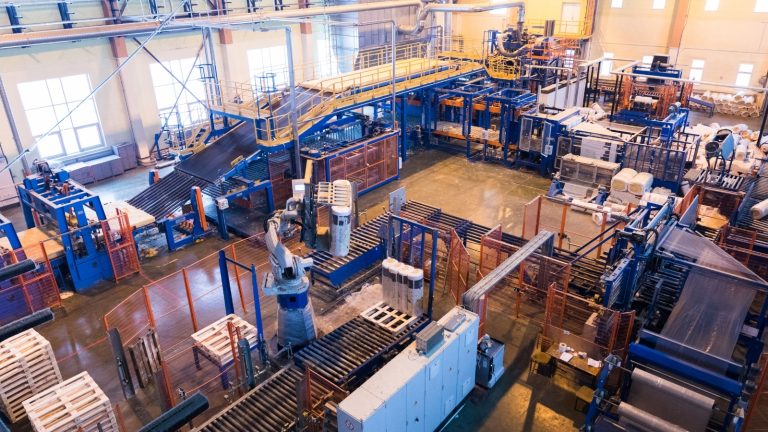
There are advantages and limitations to OEM products. This subsection creates a fair comparison that enables businesses and consumers alike to analyse whether they will fit their criteria.
Key Benefits of Choosing OEM
- Manufactured to the strictest OE performance, quality, and durability standards.
- Uniform quality from batch to batch.
- Further enhanced the reliability and service life of the critical parts.
- Improved compatibility with other systems and assemblies.
- Better warranty parity with finished goods.
- Decreased likelihood of failure in regulated or safety-critical industries.
- Less maintenance and servicing during the product lifetime.
- Increased brand confidence due to consistent performance
- Reduced integration risk in manufacturing and upgrades.
- Long-term prices and long-term value, even with higher upfront costs.
Potential Drawbacks to Consider
- Upfront costs are higher than for non-OEM options.
- Restricted pricing leeway due to the defined feature set.
- Extended lead times on high-technology production.
- Relying on just one OEM supplier.
- Most of them do not have the flexibility to customise features for special needs parties and applications.
- Availability in the supply chain disruptions.
- Slower innovation compared to competitive aftermarket markets.
- Risk of vendor lock-in in long-term contracts.
- Not always required for nonessential parts.
How Industry 4.0 MES Systems Support OEM Operations
Cerexio Manufacturing Execution System is an Industry 4.0-driven MES solution that provides OEMs with real-time production insights, ensures quality compliance, maximises efficiency, and enables data-driven decision-making throughout manufacturing operations.
Real-Time Production Visibility and Quality Control
Cerexio’s Industry 4.0–ready MES solution provides OEMs with a real-time view of the production line, machine status, and quality statistics. Our software solution enables manufacturers to detect early failure modes, meet consistent OEM quality specifications, minimise downtime, and guarantee reliable component delivery throughout complex, high-volume manufacturing.
Data-Driven Efficiency and Supply Chain Integration
As a highly effective MES, the Cerexio solution provides links between machines, operators, and business systems, enabling OEMs to make data-driven decisions. It makes scheduling more efficient and transparent, helps ensure compliance, reduces costs, and encourages coordination across the entire OEM supply chain for greater efficiency and speed to market.
Call us for a free demo today.
Cerexio-Manufacturing Excellence Starts Here!
Why Digitalisation Is Critical for OEM Precision
Digitalisation in manufacturing is no longer an option but a necessity to retain accuracy and traceability and remain competitive for OEM manufacturers. MES and other Industry 4.0 technologies facilitate real-time control, data-driven decisions, and standardised quality across multifaceted processes. By leveraging digital transformation, OEMs can mitigate errors, improve compliance, strengthen supply chain coordination, and deliver parts that meet exact specifications.
That is where digitalisation plays a significant role, empowering OEMs to scale effectively, safeguard brand trust, and deliver to the precision levels that modern manufacturing demands.
Are you ready to scale up your OEM game?
FAQs About OEMs
OEM means a company that manufactures components or products used in another company’s final goods. These parts are built to original specifications and integrated into branded products sold to customers.
An OEM company specialises in producing components for other businesses rather than selling directly to consumers. Its focus is on precision, scale, and consistency.
OEM parts follow original specifications, while third-party alternatives prioritise compatibility over exact design. OEMs emphasise consistency and warranty alignment, whereas aftermarket providers focus on affordability and customisation. Each option serves different user needs depending on budget, performance expectations, and application.
OEM parts typically provide guaranteed compatibility, quality, and reliability due to adherence to original standards. Aftermarket parts may offer lower costs or enhanced features, but quality can vary. Choosing between OEM and aftermarket depends on specific product lifecycle requirements, performance priorities, and budget considerations.
In manufacturing, an OEM produces components or subassemblies that other companies use to create finished products. This role enhances efficiency, specialisation, and consistency across the OEM supply chain, allowing brands to focus on design, marketing, and customer-facing operations while OEMs handle production excellence.