
If you are a factory floor manager or manufacturing industry insider, you may have experienced pressure to ramp up production while sustaining or improving quality. This is where you will bring in a manufacturing assembly line. What can they do for you?
Assembly lines enable the efficient, scalable production of high-volume production by moving products through a structured sequence of steps, each performed by either a specialised machine or a skilled production team. However, have you ever asked yourself how the factory may attain unmatched, consistent quality with a high-speed production rate?
In this article, we will cover everything you need to know about assembly lines in manufacturing, the different types of assembly lines, the benefits, and how they work.
We will explore
- What is a Manufacturing Assembly Line?
- Evolution of Assembly Lines in Manufacturing
- Types of Assembly Lines
- How an Assembly Line Process Works
- Key Benefits of Manufacturing Assembly Lines
- Core Principles of Effective Assembly Line Operation
- Technology’s Role in Modern Assembly Lines
- Challenges of Assembly Lines in Manufacturing
- How to Choose the Right Assembly Line
- FAQs About Manufacturing Assembly Line
What is a Manufacturing Assembly Line?
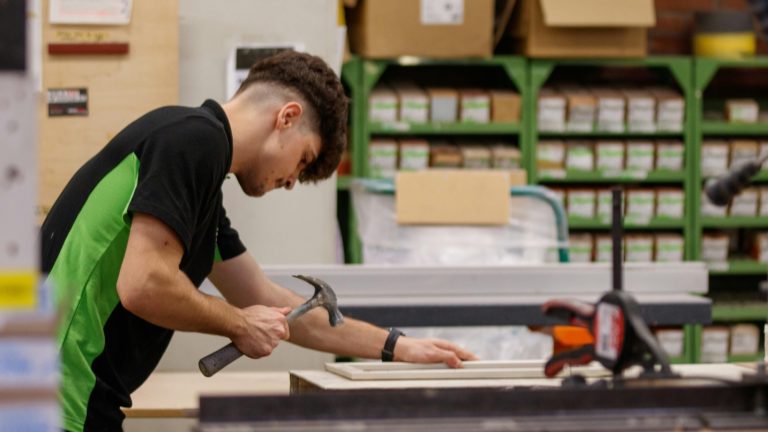
A manufacturing assembly line is a production system where the creation of a product is divided into a sequence of steps. Trained employees or specialised machines carry out specific parts of the product at each workstation.
Such a structured production workflow enables repeatable and consistent manufacturing operations, making your factories capable of delivering predictable output.
Founded by Henry Ford in 1913, the assembly line system became a revolution. This was a moving automobile assembly line that created a revolution in terms of mass production and lowered production costs. These, almost 60 years later, remain the backbone of everything from automotive to electronics.
Now the next question is, ‘Could your production processes gain from the modern assembly line technologies?’
We will find answers for that, too, in this article.
Key Takeaways
- A manufacturing assembly line streamlines the manufacturing process by dividing production into structured, repeatable stages, enabling high-volume production with consistent quality and improved efficiency.
- By applying core principles, manufacturers can reduce costs, improve quality control, and achieve scalable production.
- Choosing the right assembly, linerdination, and equipment downtime ensures long-term operational success.
Evolution of Assembly Lines in Manufacturing
This guide is incomplete if we do not look back at the evolution of the latter.
As these assembly lines have developed, they have progressed from basic linear sequences to complex systems that are capable of accommodating variability. Robotics and Automation, and digital monitoring tools have increased production efficiency by reducing time-to-market, optimising supply chain strategies. They can deliver scalable production.
A company can control its manufacturing technology to produce each component with uniform quality while minimising production costs.
Types of Assembly Lines
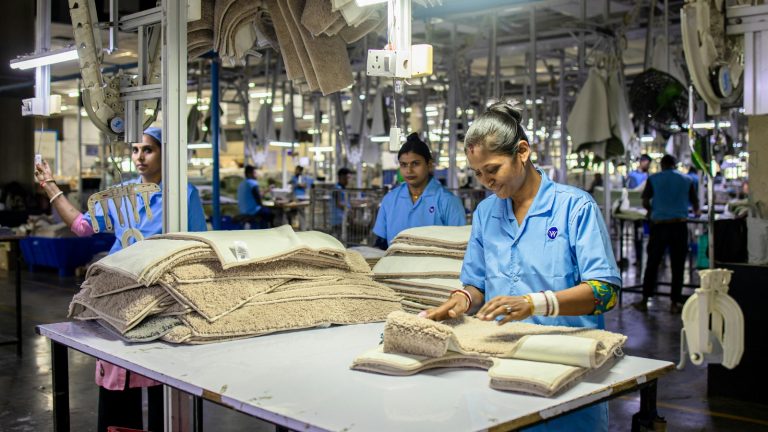
Knowing the assembly lines in manufacturing types helps the manufacturers decide on the system that will be most appropriate for a given set of production goals.
Classic Assembly Line
In that iconic assembly line, a device is transported along a line, and workers work on it by doing the same thing every time the product arrives at their position. It is this assembly line process of manufacturing that greatly increases the efficiency and production capacity for high-volume production, standardised products.
This is an ‘old-fashioned concept’, yet it is popular with appliances and everyday items, serving you up reliability and speed.
Modular Assembly Line
A decentralised modular assembly line segments the production process into autonomous units. They each focus on a part of the product.
The advantages of this modular manufacturing are that it is easy to adapt modules or even replace them without interrupting the whole assembly line system.
This form of organisation has large advantages for the construction and furniture industries.
With our experience in the manufacturing domain, we have witnessed that such a configuration offers huge opportunities.
Flexible Assembly Line
This is where quick conversion of machines and workstations can be accomplished on a flexible production line. It is a flexible manufacturing process that makes sense for industries with shifting needs, as you can quickly adapt production.
In this context, you will get flexible systems for assembly line operation. They not only improve production efficiency, but also act as a preferred system that you can ship a response to a product variety.
How an Assembly Line Process Works
- Inputs arrive at the production line at the station.
- Each workstation does a specific task to move the product forward.
- You will obtain procedural standardisations to guarantee that the quality remains consistent at each stage.
- Your assembly line operation is increased with the help of automation and real-time monitoring.
- Accurate material and inventory tracking keeps materials on hand when needed.
- The warehouse layout should be designed such that products can move seamlessly and delays are minimised.
- Next, Frequent analysis of production workflows exposes bottlenecks and optimisation chances.
- Coordination of teams and equipment which improves overall production efficiency.
Key Benefits of Manufacturing Assembly Lines
Increased Production Efficiency
Assembly lines minimise downtime and increase efficiency in production by breaking up the manufacturing process into many small, repeated tasks.
Each workstation has a special operation which makes the work done more efficiently.
This way, the production workflow becomes very fluent, and the factory can produce at higher capacities while maintaining quality.
Cost Reduction and Waste Minimisation
You-the manufacturers, gain savings in the form of labour and waste reduction, as well as lower costs by standardising production, as well as specialised labour and optimised work flows.
Efficient processes and accurate material and part handling also decrease error rates, scrap levels and overall resource wastage. As a result, you can increase the profitability and sustainability of a manufacturing operation.
Consistent Quality and Quality Control
Specialised production and skilled staff are what you require to maintain standards. QC is far simpler if you describe and check each step in the assembly line process.
Ongoing accountability at each of the work centres minimises defects, improves consistency across products and assists in complying with industry standards.
Scalability in Manufacturing
Scalable production is feasible because you can extend assembly line systems in terms of new workstations or (in the extreme case) stretches of 24-hour shift operation to meet demand.
Adaptable scheduling enables you to scale production efficiently, adjust production schedules, and manage order fluctuation. This is all while maximising productivity and product quality.
Labour Specialisation and Workforce Optimisation
Workers who specialise in a single task can become more skilled, faster, and more accurate, and it helps the line run smoothly.
This means that targeted knowledge enhances performance, shortens learning time and increases productivity.
This systematised method integrates the resources that can be made use of more efficiently and the personnel who can learn their uses.
Additional Benefits
Using this as an ideal way to increase productivity, improve workforce coordination, increase safety compliance and maximise resource utilisation.
Structured production operations, uniform processes and continuous monitoring allow manufacturers to produce more, better and safer with a more efficient assembly line system.
Core Principles of Effective Assembly Line Operation
Division of Labour
By delegating certain duties according to ability, you can run each station with maximum efficiency and the general flow of production optimised. This allows your manufacturing company’s employees to specialise in their area of expertise.
This will undoubtedly reduce mistakes and speed their work process with increased capacity and quality throughout the production assembly line.
Standardisation and Documentation
Due to clear task and process standards as well as a precise bill of materials (BOM), the assembly line system offers accuracy. This method minimises variance, simplifies training and ensures that each product is consistent with standard quality requirements.
Is it really necessary to mention that this helps improve quality control and easy monitoring in the production phase?
Continuous Workflow Management
It keeps a cascading process in continuous product flow to avoid blockages and allow free-flow manufacturing.
This paves the way for reasonable allocation of labour and materials, monitoring of work positions, while ensuring continuous production. The latter also reduces idler time, increasing production efficiency to enable production line operation to meet the demand without delays.
Equipment Maintenance and Reliability
Some of the assembly line equipment is chrome and requires maintenance to keep it in good shape for production. Routine equipment maintenance prevents breakdowns, reduces downtime and makes sure the assembly line is safe.
Prompt inspections, preventive maintenance, and timely replacement or refurbishment of parts create fewer machine malfunctions, safety of workers. Such constant output helps plant-wide productivity and flow.
Optimised Supply Chain and Layout
With effective supply chain management and an optimised warehouse layout, there is a smooth flow of materials and products through the assembly line.
Optimal positioning of raw material and finished goods minimises transportation time. It also improves production organisation and facilitates the scalability and effectiveness of manufacturing.
Technology’s Role in Modern Assembly Lines
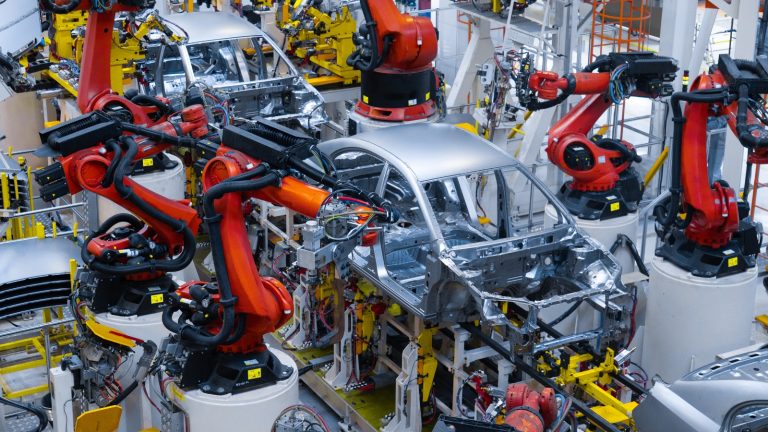
The implementation of state-of-the-art manufacturing technologies, including automation, sensors and software, can increase productivity by allowing better control over production, inventory and work orders.
There are more sophisticated tools that you can use to improve line operation, providing for a smooth flow of continuous process work. Also, the new technology facilitates efficient manufacturing processes to achieve greater capacity in the same amount of time.
Automation and Robotics
Auto work stations eliminate manual labour, enhance speed and perfect the function of the assembly line.
Robotics help manufacturers improve production efficiency, minimising human error and maintaining the quality of products.
Automation provides high-throughput production, allows for production flow adjustments and time and labour saving.
Real-Time Monitoring Systems
You can utilise these systems to monitor performance measurements in real-time, flag bottlenecks and uniformly apply quality control protocols throughout the manufacturing process.
These systems can offer visibility into the production process, equipment management, and inventory tracking to help managers make data-driven decisions that maximise output.
They also support you in minimising downtime while improving overall assembly line system efficiency.
Software Integration
ERP and MES Systems enable inventory management, production workflow optimisation, and assembly line efficiency.
Integrated software streamlines manufacturing and optimises work orders management and specialisation of labour.
This is all while ensuring that manufacturers are able to keep pace with changes in demand without sacrificing quality.
Predictive Analytics
Predictive analytics software can show ways to avoid production stoppages and increase productive time.
By monitoring and analysing workstation data, data from the equipment maintenance schedule and the supply chain performance, manufacturers can take proactive measures to resolve problems.
Not to say that this technology optimises assembly line operation, leverages dissimilar production lines across all manufacturing processes.
Digital Twins
Digital twins simulate assembly lines; therefore, you can test changes without interfering with actual production.
This kind of technology can improve efficiency, it is beneficial to quality control, facilitates management and promotes the perfection of the pipeline operations.
With simulation, manufacturers can simulate high-volume production environments and optimise manufacturing processes for more successful results.
Challenges of Assembly Lines in Manufacturing
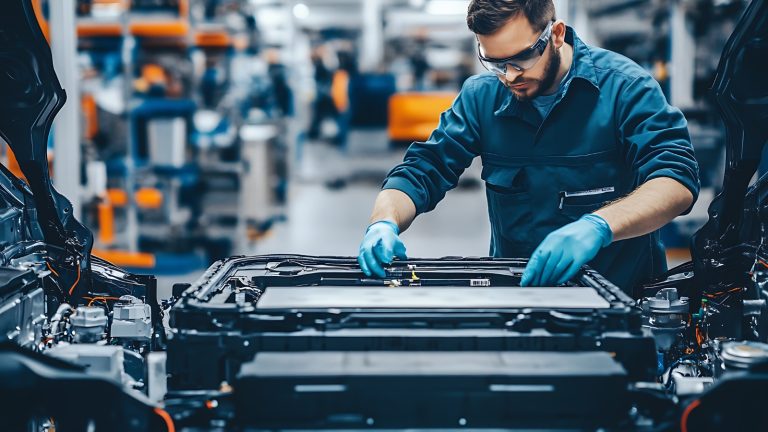
There are many benefits to production assembly lines; however, the truth is that issues emerge when addressing the requirements for flexibility, equipment maintenance and labour specialisation.
Keeping production efficiency up, line operations running well, and product quality intact throughout the manufacturing process are some of the reasons why manufacturers must face these challenges head-on.
Managing High-Volume Production
Stabilising working conditions in mass production without compromising the quality is the most difficult problem.
Finally, cut the production flow, Station assignment and inventory monitoring are considered to be vital operations. Putting these aside, manufacturers need to find a good balance between the speed and uniformity of operations so as not to generate bottlenecks in the process and keep the assembly line system running smoothly.
Adapting to Market Changes
It takes strategic planning to have flexible manufacturing and still keep the assembly line running smoothly. Fast-changing market trends require immediate changes to workstations and production flows to maintain uninterrupted output and minimise interference with the rest of the manufacturing flow.
Workforce and Training
Labour specialisation and the division of labour would require continual training and skill development; that way, the output achieved is not low.
Investment in employee learning and development is a challenge that manufacturers struggle with when it comes to workforce and training.
Equipment Downtime
Preventive maintenance is essential to eliminate production losses due to unforeseen breakdowns. Prophylactic maintenance, regular inspections, and automated monitoring of production lines elevate the rich tapestry that is assembly line performance.
They increase yields and cut down on those expensive production chains being slowed or disrupted.
Supply Chain Disruptions
Supply chain optimisation ensures that the material is on hand for a smooth production run. Effective planning, organised warehouse layout and live inventory management will help you to reduce delays. Plus, they will provide flexibility in production and keep the assembly line system efficient.
How to Choose the Right Assembly Line
Choosing the right assembly line system depends on the types of products being manufactured, the production volume and the number and variety of those products. The right system should be able to assist manufacturing operations, enhance production efficiency and incorporate advanced processes in manufacturing.
Assessing Production Needs
Study the actual production, projected volume and work processes to develop a suitable assembly line system.
Knowing the complexity of your product and volume requirements will enable non-wasteful use of the resources you employ. It also answers the scalable production question.
Evaluating Facility Layout
Take warehouse design and workstation placement into account for ease of production flow.
The right layout lowers the time spent on handling, eases any bottlenecks and enhances how well your assembly line works in general.
Integrating Technology
Industrial designers can utilise state-of-the-art manufacturing technologies such as MES, SPC and ERP to provide a solid foundation for every assembly line.
Applying suitable technology enables inventory tracking, work order management , and smooth production for all manufacturing processes.
Cost-Benefit Analysis
Compare the ROI between possible assembly line systems to pick the most efficient one without compromising scalability.
You need to compare labour, equipment and technology costs to improvements in productivity and high-volume production capacity.
Scalability Planning
Check that the selected assembly line system and line configurations are capable of expanding as production demands increase.
Expand your scalable system with workstations, shifts and production flows that can grow alongside your business from sustainable manufacturing to efficient high-throughput operations.
How Cerexio MES Supports All Types of Assembly Lines
Cerexio MES is an Industry 4.0-powered Manufacturing Execution System that will help the manufacturing industry enhance assembly line systems by providing end-to-end visibility across classic, modular, and flexible manufacturing setups.
Our software enables real-time monitoring of workstations, tracks work orders, ensures accurate inventory tracking, and automates reporting for improved production efficiency and quality control.
With Cerexio MES, manufacturers can optimise assembly line operations and make data-driven decisions, resulting in a smoother, more scalable manufacturing process.
Laying the Base for Manufacturing Success with Assembly Line Operations
Since you read the whole article, you may understand that the assembly lines in manufacturing remain at the roots of manufacturing and they act as the fundamental building block of contemporary production with all its attributes of efficiency, reliability and scalability.
If you move forward with a nuanced understanding of the different assembly line methodologies, following best practices, using technology to its fullest potential and connecting operations via systems like Cerexio MES, your manufacturing company can achieve high output with sustained levels of quality.
Is your factory ready to boost production efficiency with a perfect assembly line?
Call for a free demo today.
Cerexio-Manufacturing Success is One Click Away
FAQs About Manufacturing Assembly Line
An assembly line in manufacturing is a structured production workflow where products move sequentially through workstations, each performing specialised tasks, to enhance production efficiency and maintain consistent quality control.
Common types of assembly lines include classic, modular, and flexible assembly lines, each designed to meet specific manufacturing operations and production goals.
By breaking the manufacturing process into standardised tasks, assembly lines reduce downtime, optimise production workflows, and increase high-volume production capabilities.
Modern manufacturing technology automates tasks, enables real-time inventory tracking, and improves assembly line operation, resulting in higher production efficiency.
Labour specialisation ensures workers focus on specific tasks, improving skill, speed, and accuracy, which enhances overall production efficiency and the effectiveness of the assembly line system.