
We all know that global manufacturing supply chains, which are growing at a 10.9% CAGR, are designed for efficiency, speed, and cost optimisation. Yet history has repeatedly shown that even the most sophisticated networks can be brought to a standstill by unexpected disruptions. From pandemics and natural disasters to geopolitical conflicts and transportation bottlenecks, major events have exposed vulnerabilities across industries ranging from automotive and electronics to pharmaceuticals and consumer goods.
Over the past two decades, manufacturers have learned a difficult lesson: supply chains are only as strong as their weakest link. A single factory closure, shipping delay, or geopolitical crisis can ripple across continents, affecting production schedules, inventory levels, and customer demand.
This article explores the ten most significant events that disrupted manufacturing supply chains, examining how they unfolded, why they mattered, and what lessons manufacturers can learn to build greater resilience in the future.
This article covers
- Why Manufacturing Supply Chains Are Vulnerable to Global Disruptions
- Top 10 Events That Disrupted the Manufacturing Supply Chain
- From Chaos to Comeback: How Manufacturers Rewrote the Rules of Supply Chain Resilience
- Lessons Manufacturers Can Learn from These Disruptions
- Looking Ahead: Potential Manufacturing Supply Chain Disruptions Over the Next Five Years
- FAQs About Manufacturing Supply Chain Disruptions
Why Manufacturing Supply Chains Are Vulnerable to Global Disruptions

Modern manufacturing relies on an interconnected network of suppliers, logistics providers, ports, warehouses, and production facilities spread across multiple countries. While globalisation has reduced costs and improved efficiency, it has also increased dependence on critical nodes within the supply chain.
When a major disruption occurs, shortages quickly cascade through the network.
This is when manufacturers might face delayed raw materials, rising transportation costs, labour shortages, or reduced production capacity. These disruptions usually reveal hidden dependencies that remain unnoticed during normal operations.
Key Takeaways
- Supply chain disruptions can originate from health crises, natural disasters, conflicts, or trade disputes.
- The COVID-19 pandemic remains the most significant manufacturing supply chain disruption in modern history.
- Supplier diversification and regional sourcing have become essential resilience strategies.
- Digital visibility and predictive analytics help manufacturers detect and mitigate risks faster.
Top 10 Events That Disrupted the Manufacturing Supply Chain
The following ten events represent the most significant manufacturing supply chain disruptions in modern history. They caused widespread production delays, material shortages, logistics bottlenecks, and billions of dollars in economic losses worldwide.
1. The COVID-19 Pandemic (2020–2023)
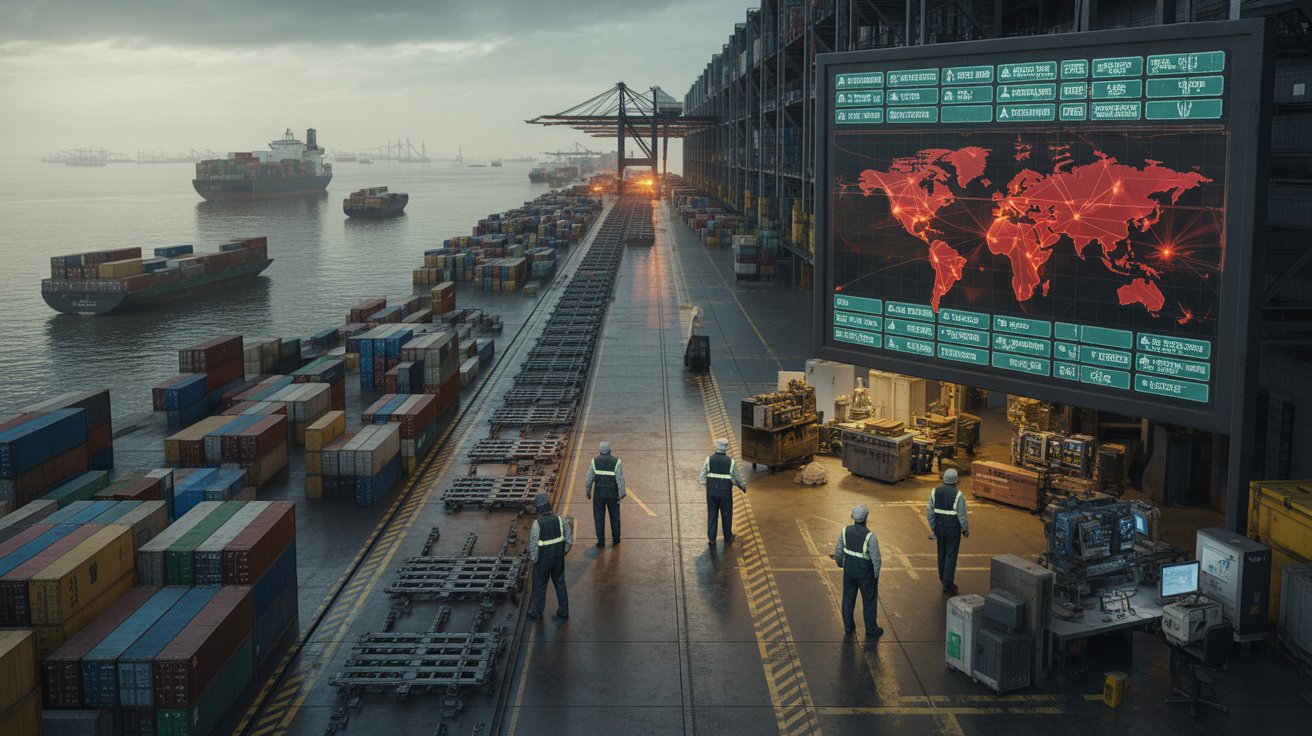
In early 2020, manufacturers around the world watched as a regional health crisis evolved into the largest global supply chain disruption in modern history. What began with factory shutdowns in China soon spread across Europe, North America, and the rest of the world.
As governments imposed lockdowns, production facilities halted operations, transportation networks slowed dramatically, and consumer demand shifted overnight.
At this point, manufacturers struggled to obtain essential components, from semiconductors and industrial chemicals to packaging materials and electronic parts. Ports became congested, container availability collapsed, and shipping costs surged to record highs.
Industries such as automotive manufacturing were particularly affected as semiconductor shortages forced companies to suspend production lines for months. Meanwhile, manufacturers of medical equipment and consumer goods faced unprecedented demand spikes.
The pandemic exposed the risks of overreliance on single-source suppliers and geographically concentrated manufacturing hubs. Even years after the initial outbreak, manufacturers continued experiencing the aftereffects through labour shortages, inventory imbalances, and elevated logistics costs.
2. The Fukushima Earthquake and Tsunami (March 2011)
On March 11, 2011, a magnitude 9.0 earthquake struck off the coast of Japan, triggering a devastating tsunami and the Fukushima Daiichi nuclear disaster. The event quickly evolved from a national tragedy into a global manufacturing crisis.
Japan was a critical supplier of specialised components used in automotive, electronics, and industrial manufacturing. Numerous factories producing semiconductors, automotive sensors, batteries, and precision materials were forced to shut down due to physical damage, power shortages, and safety concerns.
This was the point when manufacturers worldwide suddenly discovered how dependent they were on Japanese suppliers.
Automotive companies experienced shortages of critical electronic components, while electronics manufacturers struggled to secure specialised materials used in displays and microchips.
The disruption highlighted the vulnerability of highly specialised supply chains where a single supplier may dominate global production of a critical component. The Fukushima disaster became a turning point that encouraged manufacturers to improve supplier diversification and disaster recovery planning.
3. The Global Semiconductor Shortage (2020–2024)
Few supply chain crises have had as widespread an impact as the global semiconductor shortage. Although the issue emerged during the COVID-19 pandemic, its roots stretched across years of increasing demand and limited production capacity.
As remote work accelerated, demand for laptops, smartphones, gaming devices, and cloud infrastructure skyrocketed. Semiconductor manufacturers shifted production toward consumer electronics, while automotive companies initially reduced chip orders due to fears of declining vehicle sales.
When vehicle demand recovered much faster than expected, automakers found themselves competing with technology companies for limited semiconductor supplies. Production lines were halted worldwide as manufacturers waited months for critical chips.
The shortage affected everything from automobiles and industrial machinery to medical equipment and household appliances. Some manufacturers were forced to redesign products around available components, while others significantly reduced production targets.
The crisis revealed how deeply modern manufacturing depends on semiconductors and sparked major investments in domestic chip production across multiple countries.
4. The Suez Canal Blockage by Ever Given (March 2021)
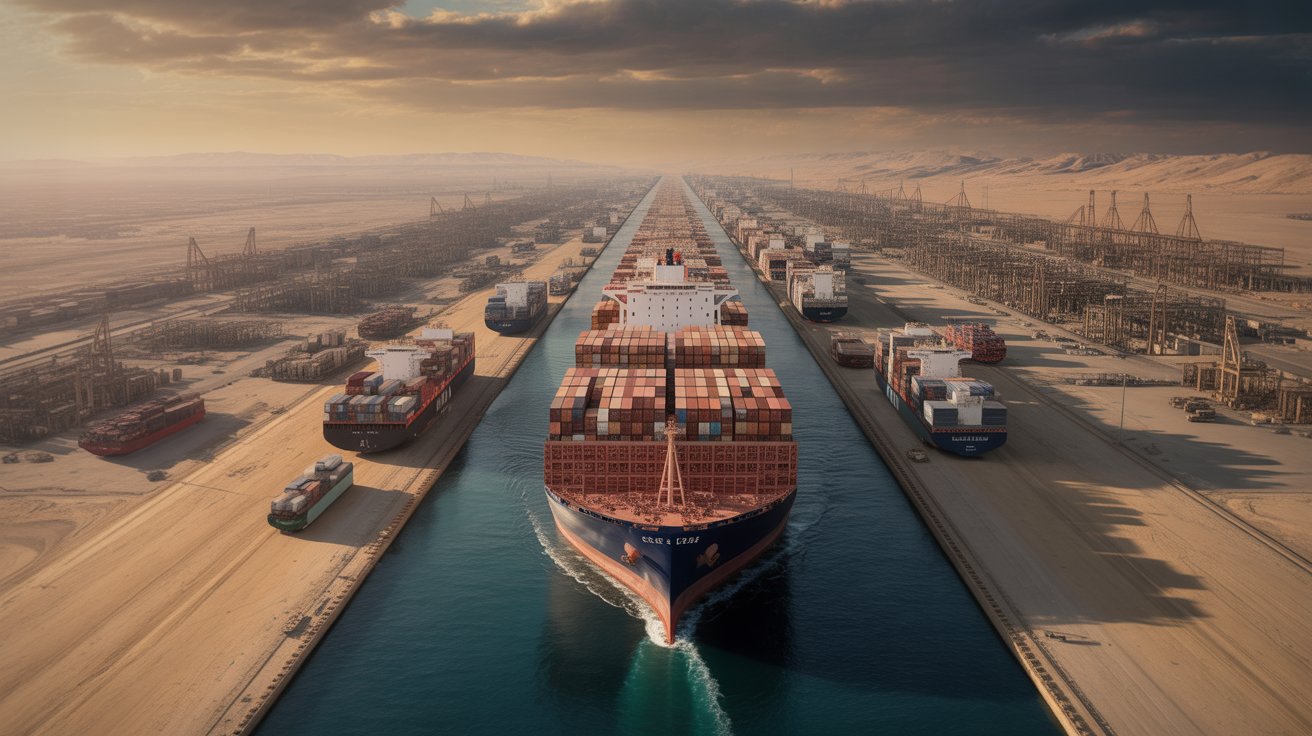
In March 2021, the container ship Ever Given became lodged sideways in the Suez Canal during a sandstorm, blocking one of the world’s most important trade routes for six days.
While six days may sound insignificant, the consequences were enormous. Nearly 12% of global trade passes through the canal, connecting manufacturers in Asia with customers and suppliers across Europe and beyond.
As hundreds of ships accumulated on both sides of the canal, manufacturers faced delays in receiving raw materials, machinery, and finished goods. The backlog continued affecting global shipping schedules for weeks after the vessel was freed.
The incident served as a dramatic reminder of how a single transportation chokepoint can disrupt global manufacturing networks. Companies relying on just-in-time inventory strategies found themselves particularly vulnerable as critical supplies became stranded at sea.
5. The Russia–Ukraine War (2022–Present)
When Russia launched its full-scale invasion of Ukraine in February 2022, the effects extended far beyond Eastern Europe. The conflict disrupted global supplies of energy, metals, chemicals, and agricultural commodities essential to manufacturing operations.
Ukraine was a major supplier of neon gas, a critical material used in semiconductor manufacturing. At the same time, Russia played an important role in supplying nickel, palladium, aluminium, and natural gas to global markets.
Sanctions, transportation disruptions, and geopolitical uncertainty caused commodity prices to surge. Manufacturers experienced rising energy costs, material shortages, and increased production expenses across multiple industries.
Automotive manufacturers were among the hardest hit, facing shortages of wire harnesses produced in Ukrainian factories. Meanwhile, manufacturers across Europe grappled with volatile energy markets and increasing operational costs.
The conflict demonstrated how geopolitical instability can rapidly reshape global supply chains and force manufacturers to reassess sourcing strategies.
6. The U.S.–China Trade War (2018–Present)
The trade tensions between the United States and China marked one of the most significant geopolitical disruptions to manufacturing supply chains in recent decades.
Beginning in 2018, both countries imposed tariffs on hundreds of billions of dollars worth of goods. Manufacturers suddenly faced increased costs for imported components, raw materials, and finished products.
Many companies found themselves caught between rising tariffs and shrinking profit margins. To reduce risk, manufacturers began relocating production facilities to countries such as Vietnam, India, Mexico, and Thailand.
The trade dispute accelerated a broader trend toward supply chain diversification and regionalisation. Businesses that had spent decades optimising operations around China’s manufacturing ecosystem were forced to rethink sourcing, procurement, and production strategies.
The long-term impact continues today as manufacturers pursue ‘China Plus One’ strategies to reduce dependence on any single manufacturing region.
7. Thailand Floods (July–December 2011)
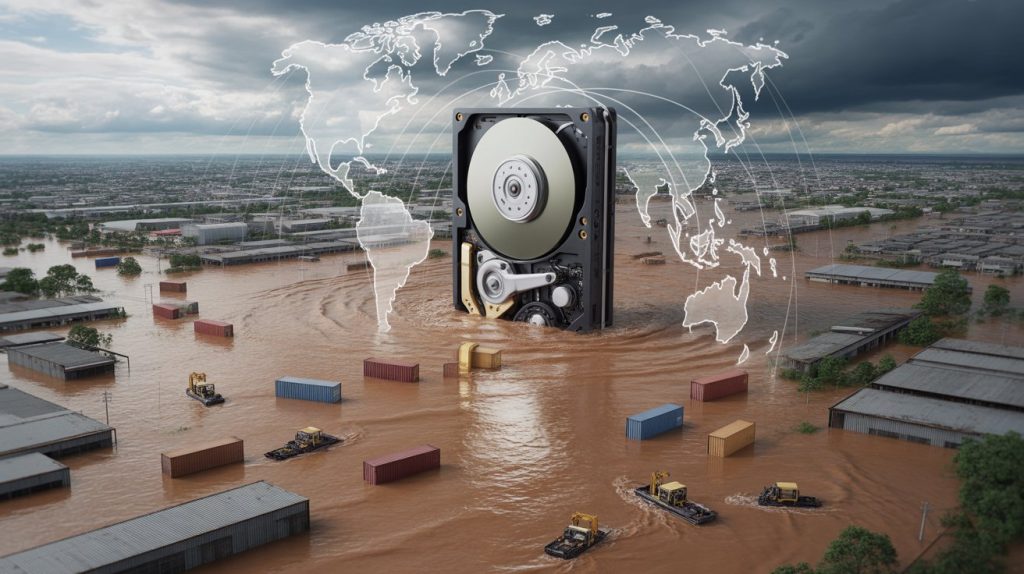
In 2011, Thailand experienced its worst flooding in more than half a century. What initially appeared to be a regional disaster quickly became a global manufacturing emergency.
The floods submerged major industrial parks responsible for producing hard disk drives, automotive parts, electronics, and industrial equipment. Many facilities remained underwater for weeks, causing extensive damage to machinery and infrastructure.
At the time, Thailand produced a significant portion of the world’s hard disk drives. As factories shut down, global supply contracted dramatically. This caused prices to spike and availability to plummet.
Computer manufacturers struggled to maintain production schedules, while automotive companies experienced shortages of key components. Recovery took months, illustrating how concentrated manufacturing clusters can create systemic risks for global supply chains.
The event remains one of the most frequently cited examples of climate-related supply chain disruption.
8. The Red Sea Shipping Crisis (2023–Present)
Beginning in late 2023, attacks on commercial vessels in the Red Sea forced shipping companies to reroute cargo around the Cape of Good Hope rather than transit through the Suez Canal.
The alternative route added thousands of miles to shipping journeys between Asia and Europe, significantly increasing transportation times and fuel costs.
Manufacturers relying on predictable delivery schedules faced growing uncertainty as transit times lengthened. Shipping capacity tightened, freight rates rose, and inventory planning became increasingly complex.
Industries dependent on imported components experienced delays that affected production schedules and customer deliveries. The crisis demonstrated how geopolitical tensions in a single region can disrupt global logistics networks and create cascading effects throughout manufacturing supply chains.
Many companies responded by increasing safety stock levels and exploring alternative sourcing strategies to reduce exposure to transportation disruptions.
9. China's Zero-COVID Lockdowns (2022)
Although related to the broader pandemic, China’s strict Zero-COVID policy deserves separate recognition due to its unique impact on manufacturing.
Throughout 2022, major manufacturing hubs, including Shanghai, Shenzhen, and other industrial centres, experienced extensive lockdowns aimed at preventing virus outbreaks. Factories, warehouses, and logistics facilities were frequently closed or operated under strict restrictions.
Manufacturers worldwide faced delays in obtaining components, machinery, and finished goods sourced from China. Port operations slowed, trucking networks encountered restrictions, and production schedules became increasingly unpredictable.
The lockdowns highlighted the global manufacturing sector’s dependence on Chinese production capacity. Even companies with diversified suppliers often found that critical upstream components still originated from Chinese factories.
The experience accelerated discussions around reshoring, nearshoring, and regional manufacturing strategies designed to improve resilience.
10. The Global Financial Crisis (2008–2009)
The financial crisis of 2008 and 2009 is often remembered as a banking and economic event, but its impact on manufacturing supply chains was equally significant.
As credit markets froze and consumer demand collapsed, manufacturers experienced sudden order cancellations and shrinking revenues. Many suppliers faced severe financial distress, while others declared bankruptcy altogether.
The crisis disrupted supply chain financing, making it difficult for smaller suppliers to secure working capital. Manufacturers that depended on these suppliers suddenly faced production risks unrelated to physical shortages.
Demand uncertainty created widespread inventory challenges as businesses struggled to balance production levels against rapidly changing market conditions.
The crisis underscored the importance of financial resilience throughout supply networks and highlighted the risks associated with supplier insolvency. Many manufacturers subsequently introduced stronger supplier risk management programs and financial monitoring systems.
From Chaos to Comeback: How Manufacturers Rewrote the Rules of Supply Chain Resilience
After facing unprecedented supply chain disruptions, manufacturers adopted new resilience strategies, including supplier diversification, digital transformation, nearshoring, and risk management, to strengthen operations against future global crises.
- Diversifying Supplier Networks
When single-source suppliers failed during global disruptions, manufacturers quickly realised the danger of putting all their eggs in one basket.
Companies began building multi-supplier ecosystems across different countries. It ensured that if one region shut down, alternative partners could keep production lines moving.
- Embracing Nearshoring and Regional Manufacturing
Long-distance supply chains became liabilities when ports clogged, and borders tightened. In response, many manufacturers shifted production closer to key markets.
When establishing facilities in neighbouring countries, businesses reduced transportation risks while gaining greater control over lead times and inventory flows.
- Increasing Strategic Inventory Buffers
The just-in-time model faced its toughest test during recent crises.
Instead of operating with razor-thin inventory levels, manufacturers started maintaining strategic safety stocks.
While this increased storage costs, it provided a valuable cushion when critical components suddenly became unavailable.
- Investing in Supply Chain Visibility Platforms
During disruptions, many companies discovered they lacked visibility beyond their immediate suppliers.
To solve this, manufacturers invested heavily in real-time monitoring platforms, giving decision-makers a clearer picture of supplier performance, shipment locations, inventory levels, and emerging risks across the network.
- Accelerating Digital Transformation
The companies that adapted fastest often had one advantage: digital capabilities. Manufacturers accelerated investments in artificial intelligence, predictive analytics, and automation technologies.
These tools helped them identify bottlenecks early, forecast shortages, and make informed decisions before problems escalated.
- Strengthening Supplier Risk Management Programmes
Many disruptions exposed hidden vulnerabilities deep within supply chains.
In response, manufacturers began conducting more rigorous supplier assessments, evaluating financial stability, geographic risks, operational resilience, and contingency plans to ensure partners could withstand future shocks.
- Developing Dual-Sourcing Strategies
When critical suppliers shut down unexpectedly, production lines ground to a halt. Manufacturers responded by securing secondary suppliers for essential materials and components.
This dual-sourcing approach reduced dependency on any single source and improved business continuity during crises.
- Building More Flexible Manufacturing Operations
The most resilient companies learned to adapt quickly. Manufacturers redesigned production systems to handle multiple product types, substitute components, and shift demand patterns.
This flexibility enabled them to continue operating even when traditional supply channels became disrupted.
- Strengthening Collaboration Across the Supply Chain
In the middle of uncertainty, communication became a competitive advantage.
Manufacturers increased collaboration with suppliers, logistics providers, and customers through shared planning, demand forecasting, and information exchange, helping all parties respond faster to changing conditions.
- Prioritising Supply Chain Resilience Over Pure Efficiency
Perhaps the biggest lesson was philosophical. For decades, manufacturers focused primarily on cost reduction and efficiency.
After experiencing repeated disruptions, many shifted their priorities toward resilience, accepting slightly higher costs in exchange for greater stability, adaptability, and long-term operational security.
Lessons Manufacturers Can Learn from These Disruptions
If you look back carefully, you may notice that the most disruptive supply chain events in history share a common lesson: resilience is just as important as efficiency.
While lean operations and just-in-time inventory systems can reduce costs, they may also increase vulnerability when disruptions occur.
Manufacturers today are investing heavily in supplier diversification, digital supply chain visibility, predictive analytics, inventory optimisation, and regional production networks. Technologies such as artificial intelligence, digital twins, and real-time monitoring systems are helping organisations identify risks before they escalate into crises.
The future of manufacturing will belong to organisations that can balance efficiency with adaptability.
Looking Ahead: Potential Manufacturing Supply Chain Disruptions Over the Next Five Years
As manufacturers recover from recent crises, a new wave of risks is already emerging. Based on current geopolitical developments, trade policies, resource constraints, and infrastructure pressures, the next five years could bring disruptions that rival those of the past decade. Here are three of the most likely threats manufacturers should prepare for.
Critical Mineral Shortages Could Trigger a New Industrial Bottleneck
Imagine a future where factories have the workforce, machinery, and customer demand to produce goods, but cannot obtain the minerals required to build them. That scenario is becoming increasingly plausible.
The global race for lithium, rare earth elements, cobalt, nickel, and other critical minerals is intensifying as demand from electric vehicles, renewable energy systems, AI infrastructure, and advanced manufacturing continues to surge.
Meanwhile, export restrictions and concentrated processing capacity are increasing supply risks.
Industry leaders warn that certain critical minerals are already becoming difficult to source, while governments worldwide are building strategic reserves and pursuing resource security initiatives.
Manufacturers dependent on batteries, electronics, industrial equipment, and advanced technologies may face higher costs, longer lead times, and material shortages throughout the remainder of the decade.
Escalating Geopolitical Tensions Around Taiwan Could Disrupt Global Electronics Manufacturing
Every modern factory depends on semiconductors, and much of the world’s advanced chip production remains concentrated in Taiwan. Today, growing military activity and geopolitical tensions in the region are creating concerns across global manufacturing sectors.
If trade routes were interrupted or semiconductor production were affected, industries ranging from automotive and aerospace to consumer electronics and medical devices could experience severe shortages.
Unlike previous disruptions, the impact would likely spread rapidly across nearly every manufacturing sector because semiconductors have become foundational components of modern production systems.
Many manufacturers are already diversifying suppliers and supporting domestic chip initiatives, but replacing Taiwan’s manufacturing capacity would take years rather than months.
Global Shipping Networks May Face Persistent Logistics Disruptions
The next major supply chain crisis may not come from factories but from the oceans connecting them.
Ongoing instability in the Red Sea, pressure on key maritime chokepoints, congestion at alternative ports, and climate-related disruptions are creating a more fragile global logistics environment.
As shipping companies reroute vessels and transit times become increasingly unpredictable, manufacturers may face recurring delays in raw material deliveries and finished goods transportation. Recent disruptions have demonstrated that even a single bottleneck can create ripple effects throughout global trade networks.
Over the next five years, manufacturers will likely need to plan for a future where transportation reliability becomes less predictable and logistics resilience becomes a competitive advantage.
Building a Supply Chain Ready for the Next Global Crisis
From the COVID-19 pandemic and Fukushima disaster to the Suez Canal blockage and ongoing geopolitical conflicts, supply chain disruptions have repeatedly reshaped the manufacturing landscape. Each event exposed different weaknesses within global networks, forcing manufacturers to rethink sourcing strategies, inventory management, and risk mitigation practices.
As global uncertainty continues to grow, supply chain resilience has become a strategic priority rather than an operational concern.
Manufacturers that learn from these historic disruptions will be better positioned to withstand future shocks, maintain production continuity, and remain competitive in an increasingly unpredictable world.
FAQs About Manufacturing Supply Chain Disruptions
Supply chain resilience is a manufacturer’s ability to anticipate, withstand, respond to, and recover from disruptions while maintaining operational continuity. It combines supplier diversification, risk monitoring, inventory optimisation, and digital visibility to minimise production interruptions during unexpected events.
Geopolitical conflicts disrupt manufacturing supply chains by restricting trade routes, increasing tariffs, imposing sanctions, and creating raw material shortages. These factors raise procurement costs, extend lead times, and force manufacturers to identify alternative suppliers and logistics networks.
Semiconductors power essential systems used in automotive production, industrial automation, consumer electronics, medical devices, and telecommunications equipment. A shortage of chips can halt manufacturing lines because many products cannot be assembled or tested without them.
The bullwhip effect occurs when small changes in customer demand create increasingly larger fluctuations in orders throughout the supply chain. This leads to inventory imbalances, production inefficiencies, excess stock, shortages, and inaccurate demand forecasting.
Digital supply chain technologies improve visibility across suppliers, transportation networks, warehouses, and production facilities. Tools such as AI, IoT sensors, predictive analytics, and digital twins enable manufacturers to detect risks early and make faster data-driven decisions.