
With industrial air pollution now an increasing concern among manufacturers and asset owners, the focus on the topic ‘how to reduce industrial air emissions’ can only be growing. Control of emissions can be a leading indicator of compliance, operational efficiencies, cost-saving opportunities, and sustainable practices.
This is where tactics like source capture and treatment may cut VOC emissions in manufacturing by 80–90% and waterborne low-VOC products/solvent-free products can lower the rate of evaporated VOCs by 85–95%. Adsorptive filtration with activated carbon removes more than 90% of VOCs in manufactured goods.
If you are looking for ways to reduce industrial air emissions, you need to have a good understanding of how to utilise these solutions to drive quantifiable decreases in emissions, maximise energy efficiency and improve manufacturing safety and cleanliness.
This guide is exactly what you are looking for.
The article reveals
- What Causes High Industrial Air Emissions?
- Why Should Industries Prioritise Reducing Emissions?
- What Technologies Help Monitor and Reduce Emissions in Real Time?
- How Can Industrial Processes Be Optimised to Lower Emissions?
- How Can Maintenance Strategies Reduce Industrial Emissions?
- What Role Does Workforce Training Play in Emission Reduction?
- What KPIs Help Track and Improve Emission Performance?
- How Do Digital Twins Help Forecast and Reduce Emissions?
- FAQ About Industrial Air Emissions
What Causes High Industrial Air Emissions?

Industrial emission of air can be high when outdated equipment, inefficient practices and uncontrolled discharges combine.
When you try to reduce industrial air emissions, you must find process-based and equipment-based industrial air emissions reduction opportunities that allow for cleaner, environmentally sustainable manufacturing.
Key Takeaways
- Reducing industrial air emissions requires an integrated strategy, not isolated fixes.
- You achieve sustainable results by combining real-time monitoring, process optimisation, predictive maintenance, and workforce accountability rather than relying solely on end-of-pipe control equipment.
- Digital technologies turn emission control into a proactive, cost-saving operation.
Common Pollutants Released (NOx, SOx, CO₂e, VOCs, PM)
Five indications in your industrial warning device, such as NOx, SOx, CO₂e, VOCs, and PM, are the main contributors to environmental harm in most manufacturing environments. VOC emissions from manufacturing became a concern, affecting indoor and outdoor air quality.
With high levels of particulate matter, it is necessary to have particulate matter PM2.5 with reduction-focused initiatives, while GHG can be addressed using reduce CO₂ and greenhouse gases programs targeting your facility’s and community’s compliance.
How Equipment Inefficiencies Contribute to Emissions
Machines in poor condition or equipment that is among the oldest are frequently sources of above-average emissions. Poorly maintained pumps, boilers, and compressors can increase air pollution control risks in manufacturing.
Further, low reliability performance from pumps, boilers and compressors may expose your manufacturing plant to greater air pollution control even before you realise. Installing efficiency upgrades and tracking equipment performance is a strategy that you can use to maximise output while minimising emissions.
This, in turn, saves energy as well as money. Routine maintenance also aids in the performance and emissions control of your assets for better operational visibility.
Process-Related Causes vs. Equipment-Related Causes
You may know that air releases arise from both inefficiencies in processes and equipment failures. Production process limitations, such as excess fuel, incomplete combustion or incorrect handling of chemicals, require an effective industrial reduction strategy, which is a cleaner production process.
You can avoid equipment malfunctions, such as leaking valves or aged boilers, with the integration of a CEMS monitoring system. Identifying the causes will help you identify the right points of focus for reducing industrial air emissions, optimising compliance and performance.
Why Should Industries Prioritise Reducing Emissions?

Emissions reductions are no longer a choice; they are a requirement in order to remain compliant, cost-effective and continue growing. By taking into account the business, environmental and reputational consequences, you can make strategic moves to reduce emissions while improving manufacturing results.
Compliance, Penalties, and Regulatory Obligations
Failure to adhere to these standards can result in your facility being fined, penalised and having a negative reputation. Complying with EPA emissions guidelines and local industrial air permit requirements is a requirement, which means you meet regulations like ‘Clean Air Act Industrial Compliance’.
With ongoing monitoring and reporting of emissions compliance, you can be proactive in avoiding violations while showing responsibility to regulators, shareholders, and the community.
Cost Savings From Energy and Fuel Efficiency
Reducing wasted energy is the flip side of cutting emissions. Optimum fuel consumption and improved combustion efficiency result in energy-efficient air systems, which can reduce the operational costs substantially.
Predictive emission analytics enable you to identify high-energy processes and inefficiencies, saving your money. The latter ensures that you are able to maintain high production standards and support all of your other industrial sustainability initiatives.
Improving ESG Performance and Brand Reputation
Manufacturers who focus on industrial sustainability and efficient air pollution control equipment must solidify their ESG profiles. According to the experts, showing empirical reductions in industrial air emissions reduction enhances brand reputation and investor confidence.
By presenting ‘sensitive’ data and real-time emission monitoring, it is a clear sign that the plant is serious about both its environmental responsibility and corporate governance of the business. In other words, it gives guidance as to being an attractive operation for clients, etc.
What Technologies Help Monitor and Reduce Emissions in Real Time?
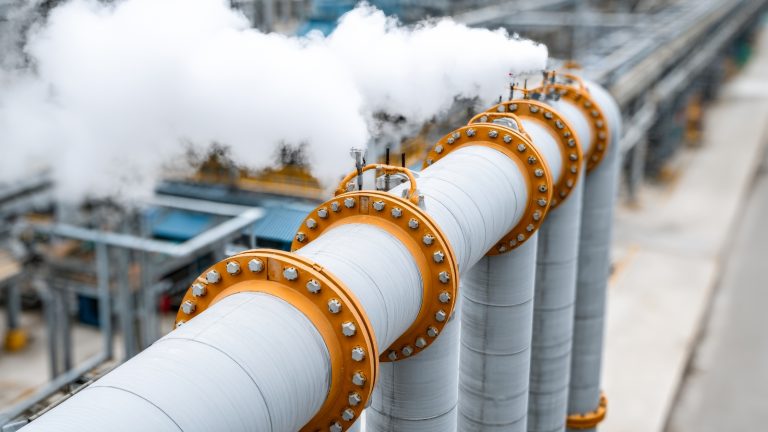
Advanced technologies can greatly reduce emissions in many industries. Real-time emission monitoring and automated data systems, you can respond to emission upticks as soon as they occur, doing wonders for compliance, reducing waste byproducts and minimising operating costs.
IoT Sensors and Continuous Emission Monitoring Systems (CEMS)
This signifies the capacity to offer real-time monitoring of pollutants NOx, SOx and PM through IOT sensors and CEMS. These instruments support time-triggered air quality monitoring IoT systems, which may provide alarms for abnormal emissions.
Paired with air sensor technology industrial, these systems offer actionable insights for prompt corrective action and continued industrial air emissions reduction to help you keep your operations sustainable and in compliance.
AI-Based Anomaly Detection for Emission Spikes
Even the most advanced technology can be beaten with artificial intelligence predictive emissions monitoring, alerting when emissions go unexpectedly high immediately. By sifting through past patterns and current data, AI is used to forecast high-emission events before they happen.
Further, this method helps minimise the risks of VOC solvent emissions management, fugitive emissions and inefficient process operation. Plus, it offers you a more intelligent method to implement industrial sustainability practices, all while saving on fuel and energy costs.
Cloud Reporting, Alerts, and Automated Compliance Logs
Cloud-based systems provide for easy access and reporting of emission compliance data, as well as obtaining real-time data in one central location. This is when threshold violations trigger instant notification to teams and prompt response.
Also, CEMS integration guarantees data accuracy, streamlines regulatory reporting and offers a cohesive view of industrial air emissions reduction for easier compliance and operational support.
How Can Industrial Processes Be Optimised to Lower Emissions?
The optimisation of industrial processes is the key to minimising environmental impact and cutting costs. Through process redesign, new equipment installation and process optimisation, emissions reductions occur.
You can realise tangible improvements in both air quality and downstream energy performance.
Improving Combustion Efficiency and Energy Optimisation
Excessive CO₂e, NOx, and SOx are generated due to inefficient combustion. Efficient fuel-air mixture and combustion control of boilers and heaters result in energy savings.
You need to pay attention to the fact that, in addition to fewer emissions, better energy efficiency also cuts costs. Powerful sensors and automation floor the glass to be produced at an optimum, always within emission requirements in your industrial air permit application – sustainable over the years.
Upgrading Equipment and Minimising Leakages
Leak control among fugitive emissions is also compromised by leaking or obsolete equipment. The exchange of valves, compressors and pumps, as well as sealing possible leakage points, will lead to the emission remaining under limits.
You can achieve increased efficiency and effectiveness through the optimisation of air pollution control equipment, such as baghouse filtration systems and scrubber systems emissions. This results in lower particulate matter and VOC emissions, and it offers greater industrial air emissions reduction without sacrificing operational capability.
Process Redesign and Cleaner Production Workflows
Transforming the way factories run allows for better optimisation of processes and reduces emissions from unnecessary steps, generating fewer pollution byproducts. Water-based low-VOC products, along with a thermal oxidiser for pollution control and a catalytic oxidiser for emissions control on production lines, help make the brand’s manufacturing process cleaner.
By integrating processes with best available control technology BACT you will be able to reduce emissions and increase efficiency, ensuring both efficient and safe working environments.
How Can Maintenance Strategies Reduce Industrial Emissions?
There is no doubt that your maintenance is important for keeping emissions down. Proactive tactics help avoid costly equipment failure.
They also have the added benefit of reducing industrial air emissions, resulting in an all-around more efficient and environmentally friendly plant.
Predictive Maintenance to Avoid High-Emission Failures
A predictive maintenance approach can help prevent such incidents by detecting potential equipment failures before they cause high emissions. When you monitor strategically with analytics and sensor data, you can identify service gaps ahead of time.
This supports operational equipment maintenance emissions, minimises production of unplanned plant waste and promotes adherence to ISO 14001 environmental management whilst managing emissions to maintain both the environment and its operation.
Early Detection of Faulty Valves, Motors, Boilers, Compressors
Sources of excessive emissions are frequently faulty equipment, including valves, motors and compressors. You can use the air filtration industrial technologies, detection and the continuous emissions monitoring CEMS for early recognition to protect against leaks and overflows.
When you regularly maintain your equipment, you can create efficient and steady industrial air emissions reduction supported by worker safety, as well as EPA emissions standards compliance for your facility.
Linking APM and Maintenance Data With Emission Monitoring
Combining the performance of assets such as boilers with emission control information, APM systems offer a complete view of industrial operations. You can also track equipment health against emissions, hotspots and prioritise maintenance.
This data-driven approach comes with real-time air quality monitoring and an efficient industrial sustainability process as well.
What Role Does Workforce Training Play in Emission Reduction?

Have you realised that having a well-qualified workforce is one of the conditions for achieving the target reduction in industrial air emissions?
Workers who know how to use energy, handle facilities and the like, what we call best practices in these areas, are a very important mechanism to reduce emissions without sacrificing productivity.
Training Teams on Energy-Efficient Operations
Educating your staff about energy efficiency air systems and low-emission operation techniques also means that sustainable practice is more easily adhered to. When added to the workplace air quality standards and safe ways of taking care of chemicals, workers can take part in helping the industrial sustainability protocol.
Moreover, this lowers VOC emission mfg and helps with industry air permit requirements. Knowledgeable squads are your first defence against offensive pollution.
SOP Standardisation for Cleaner Processes
Standard Operating Procedures (SOPs) for maintaining air pollution control in manufacturing are followed by staff on all three shifts. Standardisation also minimises the human factor, ensures emission consistency levels and corresponds with best available control technology BACT.
Clear SOPs also include source capture air emissions processes, which, when combined with air filtration industrial technology. Plus, wet scrubber technology helps keep companies within permitting limits and improves the quality of overall air.
Accountability for Environmental Performance
Through attributing environmental results, teams are encouraged to monitor and take care of emission targets. By associating individual or group performance with the reduction of industrial air emissions, compliance with principles in the ISO 14001 environmental management standard can be facilitated.
It will also be conducive to draw fugitive emissions under control, as well as effective management of VOC solvent emission and ongoing improvement in the manufacturing air quality.
What KPIs Help Track and Improve Emission Performance?
The key is to measure and then improve emissions by tracking the right KPIs. However, the real question is, how to use your real data?
By using this actual feedstock, you can optimise your operations, minimise energy waste and achieve regulatory compliance more effectively.
Emission Intensity, Emission per Production Unit, Fuel Efficiency
Tracking emission intensities, emission per volume of production and fuel efficiencies serve to give an indication concerning industrial sustainability and operations performance.
These indicators reveal opportunities for energy efficiency improvements and process optimisation emissions reduction, built to help you save on carbon footprint manufacturing while keeping productivity.
Identifying High-Emission Assets and Processes
It is necessary to identify high-emissions hardware and processes for successful reduction of industrial air emissions. With air sensor technology industrial realm and CEMS, you can leverage the waste of energy wastage of energy to detect where things are going wrong.
This methodology is a natural fit with predictive emission analytics, allowing the user to ensure their uptime and steer clear of expensive compliance issues.
Dashboards for Compliance and Operational Optimisation
It is possible to visualise the data from CMS-monitoring-IoT sensors and maintenance logs in Dashboards. This allows for real-time air quality monitoring, automatically sends alerts and streamlines emission compliance reporting.
With module KPIs, you can make smart choices to better operations and ensure that industrial sustainability is driving all decisions over time.
How Do Digital Twins Help Forecast and Reduce Emissions?

Digital twins give you a virtual counterpart of your industrial assets, so you can simulate various operating conditions to minimise emissions. It is a real game-changer for industrial air pollution solutions.
Scenario Modelling and Emission Impact Simulation
Digital twins facilitate optimisation of processes emissions abatement by simulating equipment modifications, process tuning and energy utilisation. Testing scenarios will virtually allow you to anticipate thermal oxidiser pollution control efficiency.
The latter helps assess scrubber systems emissions, and maximise industrial air permit requirements compliance – all without affecting actual operations.
Predicting Future Emission Hotspots
Digital twins predict through analysis of operational data and historical trends, where, in a process, certain areas are susceptible to high emissions. This valuable predictive information informs fugitive emissions control, source capture air emissions compliance and removes dependence upon reactive measures.
Both support sustainable industrial practices and the reduction of long-term operational costs.
Testing Emission Reduction Strategies Virtually
You can test air filtration industrial technology, activated carbon adsorption filtration or baghouse filtration systems before you make any changes. Digital twin technology enables safe experimentation to determine if new strategies deliver actual reductions in emissions.
Further, it helps achieve compliance with EPA emissions standards and supports the enhancement of manufacturing air quality management.
Why Cerexio Environmental and Asset Solutions Enable Real Emission Reduction
Partnering with advanced solutions like Cerexio Air Management System, a comprehensive platform that integrates real-time monitoring, predictive analytics, and unified dashboards, allows you to optimise operations while maintaining compliance and achieving industrial air emissions reduction goals.
Real-Time CEMS Integration With IoT and Digital Workflows
Cerexio connects the CEMS monitoring system’s air sample data to air quality monitoring IOT systems that provide real-time actionable intelligence. Automated processes enable rapid responses to emission spikes, reducing industrial air emissions and streamlining operations.
This connection guarantees your factory process flows are being met in relation to EPA emissions standards and industrial air permit regulations.
AI-Driven Emission Predictions and Proactive Alerts
With AI predictive emissions analytics, the Cerexio Air Management System predicts emission limitations and alerts proactively. Who uses it gains the capacity to issue real-time POI alerts.
This means that appropriate action can be taken several steps ahead of other technologies used for waste gas management and control, such as VOC solvent emission control, thermal oxidiser environmental compliance and wet scrubber technology.
Unified Dashboards for Compliance and ESG Reporting
The system’s dashboards synthesise emission compliance, operational metrics and industrial air permit requirements all in a single view. Manufacturers and asset managers can easily monitor: carbon footprint manufacturing, KPI (Key Performance Indicators) performance management and industrial sustainability operations in support of informed decision-making for reinforcing ESG performance in addition to reducing industrial air emissions.
How Cerexio Helps Industries Achieve Sustainable Operations
Combining asset performance and emission control, process optimisation, maintenance and workforce training, the Cerexio Air Management System enables them to execute their industrial emission reduction strategies successfully. Utilising a systems-based approach delivers actual, verifiable reductions in emissions, better ESG results and sustainable manufacturing operations for years to come while capitalising on the best industrial air emissions reduction practices combined with world-class technology.
Call for a free demo today.
Cerexio-Clean the AIR Around You.
FAQ About Industrial Air Emissions
Industries reduce emissions by combining real-time monitoring, energy efficiency improvements, process optimisation, and predictive maintenance. Using CEMS, AI analytics, and cleaner production techniques helps detect emission sources early, minimise losses, and maintain regulatory compliance.
Major sources include combustion processes, chemical reactions, VOC solvent use, leaking valves, boilers, and outdated equipment. Poor maintenance and inefficient workflows often amplify emissions, making continuous monitoring and process optimisation critical for long-term emission reduction.
Real-time monitoring detects emission spikes instantly, preventing violations before they occur. It enables accurate reporting, faster corrective actions, and continuous compliance with environmental regulations while reducing penalties, downtime, and reputational risks for industrial facilities.
Predictive maintenance identifies failing equipment before breakdowns occur. By addressing issues early, industries prevent high-emission events, improve energy efficiency, reduce unplanned downtime, and maintain consistent emission levels across critical assets and processes.
Digital platforms unify emission data, asset performance, and compliance reporting into dashboards. They provide real-time visibility, AI-driven insights, and proactive alerts, helping manufacturers optimise operations, meet ESG goals, and achieve measurable, long-term emission reductions.