
There is a renaissance in the manufacturing of medical devices with precision, speed, and intelligence coming together to save lives. The global Industry 4.0 market, which the U.S. and Europe helped spur, will rise from an estimated $239 billion in 2026 to more than $801 billion by 2034, and the move to smart manufacturing is quickly moving through healthcare production.
Meanwhile, the medical devices industry is facing demands for better efficiency regarding compliance with regulations and faster time-to-market with cost-effective and quality products. However, just 24% of medical device companies use AI today, and this suggests enormous room for disruption.
Industry 4.0 steps in here by converging IoT, AI, robotics and data analytics to transform the design, manufacturing and delivery of medical devices. In this article, we take a look at smart manufacturing technology, the ways it is transforming the production of healthcare and why medical device manufacturers should adopt it to be fit for the future.
We will explore
- What Is Manufacturing of Medical Devices in the Industry 4.0 Era?
- Why Smart Manufacturing Matters in Medical Device Production
- Key Technologies Powering Smart Manufacturing of Medical Devices
- Benefits of Smart Manufacturing in Healthcare Production
- Challenges in Implementing Industry 4.0 in Medical Device Manufacturing
- How Industry 4.0 Is Transforming the Future of Medical Device Manufacturing
- Best Practices for Implementing Smart Manufacturing in Medical Device Production
- FAQs About Manufacturing of Medical Devices
What Is Manufacturing of Medical Devices in the Industry 4.0 Era?
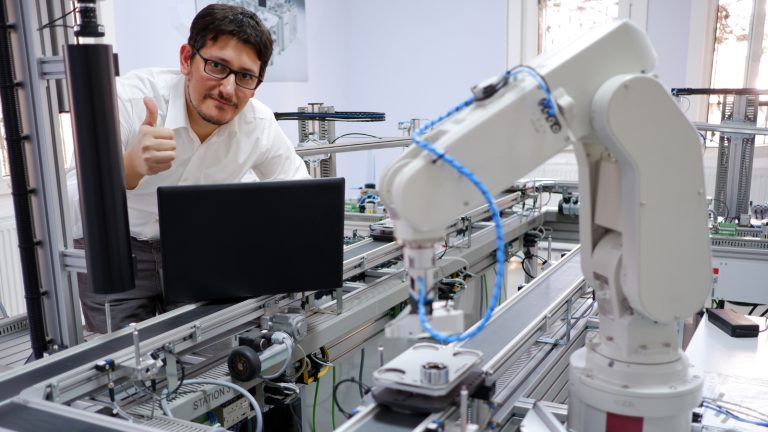
Medical device manufacturing is a process that involves the preparation of health care products such as implants, diagnostic equipment, surgical tools, and wearable devices that use human biological materials or are applicable to the human body.
In the Industry 4.0 age, this process progresses from traditional, manual production systems to complete digital interconnected ecosystems. It integrates the cyber-physical systems and IoT-enabled systems with a completely cloud-enabled factory for real-time monitoring and making decisions.
By contrast, smart manufacturing of medical devices is concerned with:
- Data-driven production processes
- Automated quality control
- Predictive maintenance
- Digital traceability
This shift allows manufacturers to comply with stringent regulatory demands more efficiently and with fewer errors.
Key Takeaways
- Smart technologies like AI, IoT, and automation are transforming the manufacturing of medical devices by improving efficiency, precision, and real-time decision-making.
- Industry 4.0 enables faster time-to-market, better quality control, and full traceability, all of which are critical for meeting strict healthcare regulations.
- Despite benefits, challenges such as high costs, regulatory barriers, cybersecurity risks, and skill gaps can slow down adoption.
- Companies that invest in smart manufacturing solutions and digital strategies will gain a competitive edge in delivering innovative, high-quality medical devices.
Why Smart Manufacturing Matters in Medical Device Production

Smart manufacturing is not the latest invented thing, but it is a need in health care.
The medical device industry works under regulatory frameworks that demand high-level precision, traceability and compliance. An Industry 4.0 tech enables everything that happens during production to be monitored, recorded, and ideally optimised.
Moreover, with an ageing population and mounting chronic diseases, the healthcare demands are also increasing. Industry 4.0 enables manufacturers to:
- Scale production efficiently
- Reduce time-to-market
- Improve product quality
- Enhance patient safety
In addition and crucially, Industry 4.0 enables patient-centric innovation where devices can be integrated with the digital health ecosystem and remote monitoring systems.
Key Technologies Powering Smart Manufacturing of Medical Devices
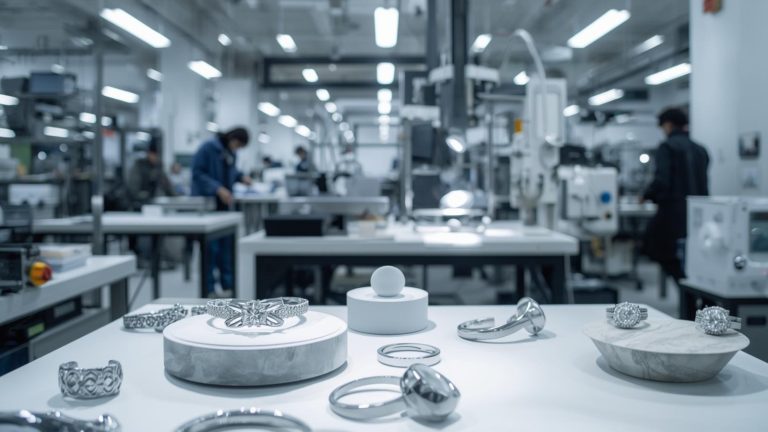
Advances in smart manufacturing of medical devices have incorporated new technologies to support real-time data, automation, and intelligent control/decision-making across production systems.
Internet of Things (IoT) in Medical Manufacturing
Manufacturing IoT connects machines, sensors, and systems across the production line, allowing them to collect data and monitor the process in real-time. IoT provides end-to-end visibility throughout the process, continuously monitoring critical parameters such as temperature, humidity, pressure, and machine performance in the manufacturing of medical devices.
This data enables manufacturers to identify out-of-the-ordinary immediately, thus preventing faulty items from being received and reducing any chances of violating extremely narrow healthcare regulations.
IoT also plays a role in remote monitoring as well as predictive alerts; therefore, operators can also do something about it if they detect any signs of potential failure.
Moreover, connected devices can enable manufacturers to consistently deliver a product, waste less, and minimise downtime.
According to the latest industry insights, more than 70% of manufacturers invest in IoT for improved operational efficiency. As you can see, IoT adoption in healthcare production is a key pillar for Industry 4.0.
Artificial Intelligence (AI) and Machine Learning
AI and Machine Learning are changing the decision-making process while manufacturing a medical device. These technologies process large datasets originating from production lines for the purpose of pattern recognition, anomaly detection, and predicting failure before it occurs.
Not to mention that this helps manufacturers shift their operations from reactive to proactive, which in turn increases efficiency and product quality.
It is also visible that AI improves quality control by detecting minute defects that human inspectors might overlook, thereby assuring increased accuracy in medical device production. Additionally, machine learning algorithms get better at their task with time, streamlining processes and cutting operational expenses.
In spite of the challenges faced by many organisations to regulate the adoption of AI, new studies show the increasing impact of AI in the near future, with companies reducing downtime by 20%-30% improvement in productivity when integrated in manufacturing.
Robotics and Automation
One of the keys to the manufacturing of medical devices is precision and consistency, which can only result from the use of automation and robotics.
Repetitive and complicated tasks that pose danger to human lives can be performed with utmost precision, eliminating human error as much as possible. This is especially essential in the assembly of intricate constructs like microelectronics, surgical tools, and implantable devices, where even the slightest variation may jeopardise the safety of patients.
Moreover, advanced robotics does allow production to high speed; quality control measures are stringent, and production is highly scalable without sacrificing reliability.
Cobots, or collaborative robots, are designed to be operated in close proximity to human operators, making them a great fit for increasingly productive and safer environments. According to industry data, the global industrial robotics market is advancing largely due to the precision-heavy healthcare manufacturing sector.
Digital Twins
Digital twins are virtual replicas of the physical production system that enable manufacturers to simulate, analyse, and optimise operations as they happen, in real-time.
For the manufacturing of medical devices, companies can use digital twins to run through various test scenarios before a change is made on the factory floor in order to see how the changes will perform and where inefficiencies may arise.
Such a capability eliminates expensive trial-and-error processes, reducing downtimes and ensuring seamless and high-efficiency operations.
Digital twins are also used for predictive maintenance, which models equipment behaviour to predict when failure may occur. When combined with real-time data, these systems evolve all the time based on actual conditions.
Digital twins are such an effective tool in smart healthcare manufacturing because they reduce operational costs significantly. Also, there are several studies being conducted on the use of digital twins in healthcare, and they suggest that organisations that use digital twins can improve operational efficiency by 25%.
Cloud Computing and Big Data
What are the necessary technologies for the manufacturing of medical devices to enable data-driven decision-making? Cloud allows you to store petabytes of production data in a secure environment and access this data easily from several locations and teams.
Big data analyses the statistics of these data and derives trends, product quality problems, optimises production performance and provides feedback. That helps manufacturers enable quicker and more informed decisions while also driving ongoing operational improvements.
Also, collab-oriented, cloud systems allow team members to share knowledge and insights in real time.
Recent industry statistics show that more than two-thirds of manufacturers are using cloud technologies to increase agility. The latter showcases how essential this cloud technology is to the future of Industry 4.0 regarding medical device manufacturing.
Benefits of Smart Manufacturing in Healthcare Production

Together, the smart manufacturing streamlines the production of health care devices with better quality, speed, efficiency and compliance through advanced Industry 4.0 technologies.
1. Improved Product Quality and Compliance
With automatic monitoring and inspection systems, smart manufacturing also guarantees precision at each stage of the manufacturing of medical devices. AI-based tools and sensors for production parameters will track everything and detect small deviations in production instantly.
It decreases the defects to a great extent and complies with the rigorous global regulations mandated by the FDA and ISO standards.
Manufacturers which bring automation in their quality systems may decrease the defect rates by 35%, as per recent reports. Plus, they will be able to maintain consistency of their designs, product reliability, and patient safety.
2. Faster Time-to-Market
Smart manufacturing shortens the production cycles in the manufacturing of medical devices by automating workflows and implementing digital technologies.
This is where rapid access to process-relevant data and predictive analytics speed up decision-making, removing bottlenecks and delays. This enables manufacturers to expedite their time-to-market for novel medical devices, which is increasingly important in the rapidly changing healthcare ecosystem.
According to the industry data, organisations leveraging Industry 4.0 have shortened product launch timelines, thus improving their competitive edge and their ability to respond to patient needs.
3. Enhanced Operational Efficiency
The manufacturers have the ability to boost efficiency when it comes to the manufacturing of medical devices through optimal resource utilisation and waste minimisation with Industry 4.0 technologies.
The coordination of workflow improves using automated systems and data-driven insights, therefore reducing manual intervention and improving productivity along the production line. The result is a major reduction in cost, all while maintaining higher output levels.
Industry reports signify that smart manufacturing can enhance Overall Equipment Effectiveness (OEE) by up to 25%, which makes operations agile and scalable for healthcare manufacturers.
4. Predictive Maintenance and Reduced Downtime
Predictive maintenance relies on AI and IoT data to monitor the health of equipment and use predictive analytics to identify impending failures before they take place.
This proactive strategy minimises unexpected downtime, lowers maintenance expenses, and increases the life cycle of equipment.
This means manufacturers can pinpoint issues at an early stage of production and eliminate costly production halts. As per the industry expert insights, up to 50 per cent reduction in downtime is possible through predictive maintenance, which will enhance operational reliability in healthcare manufacturing situations.
5. Better Traceability and Transparency
The systems offer complete traceability of everything that goes into the manufacturing of medical devices, from raw materials to finished products, giving visibility across the manufacturing floor from one end to the other.
Due to digital records, IoT tracking, and cloud-based platforms, manufacturers can monitor every stage of production in real-time. It is vital for ensuring regulatory compliance, addressing audits and initiating product recalls when needed.
Also, we can see that digital traceability builds trust in the healthcare output system. Not to say that this increases compliance accuracy significantly, according to experts.
Challenges in Implementing Industry 4.0 in Medical Device Manufacturing
Regulation, cost, security, and workforce readiness are key hurdles to overcome for Industry 4.0 in medical device manufacturing.
- Regulatory and Compliance Barriers
It is common knowledge that all medical devices are produced under strict regulations of various certification standards, like FDA and ISO standards, making the adoption of Industry 4.0 technologies a complex and lengthy process.
Every new system needs to be validated to ensure compliance, but this comes with delays.
Again, the need to maintain audit trails and documentation in the digital environment becomes yet another point of challenge.
According to reports, regulatory compliance attempts can also take an implementation cycle on either side by 30%, which is a roadblock for any digital transformation.
- High Initial Investment Costs
Industry 4.0 in manufacturing medical devices may require heavy initial investment in sophisticated infrastructure, software platforms, and education of the workforce.
It can be unaffordable for small- and medium-sized manufacturers and restrict their capability to compete with larger organisations.
When considering factors in the costs of integrating the system and maintaining it, the financial burden increases even more. According to industry studies, digital transformation costs initially can be 15–25% of the total operational budgets; investment planning needs to be strategic.
- Data Security and Privacy Concerns
The more connected the devices are in the manufacturing of medical devices, the higher the level of risk of cyber threats and data breaches.
Patient Information (PHI) and production data (Intellectual Property) need to be safeguarded at all times. Cyberattacks can have major repercussions, disrupting operations and threatening the integrity of their product and the face of the business, and may result in regulatory fines.
On the other hand, businesses must adopt strong measures to ensure proper cybersecurity, provide quality encryption, and maintain safe data storage. Approximately 25% of global cyberattack targets are now attributed to manufacturing, according to recent statistics.
This surely emphasises the importance of addressing security risks in this area.
- Skill Gaps and Workforce Resistance
Transitioning to smart manufacturing in the manufacturing of medical devices necessitates skills in AI, IoT, and analytics, which are scarce at the moment. This barrier slows down digital adoption, as many organisations do not manage to attract qualifying professionals.
Your manufacturing company may also face resistance to change from your current employees, who may fear automation, or they may not be well-trained.
This is where workforce development becomes a priority for more than half of surveyed manufacturers, noting skill shortages among their top five challenges.
How Industry 4.0 Is Transforming the Future of Medical Device Manufacturing

Manufacturing of medical devices is influenced by Industry 4.0, enabling the smarter factory, healthcare, and personalisation.
Shift Toward Smart Factories
The manufacturing of medical devices in conventional facilities is quickly evolving to smart factories where every machine, system, and process is connected to each other.
These environments leverage real-time data and automation to optimise production without needing a human presence at every moment. This allows for faster production, fewer errors, and greater uniformity.
Driving future healthcare manufacturing efficiencies, smart factories can increase productivity without any doubt.
Integration of Healthcare Ecosystems
Medical devices are increasingly becoming part of interconnected healthcare ecosystems within the manufacturing of medical devices landscape.
Devices now communicate with hospital systems, cloud platforms, and remote monitoring tools, enabling real-time data exchange. This improves patient care and supports data-driven healthcare decisions.
Studies show that connected healthcare systems can improve clinical outcomes greatly, highlighting the growing importance of integration in modern manufacturing strategies.
Customised and Personalised Medical Devices
In the manufacturing of medical devices, Industry 4.0 paves the way to mass customisation, allowing manufacturers to create devices to suit the individual needs of patients.
Having technologies, such as 3D printing, AI, and digital design tools, facilitates the making of personalised implants, prosthetics, and wearable devices. This increases the effectiveness of treatment and aids in patient satisfaction.
The personalised medical device market is increasingly being driven over more than 8% per annum in line with demand for patient specificity.
Sustainable Manufacturing Practices
The manufacturing of medical devices industry is witnessing sustainability gain a foothold with the help of Industry 4.0 for reducing the environmental footprint.
In this context, intelligent systems optimise energy use, minimise waste and enhance production efficiencies at all stages in the production process. This helps meet environmental objectives and lowers operating expenses at the same time.
According to reports, smart manufacturing decreases energy consumption technologically, up to 20%, and it is indeed a key aspect of sustainable healthcare manufacturing.
Resilient Supply Chains
In this juncture, digital transformation improves visibility and responsiveness by growing supply chain resilience.
With true tracking, predictive analytics, and automated systems, manufacturers can foresee disturbances and adjust spontaneously. It keeps production rolling, and it keeps delivery flowing, regardless of global challenges.
Industry data shows that firms with digital supply chains are 50% more resilient to disruptions. It is clear that such firms are better prepared for the uncertainties of the future.
Best Practices for Implementing Smart Manufacturing in Medical Device Production
The combination of strategic plan, scalable technology, and emphasis on people and process is the key to successful implementation of Industry 4.0 concepts in the manufacturing of medical devices.
Start with a Digital Transformation Strategy
Success in the manufacturing of healthcare devices relies on a clear digital transformation strategy. This means that companies need to set objectives, determine which technologies will be central to their business and how the key initiatives will align with business and regulatory needs.
A well-laid roadmap facilitates easy implementation and reduces risks. Research found that organisations with a clear digital strategy are 2.5times more likely to achieve successful transformation outcomes, underscoring the need for it in any Industry 4.0 effort.
Invest in Scalable Technologies
Selecting scalable and flexible solutions is imperative to climatic success. Scalable means manufacturers will be able to scale their operations and scale with future technology upgrades without needing to replace entire systems.
That has been said for better costs and flexibility. Scalable digital solutions can cut down the costs to upgrade, and they are excellent options for scaling healthcare manufacturers.
Focus on Data Integration
They can also help optimise operations in the manufacturing of healthcare devices, where data integration is critical. Integration within the systems across quality, production, and supply chain organisations allows for smoother data transfer and more informed decisions.
Having real-time access to integrated data means less time spent searching for it and fewer mistakes. As we see, smart data integration sets apart successful manufacturers from the rest, helping strengthen operational performance.
Train and Upskill Workforce
Workforce training is the key to Industry 4.0 in the manufacturing of medical devices.
Workers need to learn new digital, data analytics, and automation system skills. Training will be less obstructive and equip businesses with better use of new tools. Yet, despite evidence from companies that assigning employees to analytics projects leads to higher productivity.
Ensure Regulatory Compliance From Day One
The regulatory compliance should be integrated from the first day itself while implementing any of the initiatives of Industry 4.0 in the manufacturing of medical devices.
Compliance built into the system itself mitigates risks, delays and smoother audits. With digital tools, documentation and reporting can be automated, enhancing accuracy and efficiency.
Data from the industry has shown that early compliance integration can address up to 40% of regulatory issues, establishing it as a critical best practice to implement successfully.
How Cerexio MES Enables Smart Manufacturing of Medical Devices
Cerexio MES is a robust Manufacturing Execution System in Singapore that gives you the ability to create your medical device manufacturing as a fully customisable smart production ecosystem designed with the needs of the healthcare standard evolution in mind.
In comparison to large, confining frameworks, Cerexio MES fits into any form of manufacturing size, process, and compliance.
This allows for real-time production monitoring, end-to-end traceability, and predictive analytics for quality control.
Cerexio MES has been recognised as a game-changing component in the medical manufacturer industry 4.0 arena as it seamlessly interfaces with the production lines, eliminating errors, enhancing efficiency and quicker time to market.
Call for a personalised demo today.
Cerexio-We Promise Excellence
The Future of Medical Device Manufacturing Is Smart
Industry 4.0 is a game-changer for the healthcare devices production landscape. Smart factories, advanced analytics to drive intelligent products, AI-powered digital twin, IoT–the future of healthcare production is more connected, more efficient, more intelligent and more ubiquitous than you can imagine.
Although obstacles like regulatory compliance and the high capital costs exist, the advantages outweigh the threats immensely. Those companies that incorporate smart manufacturing today will shape the future of health innovation.
With the ongoing evolution of Industry 4.0, medical device manufacturers need to start to act now, adopting these technologies to enhance quality, efficiency and patient outcomes in a fast-shifting environment.
FAQs About Manufacturing of Medical Devices
Manufacturing of medical devices is the process of designing, producing, assembling, and testing healthcare products such as implants, diagnostic tools, and surgical instruments. It involves strict quality control, regulatory compliance, and precision engineering to ensure safety, effectiveness, and reliability for patient use.
The key steps in the manufacturing of medical devices include product design, material selection, prototyping, testing, regulatory approval, and mass production. Each stage must follow strict compliance standards to ensure product safety, quality, and performance in real-world healthcare environments.
Quality control is essential in the manufacturing of medical devices because it ensures products meet strict safety and regulatory standards. It helps prevent defects, reduces risks to patients, and ensures consistent performance, which is critical for maintaining trust and compliance in the healthcare industry.
Industry 4.0 improves the manufacturing of medical devices by using technologies like IoT, AI, and automation to enhance efficiency, accuracy, and traceability. These technologies enable real-time monitoring, predictive maintenance, and faster production while ensuring high-quality standards and regulatory compliance.
The manufacturing of medical devices is governed by regulations such as FDA guidelines, ISO 13485, and other regional compliance standards. These regulations ensure that devices are safe, effective, and manufactured under controlled processes that meet global healthcare quality requirements.