

Did you know that over 60% of manufacturers struggle with inaccurate demand forecasts, leading to excess inventory and lost revenue? In today’s volatile markets, demand forecasting has become a strategic necessity, not just an operational task.
From managing production costs to aligning with future demand, manufacturers rely on data-driven forecasts and predictive analytics to remain competitive. This is where a well-structured forecasting system helps businesses anticipate demand shifts, reduce forecast error, and improve forecast accuracy across the entire demand chain.
In this article, we explain Demand Forecast in depth.
The article covers
- What Is Demand Forecasting and How Does It Work?
- Types of Forecasting Methods Used in Manufacturing
- Key Components and Inputs for Accurate Demand Forecasting
- The Role of Demand Forecasting in Manufacturing Operations
- Benefits of Accurate Demand Forecasting in Manufacturing
- Common Challenges in Demand Forecasting
- Best Practices for Effective Demand Forecasting in Manufacturing
- Demand Forecast Accuracy and Performance Measurement
- Demand Forecasting Tools and Software in Manufacturing
- Future Trends in Demand Forecasting for Manufacturing
- FAQs About Demand Forecasting
What Is Demand Forecasting and How Does It Work?

A demand forecast helps manufacturers predict future product demand accurately using structured data and analytics.
Key Takeaways
- Demand forecasting is essential for aligning production, inventory, and supply chain decisions in manufacturing.
- Combining quantitative and qualitative forecasting with predictive analytics improves forecast accuracy.
- Accurate forecasts reduce costs, minimise waste, and enhance overall operational efficiency.
- Continuous monitoring, the right tools, and adaptable systems drive long-term forecasting success.
Demand Forecasting Definition and Core Concepts
At its core, demand forecasting is the process of predicting future demand for a product, helping businesses align production with anticipated demand.
It involves analysing consumer and market demand, as well as various demand levels, using statistical models and economic theories. Concepts like elasticity of demand, demand elasticity, and demand variability play a key role in understanding fluctuations.
A good demand forecast considers both short-term demand and long-term demand, ensuring accurate planning and minimising under-forecasts or over-forecasts.
The Demand Forecasting Process in Manufacturing
The forecasting process includes data collection, estimation, model selection, and generating a forecast report.
Manufacturers rely on ongoing forecasting process improvements to refine forecast model performance. This includes evaluating actual demand results against predicted demand and adjusting forecasting processes accordingly.
A strong forecasting system integrates forecasting tools and enables ongoing forecasts.
Whether it is a first forecast or baseline forecast, continuous iteration helps businesses forecast better and meet specific forecasting needs.
Key Types of Demand Forecasting
Manufacturers use various approaches, like short-term demand forecasting for immediate operations and long-term demand forecasting for strategic planning.
Active demand forecasting focuses on influencing demand through pricing strategy, while passive demand forecasting relies on historical data.
Internal demand forecasting and macro-level demand forecasting help businesses assess both internal operations and future industry demand.
However, each demand forecast method must align with forecasting purposes and operational goals.
Types of Forecasting Methods Used in Manufacturing
Manufacturers use multiple forecasting methods to improve accuracy and adapt to changing demand patterns.
Quantitative Forecasting Methods
Quantitative forecasting relies on historical data and mathematical models such as time series analysis and time-series forecasts.
This is when techniques like econometric modeling help identify relationships between variables like price, production costs, and market trends.
Quantitative demand forecasting is widely used in manufacturing due to its accuracy. These quantitative forecasting methods support data-backed demand forecasts and enable accurate forecasting across complex operations.
Qualitative Forecasting Methods
Qualitative forecasting uses expert judgment and insights from economic forecasters to predict future demand markets. This includes qualitative forecasting methods like Delphi techniques and market research.
Moreover, qualitative demand forecasting is useful when historical data is limited.
When they analyse economic trends, market trends, and consumer behaviour, businesses generate insightful forecasts. These methods complement quantitative forecasting and improve overall forecast accuracy.
Advanced Forecasting Models and Techniques
Modern manufacturers use advanced forecasting models like reference class forecasting, rule-based forecasting, and AI-driven predictive analytics.
A robust demand forecasting model enhances forecast model performance and reduces forecast bias. Plus, predictive analysis and machine learning algorithms allow businesses to generate fine-grained forecasting insights.
As you can see, choosing the desired forecasting model depends on the forecasting challenge, data availability, and forecast needs.
Key Components and Inputs for Accurate Demand Forecasting

Accurate demand forecasting depends on multiple internal and external data inputs.
1. Market and Economic Factors
Understanding market demand, consumer demand, and future demand is essential if you want to stay ahead instead of reacting too late.
Smart manufacturers do not just observe numbers; they interpret them using evolving economic theories and real-time economic trends. These factors directly influence demand growth and sudden demand shifts.
Since it makes it possible to continuously analyse markets and identify recurring demand trends, businesses can build robust demand forecasts that reflect reality, not guesswork.
The latter gives them a strong competitive edge.
2. Pricing and Cost Considerations
Let’s be honest, your pricing strategy can make or break your forecast.
Every adjustment in pricing directly affects demand levels and buying behaviour. Add to that rising production costs and shifting budgets, and your demand forecasting capabilities must be sharp.
A smart forecasting approach does not treat pricing as a separate decision; it integrates it deeply into supply and demand dynamics.
When done right, this ensures a truly accurate demand forecast, helping you avoid costly miscalculations.
3. External Influences and Seasonality
Not all demand patterns are within your control, and that is where things get interesting.
External factors like weather, which means unexpected shifts in weather forecasts, and predictable seasonality, can drastically reshape demand planning. Think about seasonal demand spikes or sudden drops due to climate conditions.
Successful manufacturers track stable demand patterns while staying flexible enough to adjust to intermittent demand forecasts.
This adaptability is what separates average forecasting from high-performing strategies that consistently improve forecast accuracy.
The Role of Demand Forecasting in Manufacturing Operations
Demand forecasting drives production, inventory, and revenue decisions across manufacturing operations.
Production Planning and Scheduling
Imagine running production without knowing what customers actually want; that is a risk no manufacturer can afford.
Reliable demand forecasts ensure your production lines align perfectly with forecasted demand, eliminating inefficiencies. This directly improves time to market, helping you deliver faster than competitors.
By using a well-defined forecast horizon, manufacturers can confidently plan for future product demand. They can also reduce waste and maintain smooth operations without overloading resources or missing opportunities.
Inventory Optimisation and Supply Chain Forecasting
Inventory is where forecasting truly proves its value. With effective supply chain forecasting, businesses maintain optimal stock levels across the entire demand chain.
Since they can compare actual demand with predicted demand, companies avoid the costly traps of overstocking or stockouts. This balance not only improves operational efficiency but also strengthens overall demand forecasting strategies. When your inventory decisions are backed by accurate insights, your entire supply chain becomes more responsive, agile, and cost-efficient.
Sales and Revenue Planning
At the end of the day, forecasting is not just about operations; it is about revenue.
Strong sales forecasting, supported by a reliable sales forecast and multiple sales forecasts, gives businesses the clarity they need to plan ahead. Whether you are analysing annual forecasts, exploring sector forecasts, or refining customer forecasting, the goal is the same: reduce uncertainty.
When you improve forecasting demand, you unlock more predictable revenue streams, better financial decisions, and long-term growth confidence.
Benefits of Accurate Demand Forecasting in Manufacturing
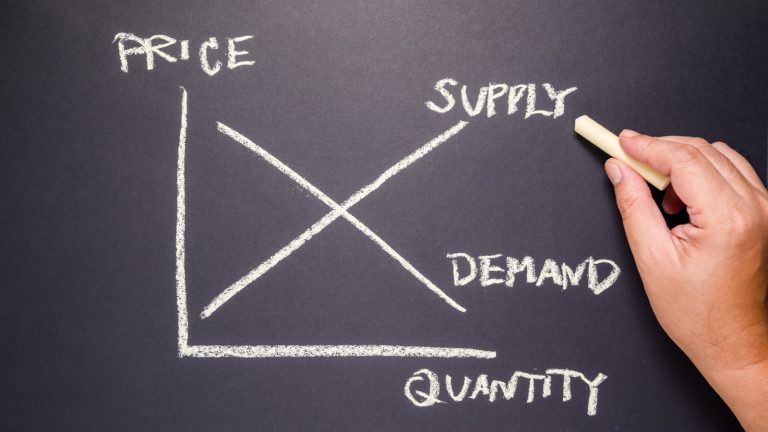
Accurate demand forecasting improves efficiency, reduces costs, and enhances decision-making.
Improved Forecast Accuracy and Decision-Making
When your forecast accuracy improves, everything else follows. Manufacturers can make smarter production, procurement, and logistics decisions with confidence.
Accurate demand forecasts combined with timely forecasts allow teams to respond quickly to unexpected shifts in demand. Instead of reacting late, you stay ahead.
Moreover, utilising data-driven forecasts ensures decisions are backed by insights, not assumptions, reducing uncertainty and risk. This level of visibility transforms planning into a strategic advantage.
Not to mention this enables leaders to act faster and with greater precision across operations.
Reduced Costs and Waste
Let’s talk about the bottom line, because that is where demand forecasting really delivers value.
By minimising over-forecasts and under-forecasts, manufacturers avoid excess inventory, stockouts, and unnecessary expenses. This directly reduces production costs while improving operational efficiency.
A well-structured forecasting approach ensures resources are allocated where they matter most. Can you guess the result? Less waste, better utilisation, and stronger margins.
When forecasting is done right, it does not just support operations; it actively drives profitability and long-term sustainability.
Enhanced Customer Satisfaction
Customer expectations are higher than ever, and forecast demand plays a crucial role in meeting them. When businesses rely on good demand forecasts and consistently deliver accurate forecasts, they ensure products are available exactly when customers need them.
This improves fulfillment rates, reduces delays, and strengthens trust.
In competitive markets, reliability becomes your differentiator. Accurate forecasting does not just support internal efficiency, as it enhances the overall customer experience.
The latter helps you build loyalty and long-term relationships.
Common Challenges in Demand Forecasting
Despite its benefits, demand forecasting presents several operational and analytical challenges.
- Forecast Errors and Bias
Even the best systems face a forecasting challenge, and that often comes down to managing forecast error and forecast bias.
A major forecast error can disrupt production plans and inventory levels, while poor forecast error calculation leads to misleading insights. Many businesses struggle because they do not continuously monitor and refine their models.
To improve forecast accuracy, organisations must regularly evaluate performance, identify gaps, and adjust strategies. Recognising these challenges early is the first step toward building more reliable forecasting systems.
- Demand Variability and Uncertainty
Here is the reality: demand variability is unavoidable.
This means sudden demand shifts, evolving customer preferences, and unpredictable future forecasts make planning complex. Add to that the challenge of managing intermittent demand forecasts, and you quickly see why forecasting is not straightforward.
Manufacturers must stay agile, constantly adjusting to changing conditions. The key is not eliminating uncertainty, but managing it effectively.
Businesses that embrace flexibility and continuously refine their forecasting models are better equipped to handle volatility and maintain operational stability.
- Data and System Limitations
Your forecasts are only as good as the data and tools behind them. Limited or poor-quality data can severely impact forecasting efforts, leading to unreliable outcomes.
Outdated forecasting software and a lack of advanced forecasting tools make it difficult to generate comprehensive demand forecasts. Without modern systems, businesses struggle to keep up with real-time changes.
Investing in the right technology and improving data quality is essential for building accurate, scalable, and future-ready forecasting capabilities.
Best Practices for Effective Demand Forecasting in Manufacturing

Adopting best practices ensures more accurate and reliable demand forecasting outcomes.
Choosing the Right Forecasting Methods
Choosing the right approach is not just important; it is foundational.
Selecting appropriate forecasting methods ensures your models reflect real-world conditions. The most effective strategies combine quantitative forecasting methods with qualitative forecasts to balance data and human insight.
Every manufacturer has unique, specific forecasting needs, so adopting the right forecasting approach is critical.
Whether you are dealing with stable demand or volatility, aligning your demand forecasting methods with business goals leads to more good forecasting outcomes and long-term success.
Leveraging Data and Predictive Analytics
If data is the fuel, then predictive analytics is the engine driving modern forecasting. By combining predictive analysis with advanced statistical models, manufacturers unlock deeper insights into demand patterns.
Today’s forecasting software enables strong forecasting capabilities by processing vast datasets quickly and accurately. This supports both detailed planning and macro-level forecasting, helping businesses understand big-picture trends.
When used effectively, these technologies transform forecasting from a reactive process into a proactive, data-driven strategy.
Continuous Improvement and Forecast Monitoring
Forecasting is not a one-time activity; it is a continuous journey. Regular evaluation of forecast model performance allows businesses to identify weaknesses and refine strategies. By closely monitoring ongoing forecasts and improving forecasting processes, companies can adapt to changing conditions.
An effective ongoing forecasting process ensures models evolve alongside the business environment. This commitment to improvement helps organisations forecast better, reduce errors, and maintain consistent performance in dynamic markets.
Demand Forecast Accuracy and Performance Measurement
Measuring forecast accuracy helps businesses refine their forecasting strategies.
Key Metrics for Forecast Accuracy
You cannot improve what you do not measure. Tracking demand forecast accuracy and overall forecast accuracy is essential for understanding performance.
By comparing actual demand with forecasted demand, businesses can identify gaps and refine their models. These insights enable more accurate forecasting and better planning decisions.
Over time, consistent measurement builds confidence in your forecasts and strengthens your ability to respond to changing market conditions effectively.
Improving Forecast Model Performance
Improving performance starts with reducing forecast error and addressing inefficiencies in your models. A focus on forecast model performance ensures that your forecasts remain reliable and relevant. By continuously refining inputs and methodologies, businesses can achieve more accurate demand forecasting outcomes.
This not only improves operational efficiency but also enhances competitiveness. In fast-moving industries, better models mean better decisions, and ultimately, better results.
Demand Forecasting Tools and Software in Manufacturing
Modern tools and software play a critical role in enabling accurate demand forecasting.
Features of Modern Forecasting Software
Today’s demand forecasting software goes far beyond basic calculations. Equipped with standard forecasting modules, automation, and AI-driven insights, these platforms support advanced applied forecasting.
They streamline workflows, improve accuracy, and reduce manual effort. With integrated dashboards and analytics, manufacturers gain real-time visibility into demand trends.
This allows teams to make faster, more informed decisions while enhancing overall efficiency across operations.
Role of AI and Automation in Forecasting
AI is redefining how manufacturers approach forecasting. Advanced forecasting models powered by predictive analytics enable deeper insights and faster decisions. These systems support fine-grained forecasting, allowing businesses to analyse demand at a highly detailed level while also generating macro-level forecasts.
Automation reduces human error and accelerates the forecasting process.
Together, AI and automation empower organisations to make smarter, data-driven decisions with greater confidence.
Future Trends in Demand Forecasting for Manufacturing

Emerging technologies are transforming how manufacturers approach demand forecasting.
AI-Driven Forecasting and Smart Manufacturing
The future of demand forecasting lies in intelligent systems.
AI-driven tools enable highly accurate demand forecasts and significantly improve forecasting capabilities. When integrated with Industry 4.0 technologies, these systems enhance operational efficiency and responsiveness.
Manufacturers can analyse vast datasets in real time, making forecasting more precise and actionable. This shift toward smarter systems is redefining how businesses plan, produce, and compete.
Real-Time and Fine-Grained Forecasting
Speed is everything in modern manufacturing. With real-time forecasting tools and advanced time-series forecasts, businesses can respond instantly to changes in demand.
This enables greater agility and faster decision-making.
Fine-grained forecasting allows companies to analyse demand at granular levels, while still maintaining a clear view through macro-level forecasts. The result is a more responsive, adaptive operation that can thrive in rapidly changing environments.
Cerexio’s Flexible Demand Forecasting Solutions Built for Every Manufacturing Reality
Cerexio MES is a robust Manufacturing Execution System that is not a rigid, one-size-fits-all system. Our software platform adapts seamlessly to your unique sales portfolio, production complexity, and data volumes.
Whether you handle high-mix, low-volume or mass production, it configures around your workflows. With advanced analytics, Cerexio MES delivers highly accurate demand forecasting, turning real-time data into actionable insights.
Our solution’s customisable architecture ensures every manufacturer, regardless of industry, can forecast demand precisely and scale operations without limitations.
Call for a personalised demo today.
Cerexio-Highly Flexible For Any Manufacturing Domain
Building a Strong Demand Forecasting Strategy
In today’s competitive landscape, demand forecasting is essential for manufacturing success. By adopting best practices, leveraging predictive analytics, and using advanced forecasting software, businesses can achieve accurate demand forecasts, reduce costs, and improve efficiency. A strong demand forecast team and continuous improvement in forecasting processes ensure long-term success.
FAQs About Demand Forecasting
Demand forecasting in manufacturing is the process of predicting future product demand using historical data, market trends, and analytics. It helps manufacturers plan production, manage inventory, and optimise supply chain operations to meet customer demand efficiently and reduce operational risks.
Demand forecast accuracy is important because it helps reduce excess inventory, prevent stockouts, and improve production planning. Accurate forecasts enable better decision-making, lower costs, and higher efficiency, ensuring manufacturers can respond quickly to changes in demand and maintain profitability.
The best demand forecasting methods include quantitative forecasting, qualitative forecasting, and predictive analytics. Quantitative methods use historical data, while qualitative methods rely on expert insights. Combining both approaches helps improve accuracy and provides a more balanced and reliable demand forecast.
Manufacturers improve forecast accuracy by using advanced forecasting software, analysing actual demand data, and continuously refining forecasting models. They also monitor performance, reduce forecast errors, and incorporate real-time data to adapt quickly to changes in market demand and customer behaviour.
Common demand forecasting tools include AI-powered forecasting systems, predictive analytics platforms, and integrated ERP software. These tools help automate data analysis, improve forecast accuracy, and provide real-time insights, enabling manufacturers to make faster, smarter decisions across operations.