
Rising environmental mandates and supply chain disruptions amid the global response to climate change, meanwhile, are forcing manufacturers to reimagine how products are manufactured. From buzzword to business imperative, sustainable manufacturing is now mainstream. Governments, investors, and consumers increasingly require production systems that have minimal environmental impact and are also economically viable. Here is an interesting fact: did you know that global industrial waste totals 7.6 billion tons annually, yet 50% of it is preventable with sustainable manufacturing?
This is an article that gives a comprehensive answer to your question, ‘What is sustainable manufacturing?’, covering how it works in practice, why it is important, and how businesses can integrate the methodology into their operations.
We will discover
- What is Sustainable Manufacturing?
- What is Sustainable Manufacturing in Simple Terms?
- How does Sustainable Manufacturing Work?
- What are the Key Principles of Sustainable Manufacturing?
- How Sustainable Manufacturing Helps the Environment
- Sustainable Manufacturing Examples in Real Life
- How Companies Implement Sustainable Manufacturing
- Sustainable Manufacturing Methods and Technologies
- FAQs About Sustainable Manufacturing
What is Sustainable Manufacturing?

Sustainable manufacturing is the basis of contemporary industrial sustainability. This section presents the idea and contrasting characteristics with traditional production systems.
Key Takeaways
- Sustainable manufacturing balances environmental, social, and economic goals while minimising waste in the form of emissions and the loss of materials and energy during production.
- This serves as a strategy that enables profit for a prolonged period through responsible and efficient operations.
- In order to achieve sustainable manufacturing, data-driven processes and Industry 4.0 technologies are key enablers providing real-time monitoring, optimisation of energy and material consumption, and continuous improvement over operations.
- Sustainable manufacturing drives verifiable business value—cost savings, regulatory compliance, brand reputation, and better preparation for supply chain risks and climate impacts.
Sustainable Manufacturing Definition and Meaning
The sustainable manufacturing definition refers to the process of creating products manufactured through processes that have a minimal negative impact on the environment, conserve energy and natural resources, are safe for employees, communities, and consumers, and are economically beneficial.
In short, the sustainable manufacturing meaning goes further than just producing goods efficiently; it talks about producing responsibly.
Since we need to ensure that the pre-identified sustainability goals are met, manufacturers rely on performance monitoring applications that track lifecycle assessment (LCA) results, energy audits, and emissions monitoring systems. It takes into account raw material extraction, energy consumption, emissions, waste, and end-of-life disposal.
By adhering to industrial sustainability objectives, manufacturers mitigate risks in the long run and also comply with sustainable manufacturing standards, as well as rising global regulatory expectations.
What is Sustainable Manufacturing in Simple Terms?
Many people think sustainability can be difficult to understand. This section demystifies sustainable manufacturing for all without technical backgrounds.
Sustainable Manufacturing Explained for Everyone
If sustainable manufacturing is explained in simple terms, it is to create more products with fewer resources, less energy, and a cleaner process that reduces pollution and waste. Rather than a ‘take–make–dispose’ process, it enables circular manufacturing and closed-loop manufacturing whereby materials are reused or recycled.
Think of it as making goods without destroying the planet or people. Companies in today’s world focus on energy-efficient manufacturing, water-efficient manufacturing, and waste reduction in manufacturing to protect natural resources.
This is working to create long-term prosperity, environmental stewardship, and social responsibility, putting sustainability into practice, not just a theory.
How does Sustainable Manufacturing Work?
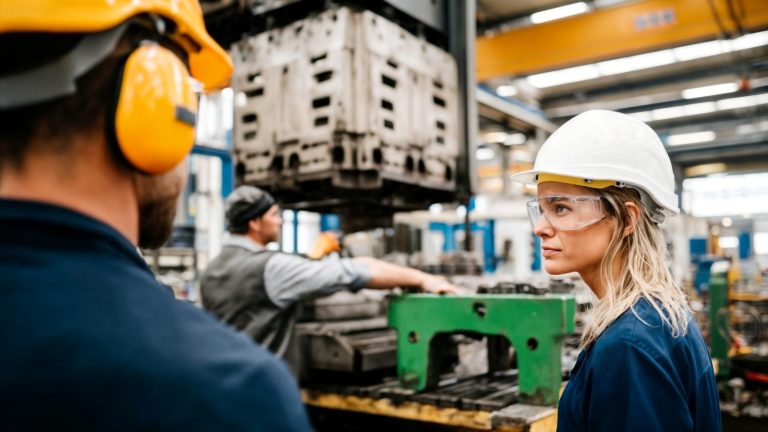
Knowledge of sustainable manufacturing provides your business with the means to locate improvement potential in its production systems.
The Sustainable Manufacturing Process Step by Step
Step 1: Sustainable Product Design
The sustainable manufacturing process starts when a manufacturer assesses materials, parts, and product architecture as part of the design phase. At this point, recyclability and cradle-to-grave design are considered in material selection as well.
Designs are also increasingly being considered for how products could be fixed, reused, or recycled at the end of their life. This preemptive strategy minimises the wasting of materials and decreases long-term emissions.
This also encourages circular manufacturing by addressing sustainability issues early, before they reach the production phase.
Step 2: Responsible Sourcing Through a Sustainable Supply Chain
After design, manufacturers select and source raw materials, including processed fabrics and components, from a sustainable supply chain and suppliers who comply with the ethical, social, and environmental standards. It is the principle of responsible sourcing: supplier audits and transparency across sourcing networks.
Further, you can evaluate a supplier’s emissions, labour conditions, and resource consumption in order to comply with responsible production targets. A sustainable supply chain reduces the risks of causing disruptions to the environment upstream, increases resilience, and enhances compliance with environmental standards when it comes to manufacturing in all stages of the life cycle.
Step 3: Low-Carbon and Resource-Efficient Production
Manufacturing in the sustainable manufacturing process includes low-carbon manufacturing, clean manufacturing technologies, and sustainable production systems aimed at reducing emissions and resource use. To reduce their carbon footprints, manufacturers use renewable energy, energy-efficient machinery, and cast-process optimisation.
Also, the companies employ reduction of waste and water saving methods, a zero-waste process, and closed-loop processes to ensure optimised production performance with the same product quality and industrial productivity.
Step 4: Performance Monitoring and Lifecycle Assessment
Since it is a must to verify the achievement of sustainability goals, manufacturers use performance monitoring tools such as lifecycle assessment (LCA), energy audits, and emissions tracking systems. These are tools that calculate the environmental impacts of a product from raw material extraction to end-of-life disposal.
Monitoring is important because it enables manufacturers to gain data-driven insights and identify inefficiencies in manufacturing processes. It helps monitor reductions in carbon footprint within their units and compliance with the green building rating system.
Step 5: Continuous Improvement and Compliance Management
The last stage of the sustainable manufacturing process is ongoing improvement , after operations begin using that performance data. To keep up with environmental compliance in manufacturing, businesses must correct it, upgrade technology, and improve the process.
This continuous optimisation is in line with long-term sustainability goals and enables organisations to advance on their journey towards net-zero manufacturing targets. The latter builds resilience within an increasingly regulated, climate-aware industrial ecosystem.
What are the Key Principles of Sustainable Manufacturing?
Sustainable manufacturing has clear principles that affect decision-making and the way in which operations are performed.
Core Principles of Sustainable Manufacturing
Resource efficiency, pollution prevention, and circularity are the principles of sustainable manufacturing. Manufacturers want to reduce waste and energy use and increase production value. The Circular economy in manufacturing promotes service-life extension through reuse and remanufacturing.
At this juncture, social responsibility is equally important. Worker health and safety, treating workers fairly, and fair labour practices are critical components of responsible production.
Economic sustainability is about making sure we continue to operate competitive businesses while at the same time investing in sustainable industrial processes. Collectively, they are in favour of long-term resilience and also align with the worldwide sustainable manufacturing goals.
How Sustainable Manufacturing Helps the Environment
The need or desire to protect the planet is another reason why manufacturers are becoming more sustainable.
Environmental Impact Reduction Through Sustainable Manufacturing
Manufacturers can greatly reduce the environmental damage due to greenhouse gas emissions, water use, and pollution with sustainable manufacturing. The carbon footprint reduction in manufacturing is possible via the adaptation of renewable energy and through highly energy-efficient manufacturing systems.
Moreover, water-efficient manufacturing processes minimise the use of freshwater, while waste reduction in manufacturing minimises reliance on landfills. With climate-friendly manufacturing, companies protect ecosystems, slow the loss of biodiversity, and help meet global climate goals.
These advantages contribute directly to international agendas such as the UN SDGs and manufacturing sustainability pledges.
Sustainable Manufacturing Examples in Real Life
Real-world examples show how the sustainable manufacturing principles are applicable across product life cycles.
Practical Examples of Sustainable Manufacturing Across Industries
The best examples of sustainable manufacturing include electric vehicle manufacturers who use recycled materials, food manufacturers using water reuse systems, and electronics factories with smart manufacturing systems that manage energy use.
In the clothing industry, circular brands operate on a closed-loop manufacturing system that turns used clothes into new products. Producers of construction materials reduce emissions through low-carbon manufacturing methods.
These are examples of how sustainable manufacturing in industry can provide environmental benefits while still achieving productivity and quality.
How Companies Implement Sustainable Manufacturing

The integration of sustainable manufacturing at the organisational level needs planning and execution.
Sustainable Manufacturing Strategies for Businesses
Sustainability Assessments and Benchmarking
The first stage of sustainable manufacturing strategies begins with the need to assess and benchmark the current environmental performance against sustainable manufacturing standards. Companies should assess the use of energy, water consumption, emissions, and waste across operations.
This is where gaps and priorities are identified through benchmarking against industry peers and regulatory requirements. This methodology creates a data-informed foundation that enables informed decision-making, prepares companies for regulatory change, and integrates business with long-term sustainability goals.
Implementing ISO 14001 Manufacturing Systems
It is common to see that organisations frequently adopt an ISO 14001 manufacturing system in order to codify environmentally related management aspects of enterprises.
This internationally accepted standard is designed to assist businesses in managing environmental risks, measuring their own objectives, and monitoring compliance. ISO 14001 manufacturing helps commit to record-keeping, responsibility, and continual improvement.
At the same time, businesses increase their environmental performance in manufacturing when they embed sustainability into management systems and also enhance credibility with regulators, investors, and customers.
Technology Upgrades for Digital Manufacturing Sustainability
As a step in this direction, the upgradation of technology facilitates the sustainability of digital manufacturing through online emissions, energy, and waste monitoring. Sophisticated sensors, analytics systems, and automation devices deliver precise visibility into production performance.
This knowledge allows manufacturers to improve processes, eliminate waste, and decrease operational expenses. Digital manufacturing sustainability further makes it possible for predictive maintenance and data-driven decision-making, which are accelerating a path to sustainable production systems and long-term environmental objectives.
Strengthening the Sustainable Supply Chain
Supplier participation serves to secure the sustainable supply chain by ensuring that raw materials and products meet environmental requirements and ethical principles. Firms also interact with subcontractors through audits, performance feedback, and sustainable standards.
This approach minimises upstream environmental risks and increases transparency in procurement networks.
A robust, sustainable supply chain bolsters resilience, promotes responsible production, and ensures that sustainability ambition extends beyond the four walls to the entire value chain.
Employee Training and Cultural Integration
By training employees, your company can incorporate sustainability into the daily operation workflow as it engages its workforce to behave in a way that results in the realisation of sustainability goals.
Further, training programmes raise staff awareness of resource efficiency, waste minimisation, and environmental responsibility in their work. It is a way to make sure that sustainable manufacturing strategies are being implemented every day on the shop floor and in managerial decision-making.
Such a culture of sustainability helps employees to generate ideas, promotes innovation, and supports long-term sustainability leadership at the organisation level.
Sustainable Manufacturing Methods and Technologies
It is technology that empowers sustainable manufacturing.
Sustainable Manufacturing Methods and Technologies Driving Change
Sustainability-based manufacturing technologies, such as energy management systems, automation, and Industry 4.0 and sustainability solutions, are among them. They are intended to enable intelligent manufacturing systems that can optimise production efficiency and minimise waste.
Predictive Maintenance supported by advanced analytics reduces energy use and downtime. Clean production technologies, such as renewable energy source integration and emissions control, help achieve manufacturing net-zero goals. Collectively, these approaches enable scalable, data-driven sustainability initiatives across industrial operations.
How Cerexio MES Helps with Sustainable Manufacturing
Cerexio MES is a robust manufacturing execution system powered by Industry 4.0 technologies for manufacturing companies looking to realise their ambition in sustainable manufacturing, including the integration of a real-time production operations view. This software suite allows for downsizing energy usage, materials usage, CO2 emissions, and wastage at the shop-floor level of manufacturing, which helps sustain digital manufacturing.
By replicating and improving the operations’ efficiency, shrinking rework, and eliminating waste of resources, Cerexio MES drives low-carbon manufacturing, energy-efficient manufacturing processes, and data-enhanced decision-making directly amidst long-term environmental and operational sustainability initiatives.
Call for a free demo today.
Cerexio-Manufacturing Sustainability At Your Doorstep!
Is Sustainable Manufacturing the New Goal-Realiser?
Sustainable manufacturing is not a trend; it is the way of the future for industry. If your company implements sustainable manufacturing practices, you do not just gain environmental street cred; you also unleash efficiency, cost savings, and increased market resilience. Adding increasingly more innovative techniques, cleaner technologies, and data-based systems, however, can help you to turn your operations from wasteful to world-leading processes.
It is no longer optional; sustainability will become the new norm!
FAQs About Sustainable Manufacturing
Sustainable manufacturing means producing goods with minimal environmental impact by conserving energy, reducing waste, and using eco-friendly materials. It balances economic growth with social responsibility, aiming for long-term viability through cleaner production, efficient resource use, and reduced emissions across the product lifecycle.
Sustainable production refers to manufacturing goods and services in ways that reduce environmental harm, conserve resources, and support social well-being. It focuses on efficient processes, responsible sourcing, and waste reduction while maintaining economic value and aligning with global sustainability goals and standards.
A sustainable manufacturing process example is a factory using renewable energy, water-efficient systems, and recycled materials while applying closed-loop recycling to reuse waste. This reduces emissions, lowers resource consumption, and supports circular manufacturing without compromising product quality or productivity.
Sustainable manufacturing is essential because it reduces greenhouse gas emissions, conserves resources, and prevents pollution. It also strengthens compliance with regulations, enhances brand reputation, and supports long-term business resilience by cutting costs, improving efficiency, and meeting growing consumer and investor expectations.
A key principle of sustainable manufacturing is resource efficiency, which aims to use less energy, water, and materials while maintaining output quality. It supports waste reduction, circular economy practices, and cleaner production methods that reduce environmental impact and improve long-term profitability.