
In 2026, manufacturers across Asia are losing an estimated $50 billion due to unplanned downtime linked to fragmented data and delayed decision-making. For many factories, this is no longer just a cost issue; it is a survival issue. This is where the manufacturing control tower Singapore is emerging as the central nervous system of modern factories, helping leaders move from reactive firefighting to proactive, data-driven control across the entire production ecosystem.
In this article, we reveal what a ‘Manufacturing Control Tower’ is and why your Singapore factory needs one.
We explore
- Why Singapore Factories Need Better Visibility
- What Is a Manufacturing Control Tower?
- How a Control Tower Delivers Real-Time Factory Visibility
- How AI Powers the Manufacturing Control Tower
- How a Control Tower Manages Production KPIs
- How a Control Tower Manages Quality KPIs
- How a Control Tower Manages Delivery KPIs
- How Digital Twin Enhances Control Tower Capabilities
- How IIoT Integration Powers the Control Tower
- How a Control Tower Eliminates Data Silos
- What Singapore Factories Gain from a Control Tower
- Common Gaps Without a Control Tower
- FAQs About Manufacturing Control Towers
Why Singapore Factories Need Better Visibility

Singapore factories need better visibility to eliminate downtime, reduce data silos, and align operations with Industry 4.0 transformation goals through real-time, unified production intelligence.
Key Takeaways
- A manufacturing control tower enables real-time, end-to-end visibility across production, quality, and delivery operations.
- It integrates MES, ERP, SCADA, and IIoT systems to eliminate data silos and unify factory intelligence.
- AI and predictive analytics help forecast disruptions and improve decision-making before issues escalate.
- Factories can significantly reduce downtime, improve KPI performance, and increase operational efficiency.
Unplanned Downtime Costing $50 Billion Annually
Unplanned downtime is one of the most expensive hidden drains in global manufacturing, contributing to the staggering $50 billion downtime impact worldwide. Did you know this?
In many Singapore plants, machines stop unexpectedly due to delayed alerts and fragmented monitoring systems. Without real-time production monitoring, managers often discover failures only after production losses accumulate.
A modern manufacturing control tower Singapore helps eliminate this gap by identifying disruptions instantly, reducing idle time reduction opportunities loss, and enabling faster corrective actions before production schedules collapse.
Data Silos Hiding Operational Blind Spots
Many factories operate with disconnected systems where MES, ERP, and shop-floor tools do not communicate effectively, leading to severe data silo elimination challenges. This creates hidden inefficiencies that managers cannot detect until it is too late.
A lack of cross-functional visibility results in misaligned production decisions across departments.
With a manufacturing control tower, all operational data is unified, enabling teams to uncover hidden data abnormalities and make faster, more coordinated decisions across production lines.
Singapore's Push Toward Industry 4.0 in 2026
We can see that Singapore’s manufacturing landscape is rapidly evolving under the Singapore Industry 4.0 transformation agenda. Factories are expected to adopt advanced digital systems that improve agility and resilience.
In this context, a manufacturing control tower is becoming essential for supporting Singapore manufacturing 2026 goals.
It acts as a foundation for smart factory evolution, helping organisations transition toward fully connected, intelligent operations aligned with national productivity and competitiveness goals.
Why MES and ERP Alone Are Not Enough
Traditional MES and ERP systems provide fragmented insights but lack enterprise-wide orchestration capabilities. While MES manages shop-floor execution and ERP handles planning, neither delivers holistic intelligence.
This is where manufacturing control tower vs MES becomes critical. MES executes, but a control tower unifies, predicts, and orchestrates.
A control tower integrates both systems with advanced analytics to deliver 360-degree manufacturing visibility, enabling decision-makers to act on complete, real-time operational intelligence.
What Is a Manufacturing Control Tower?
A manufacturing control tower is a centralised intelligence system that connects MES, ERP, SCADA, and IIoT data to provide end-to-end, real-time operational visibility and decision-making.
Defining a Control Tower as a Central Intelligence Hub
A manufacturing control tower functions as a centralised intelligence hub that consolidates data from across the factory ecosystem into one unified operational command centre.
It enables command-and-control capabilities by integrating production, logistics, and quality data streams into a single view.
Unlike traditional dashboards, it does not just display data; it interprets it, providing actionable insights that help managers shift from reactive monitoring to proactive decision-making in real time.
How It Connects MES, ERP, IIoT, and SCADA
The manufacturing control tower Singapore couples with MES integration, ERP integration, SCADA integration, and IIoT sensor integration into a unified architecture. This connectivity allows seamless data flow between planning systems, execution systems, and machine-level sensors.
The result is a fully synchronised environment where production decisions are based on live operational data rather than delayed reports. The latter enables smarter and faster responses across the entire factory.
360-Degree Visibility Across the Full Production Cycle
With 360-degree visibility, manufacturers gain a complete view of every stage of production, from raw material intake to finished goods dispatch. This level of 360-degree manufacturing visibility ensures that no process operates in isolation.
A control tower allows managers to monitor quality, throughput, and logistics simultaneously as it ensures alignment across departments and improves overall operational transparency and responsiveness.
Control Tower vs Traditional MES: Key Differences
The difference between a control tower and MES lies in intelligence and scope. While MES focuses on execution, a manufacturing control tower Singapore provides predictive and prescriptive insights.
Further, the manufacturing control tower vs MES comparison highlights that control towers leverage AI predictive analytics and prescriptive analytics to anticipate disruptions and recommend actions.
This makes them far more strategic than traditional execution systems alone.
How a Control Tower Delivers Real-Time Factory Visibility
A control tower delivers real-time factory visibility by unifying live production data into dashboards, enabling instant anomaly detection, role-based insights, and faster decision-making across operations.
Live Dashboards Across Production, Quality, and Delivery
A modern manufacturing control tower in Singapore provides dynamic dashboards that unify production KPI, quality KPI, and delivery KPI metrics in real time.
These dashboards act as a centralised KPI dashboard, offering managers instant visibility into factory performance.
When they consolidate critical metrics into a single interface, teams can respond faster to deviations and maintain operational stability across all production stages.
Anomaly Detection Before Problems Escalate
Through advanced anomaly detection, a control tower identifies irregular patterns in production before they escalate into costly disruptions. This capability is powered by machine learning algorithms that continuously scan operational data.
A manufacturing control tower ensures that even minor deviations are flagged early. It reduces downtime risks and supports proactive intervention strategies that protect throughput optimisation and operational continuity.
Role-Based Views for Operators and Managers
Different stakeholders require different insights.
A manufacturing control tower Singapore provides role-based dashboards tailored for operators, supervisors, and executives. Operators focus on machine-level alerts, while managers view strategic KPIs.
This structured collaborative platform ensures alignment across departments, enabling faster communication and eliminating confusion caused by inconsistent reporting structures.
20% Faster Decision-Making from Unified Data
As it consolidates fragmented data into a unified system, a control tower significantly accelerates decision-making speed. Organisations experience up to 20% faster response times due to improved real-time factory monitoring Singapore capabilities.
With all relevant data accessible instantly, teams no longer rely on delayed reports, enabling quicker interventions and better operational outcomes.
How AI Powers the Manufacturing Control Tower
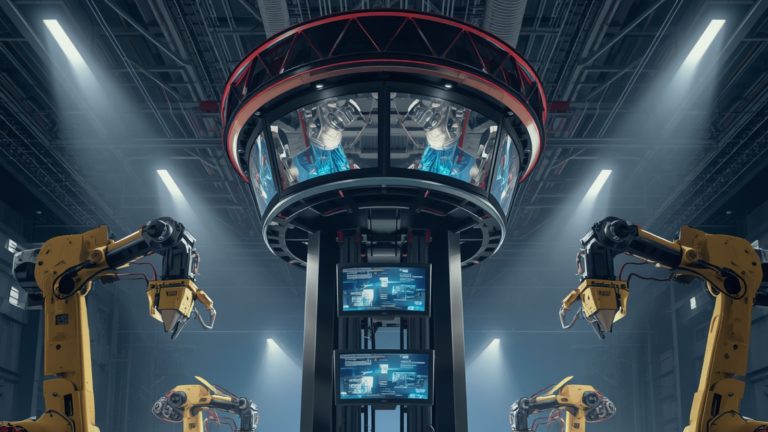
AI powers a manufacturing control tower by enabling predictive analytics, prescriptive recommendations, and what-if simulations that anticipate disruptions and optimise production decisions in real time.
AI Predictive Models Forecasting Production Disruptions
A manufacturing control tower leverages AI predictive analytics to forecast potential disruptions before they occur. These models analyse historical and real-time data to anticipate machine failures, demand shifts, and process inefficiencies.
By identifying risks early, manufacturers can implement preventive actions that reduce unplanned downtime and improve production stability.
Prescriptive Recommendations for Corrective Actions
Beyond prediction, prescriptive analytics provides actionable recommendations for resolving operational issues.
A manufacturing control tower Singapore suggests optimised corrective actions based on scenario modelling.
This ensures managers are not only aware of problems but are also guided toward the most effective solutions for minimising disruption and improving efficiency.
What-If Analysis Before Making Production Changes
Through what-if analysis, manufacturers can simulate operational changes before implementing them on the shop floor. This allows testing of scheduling, resource allocation, and process adjustments without risk.
A manufacturing control tower uses digital twin simulation to evaluate outcomes, supporting smarter decision-making and reducing operational uncertainty.
Uncovering Hidden Data Abnormalities Automatically
AI systems continuously scan for hidden data abnormalities that human operators may miss. A manufacturing control tower Singapore identifies subtle inefficiencies across systems, enabling early intervention.
Moreover, this capability improves reliability and ensures smoother operations by eliminating blind spots in production data.
How a Control Tower Manages Production KPIs
A control tower manages production KPIs by continuously tracking OEE, throughput, and cycle times, automatically detecting bottlenecks, and triggering real-time performance alerts.
Real-Time OEE, Throughput, and Cycle Time Tracking
A control tower provides continuous OEE tracking, monitoring throughput and cycle time across all production lines.
This enables managers to identify inefficiencies instantly and optimise performance in real time, ensuring production goals are consistently met.
Bottleneck Detection Across Production Workstations
Using advanced analytics, the system identifies bottlenecks across workstations, improving throughput optimisation. A manufacturing control tower Singapore ensures smooth workflow by highlighting constraints that slow down production and enabling quick corrective actions.
Automated Alerts When KPIs Breach Thresholds
The system automatically triggers alerts when KPIs exceed predefined thresholds.
This ensures immediate response to deviations, reducing risk and maintaining stability across operations.
Shift and Line-Level Performance Benchmarking
Managers can compare performance across shifts and production lines, enabling continuous improvement and accountability within the factory ecosystem.
How a Control Tower Manages Quality KPIs
A control tower manages quality KPIs by monitoring yield, detecting process drift, enabling root cause analysis, and ensuring full traceability across the entire production lifecycle.
First Pass Yield Monitoring at Station Level
The system tracks first-pass yield at every station to ensure consistent product quality and minimise defects through continuous, real-time production monitoring. By improving production KPI management Singapore, manufacturers gain clearer visibility into defect rates at each stage.
This helps strengthen quality KPI performance and ensures early correction before issues escalate across the production line.
Over time, this supports improved consistency in output and reduces rework costs significantly.
Statistical Process Control for Drift Detection
Using advanced statistical models, the system detects process drift early before it impacts production quality. This capability enhances anomaly detection by identifying subtle variations that human operators may miss.
It strengthens AI predictive analytics capabilities by continuously learning from historical and live data.
As a result, factories can maintain tighter control over quality standards and reduce variability in manufacturing processes.
Root Cause Analysis Linking Defects to Equipment
A manufacturing control tower connects defects directly to machine behaviour through deep analytics and system correlation. This enables faster root cause identification using machine learning factory intelligence. By linking equipment conditions with defect patterns, manufacturers gain actionable insights that improve decision-making speed and accuracy.
It also strengthens long-term reliability by preventing recurring quality failures.
Full Traceability From Raw Material to Finished Goods
Complete traceability ensures transparency across the production lifecycle, from raw material intake to final dispatch.
This improves compliance and supports stronger quality assurance frameworks. By enabling supply chain visibility, manufacturers can quickly trace defects back to origin points.
It also enhances regulatory readiness and ensures accountability at every production stage, reducing risk and improving customer trust.
How a Control Tower Manages Delivery KPIs
A control tower manages delivery KPIs by tracking on-time delivery, schedule attainment, and lead times while generating alerts when production schedules are at risk.
On-Time Delivery vs Customer Order Comparison
The system continuously compares actual delivery performance against customer orders to ensure reliability and consistency.
This enhances delivery KPI tracking by aligning production output with demand expectations. A control tower ensures deviations are flagged early, allowing managers to correct delays before they impact customers and service-level agreements.
Schedule Attainment Monitoring in Real Time
Continuous monitoring of production schedules ensures high schedule attainment across all manufacturing lines. This supports real-time factory monitoring Singapore, enabling instant detection of deviations.
Managers can quickly adjust resources to maintain alignment between planned and actual output, ensuring smoother production flow and improved operational predictability.
Lead Time Visibility Across Production and Logistics
End-to-end visibility across production and logistics improves coordination and reduces delays in material flow.
This strengthens cross-functional visibility by connecting departments that traditionally operate in silos. It also improves responsiveness across the value chain, ensuring faster delivery cycles and better customer satisfaction through improved operational alignment.
Re-Scheduling Alerts When Delivery Is at Risk
When disruptions occur, the system automatically triggers rescheduling alerts to prevent delivery failures.
This capability enhances production scheduling efficiency by dynamically adjusting workflows.
It also supports idle time reduction by reallocating resources effectively, ensuring production remains on track even when unexpected disruptions arise.
How Digital Twin Enhances Control Tower Capabilities
A digital twin enhances control tower capabilities by simulating production scenarios, testing layout changes, and predicting KPI outcomes before implementing real-world factory adjustments.
Simulating Production Scenarios Without Floor Disruption
A manufacturing control tower Singapore uses digital twin simulation to replicate factory operations virtually without affecting real production. This allows managers to safely test different scenarios, including demand shifts and equipment changes.
It significantly reduces operational risk while improving decision-making confidence.
Testing Layout and Scheduling Changes Virtually
Factories can evaluate facility layout planning and scheduling adjustments before implementing them on the shop floor. This ensures changes do not disrupt operations or productivity. It also enhances throughput optimisation by identifying the most efficient configurations before physical execution.
Predicting KPI Impact Before Implementation
The system forecasts how changes will affect key performance indicators such as production speed and efficiency. This strengthens what-if analysis capabilities by allowing managers to evaluate outcomes before committing resources. It reduces uncertainty and improves strategic planning accuracy.
Live Sync Between Digital Twin and Real Factory Data
Real-time synchronisation ensures the digital model accurately reflects actual factory conditions.
This enables continuous improvement in decision-making and enhances Singapore manufacturing 2026 readiness by aligning physical and digital operations seamlessly.
How IIoT Integration Powers the Control Tower
IIoT integration powers a control tower by streaming real-time machine sensor data, enabling anomaly detection, predictive maintenance, and reduced unplanned downtime across factory operations.
Sensor Data Streaming From Machines in Real Time
Machines continuously stream data into the system through IIoT sensor integration, enabling full operational awareness.
A manufacturing control tower Singapore processes this data instantly, improving responsiveness and ensuring accurate monitoring of machine performance across the factory.
Vibration, Temperature, and Flow Anomaly Detection
Sensors detect early warning signs of equipment issues through continuous monitoring of vibration, temperature, and flow patterns.
This strengthens anomaly detection capabilities and reduces unexpected breakdowns, improving operational stability and machine reliability.
Predictive Maintenance Triggered by Sensor Thresholds
When sensor thresholds are breached, maintenance is triggered automatically before failure occurs. This supports downtime reduction strategies and improves equipment longevity.
It also reduces operational disruptions and ensures smoother production continuity.
Eliminating Idle Time and Unplanned Stoppages
Since they can respond to machine data in real time, factories significantly reduce idle time and unexpected stoppages.
This improves operational efficiency and enhances overall productivity across production lines while maintaining stable output levels.
How a Control Tower Eliminates Data Silos
A control tower eliminates data silos by integrating MES, ERP, SCADA, and IIoT systems into a unified platform, enabling cross-functional visibility and automated reporting.
Connecting MES, ERP, SCADA, and IIoT Under One View
A manufacturing control tower Singapore unifies MES integration, ERP integration, SCADA integration, and IIoT systems into one platform.
This eliminates fragmented systems and ensures all operational data is accessible from a single source of truth.
Shared Data Across Production, Quality, and Logistics Teams
Teams across departments operate with synchronised data, improving coordination and decision-making. This enhances collaborative platform efficiency and ensures consistent communication across production, quality, and logistics functions.
Automated Reporting Replacing Manual Spreadsheets
Automated reporting eliminates manual processes and reduces human error.
This improves accuracy, saves time, and ensures faster access to operational insights across all departments in the factory ecosystem.
Faster Cross-Team Response to Operational Deviations
With unified data access, teams can respond faster to operational issues.
This strengthens data silo elimination efforts and ensures faster corrective action when deviations occur in production.
What Singapore Factories Gain From a Control Tower
Singapore factories gain higher productivity, reduced downtime, improved quality consistency, and better on-time delivery by adopting a unified manufacturing control tower system.
15% Higher Productivity From Smarter Data Use
Factories using a control tower experience measurable productivity improvements driven by better data utilisation and smarter operational decisions supported by production KPI insights.
Significant Reduction in Unplanned Downtime
When employing predictive systems, factories achieve strong unplanned downtime reduction, improving machine availability and production continuity across all operations.
Stronger Quality, Consistency, and Fewer Defect Escapes
Enhanced monitoring ensures consistent output quality and reduces defect leakage. This improves customer satisfaction and strengthens overall manufacturing reliability.
Better On-Time Delivery and Customer Satisfaction
Improved planning and visibility ensure better alignment with customer expectations, leading to stronger delivery performance and increased trust.
Common Gaps Without a Control Tower

Without a control tower, factories face delayed insights, disconnected data, KPI blind spots, and reactive firefighting instead of proactive, data-driven manufacturing management.
Managers Reacting to Problems Already Out of Control
Without real-time visibility, managers often discover issues only after they have escalated into major disruptions. This reactive mode leads to inefficiencies, missed opportunities, and production losses that could have been avoided.
In many factories, a lack of real-time factory monitoring creates blind spots in decision-making.
A manufacturing control tower Singapore eliminates this delay by enabling proactive intervention, improving responsiveness, and ensuring operations remain stable before problems spiral beyond control.
KPI Deviations Invisible Until Shift-End Reports
Delayed reporting structures mean KPI deviations are only visible after shift-end summaries, when corrective action is already too late. This weakens production KPI management Singapore and limits operational agility.
Without continuous monitoring, issues such as throughput drops or quality inconsistencies remain hidden. A control tower solves this by enabling live tracking of production KPI, ensuring faster response times and preventing small deviations from escalating into costly production failures.
Teams Working From Disconnected, Outdated Data
When teams rely on disconnected systems, decision-making becomes inconsistent and error-prone.
This lack of synchronisation prevents data silo elimination and reduces efficiency across departments. Production, quality, and logistics teams often operate with outdated spreadsheets instead of unified dashboards.
A manufacturing control tower integrates all systems into a collaborative platform, ensuring that every stakeholder works with the same real-time data, improving alignment and operational accuracy across the entire factory ecosystem.
Continuous Firefighting Instead of Proactive Management
Factories without centralised intelligence remain stuck in reactive firefighting mode, constantly responding to breakdowns instead of preventing them. This limits the adoption of AI predictive analytics and weakens long-term efficiency.
Without smart factory control tower 2026 capabilities, organisations struggle to evolve toward proactive manufacturing. A manufacturing control tower Singapore enables predictive decision-making, allowing teams to anticipate disruptions and shift toward a more controlled, data-driven operational strategy.
Why Choose Cerexio Manufacturing Control Tower?
Cerexio Manufacturing Control Tower is popular among manufacturers for its AI-driven visibility, seamless system integration, predictive planning, and ability to expose inefficiencies across factory operations.
AI and IIoT-Powered 360-Degree Factory Visibility
The Cerexio platform is a leading manufacturing control tower solution that delivers complete 360-degree visibility powered by advanced AI and connected systems. It integrates IIoT sensor integration to provide real-time insights from machines, ensuring full transparency across operations.
This enables manufacturers to monitor performance continuously, reduce blind spots, and achieve smarter, faster decision-making across production environments.
What-If Analysis and Predictive Planning Built In
Cerexio’s platform includes advanced simulation tools that support what-if analysis for better planning and risk reduction. Manufacturers can simulate production changes, demand shifts, or machine failures before execution. This strengthens production scheduling and improves demand forecasting accuracy.
With predictive insights, factories can optimise resources, reduce disruptions, and improve overall operational resilience.
Seamless MES, ERP, SCADA, and Digital Twin Integration
A strong manufacturing control tower Singapore integrates MES integration, ERP integration, SCADA integration, and digital twin simulation into a unified ecosystem. This ensures seamless data flow between planning, execution, and simulation layers.
By removing fragmentation, manufacturers gain real-time alignment across systems, improving operational efficiency and enabling more accurate production decisions across the entire factory.
Collaborative Platform Exposing Hidden Inefficiencies
Cerexio’s system acts as a powerful collaborative platform, enabling cross-department visibility across production, quality, and logistics.
It uncovers inefficiencies hidden within isolated systems and manual reporting structures. By exposing these gaps, the platform enhances throughput optimisation, improves communication, and ensures teams work together using consistent, real-time information for better operational outcomes.
Cerexio-Manufacturing Excellence In Your Hands
Ready to Take Command of Your Factory?
Factories can transform operations by consulting Cerexio specialists, exploring platform features, and deploying a manufacturing control tower for smarter, real-time control and visibility.
Consult Cerexio Control Tower Specialists Today
You can engage experts to evaluate operational gaps and assess readiness for a manufacturing control tower Singapore deployment. This consultation helps identify inefficiencies in current systems and outlines a clear transformation roadmap toward smarter factory operations driven by real-time intelligence.
Call for a free demo.
Explore Cerexio Manufacturing Control Tower Features
Discover how Cerexio’s platform enhances real-time production monitoring, improves visibility, and strengthens decision-making. The system combines analytics, AI, and system integration to deliver end-to-end control across manufacturing environments, helping factories transition into fully connected smart operations.
FAQs About Manufacturing Control Towers
A manufacturing control tower typically uses a cloud-native or hybrid data architecture combining streaming, edge, and data lake layers. This enables continuous ingestion from MES, ERP, and IIoT systems while ensuring low-latency analytics for real-time decision-making.
It reduces latency through event-driven streaming pipelines and edge computing near machines. Data is processed in milliseconds before syncing to central systems, ensuring real-time responsiveness across production, quality, and logistics environments without delaying operational insights or alerts.
Strong cybersecurity includes role-based access control, encrypted data pipelines, zero-trust architecture, and network segmentation. These measures protect MES, ERP, and SCADA integrations while ensuring secure IIoT connectivity across factory floors and cloud-based analytics platforms.
It leverages edge devices to process machine-level data locally before sending aggregated insights to central systems. This reduces bandwidth load, improves response speed, and ensures uninterrupted monitoring even in environments with unstable network connectivity or high data volume.
Yes, it uses multi-tenant cloud infrastructure and standardised data models to unify multiple plants. This enables centralised governance, cross-site benchmarking, and consistent KPI tracking across global operations while maintaining local autonomy for each manufacturing facility.