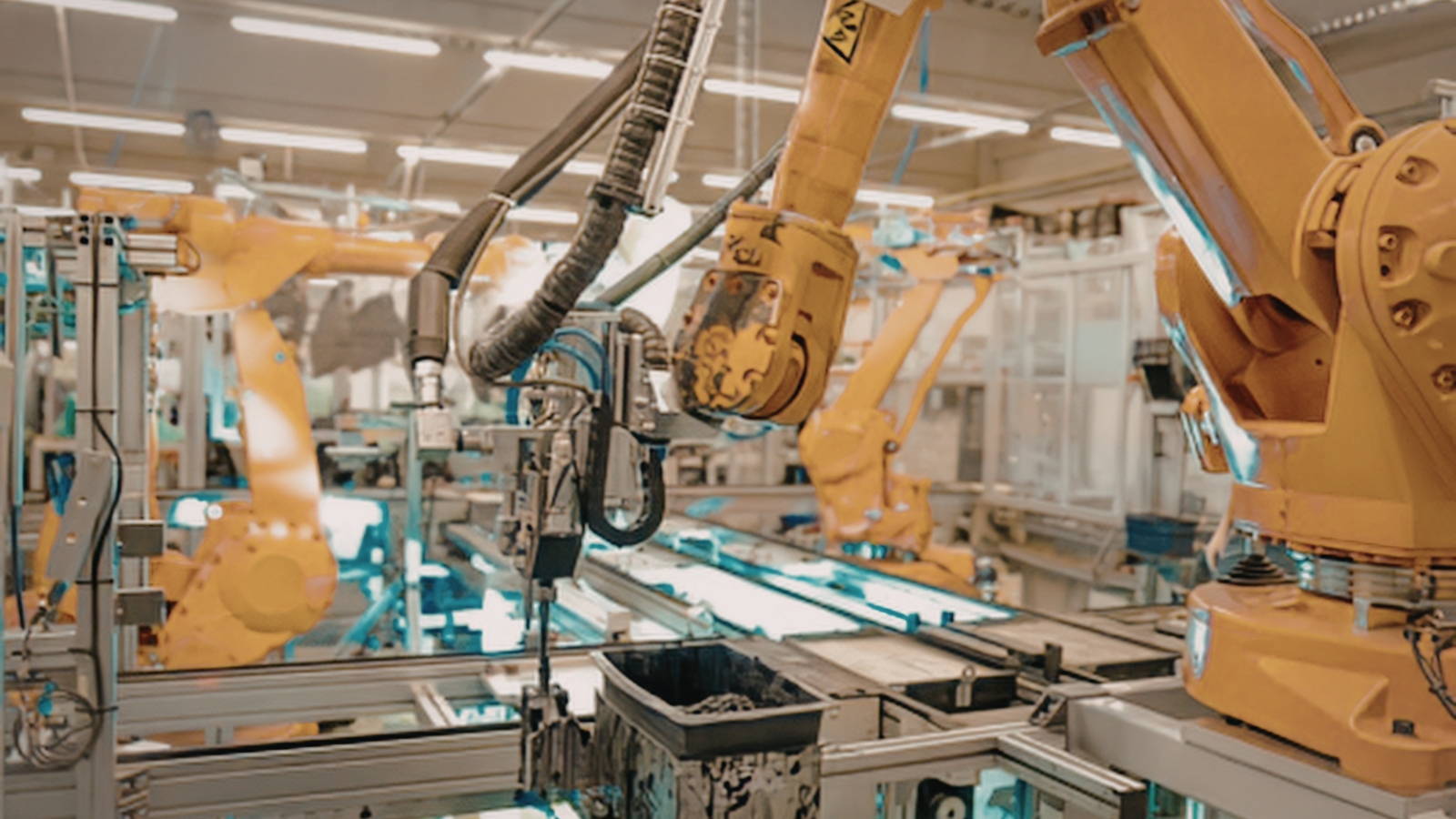
Modern factories are evolving faster than ever, yet assembly line manufacturing continues to dominate global production. According to recent industry data, over 85% of electronics manufacturing and more than 80% of automotive production still rely on assembly-based systems. This is not by chance! It is because assembly lines deliver unmatched speed, consistency, and scalability.
Today, digital technologies such as AI, IoT, and advanced analytics are transforming these systems into intelligent production environments. Businesses are no longer just building products; they are building smarter, data-driven ecosystems designed for efficiency and resilience.
This article covers everything about assembly lines in manufacturing, from their types and benefits to optimisation.
We will explore
- What Is Assembly Line Manufacturing and Why Does It Remain Central to Modern Production?
- What Are the Three Main Types of Assembly Line Systems?
- How Do Classic Assembly Lines Achieve Mass Production Efficiency?
- What Makes Modular Assembly Lines Ideal for Mixed Production?
- How Does Line Balancing Optimise Assembly Performance?
- What Role Do Collaborative Robots (Cobots) Play in Modern Assembly?
- How Does MES Transform Assembly Line Visibility and Control?
- What Advanced Automation Technologies Optimise Assembly Operations?
- How Do Digital Twins Enable Assembly Line Optimisation?
- What IoT and Industry 4.0 Capabilities Enhance Assembly Intelligence?
- How Can Manufacturers Overcome Common Assembly Line Challenges?
- What Emerging Trends Will Shape Assembly Line Evolution?
- FAQs About Assembly Line Manufacturing
What Is Assembly Line Manufacturing and Why Does It Remain Central to Modern Production?
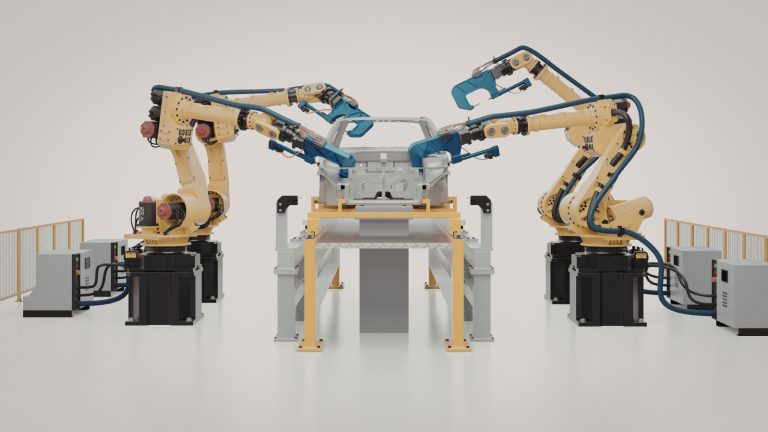
In simple terms, assembly-line manufacturing is a production method in which products are built through a series of steps, with each workstation performing a specific task. It remains central because it enables high-volume output, consistent quality, and cost efficiency across industries.
Key Takeaways
- Assembly lines remain essential for high-volume, efficient production.
- Digital technologies are transforming traditional systems into smart factories.
- Automation and AI improve quality, speed, and flexibility.
- MES platforms enable real-time visibility and continuous optimisation.
Defining Assembly Lines as Sequential, Specialised Production Workflows
Assembly lines operate as a sequential workflow, in which each product moves step by step through predefined stages.
This implies that every workstation performs a specific task, creating a system built on workstation specialisation. This structure allows manufacturers to break down complex production into manageable steps.
As each task is clearly defined, workers and machines focus on repetitive tasks, improving consistency. Over time, these processes become standardised processes, reducing variability and ensuring predictable outcomes across large production runs.
From Ford's 1913 Revolution (12 Hours to 93 Minutes) to Today's Smart Factories
Let us bring you back to history.
When Henry Ford introduced the moving assembly line in 1913, car production time dropped from 12 hours to just 93 minutes. This breakthrough reshaped industrial production forever and made mass production economically viable.
Today, assembly lines have evolved into digitally connected systems. Smart factories now integrate robotics, sensors, and AI to enhance output while maintaining flexibility.
What began as a mechanical innovation has become the backbone of intelligent manufacturing ecosystems.
Why 85–90% of Electronics and 80%+ Automotive Production Still Use Assembly Methods
You will notice that assembly lines remain dominant. That is because they deliver unmatched production efficiency and scalability. High-volume industries rely on predictable workflows to meet demand without sacrificing quality.
As a result, by optimising throughput, manufacturers can consistently produce thousands or even millions of units.
Combined with economies of scale, this reduces the cost per unit, making products more affordable while maintaining profitability.
What Are the Three Main Types of Assembly Line Systems?
The three main types of assembly lines are traditional (linear), modular, and flexible systems. Each type is designed to balance production volume, product variety, and operational complexity.
1.Classic/Traditional Assembly Lines: Linear Conveyor-Based Fixed Sequences
Traditional assembly lines are built around conveyor systems that move products through fixed stages. Each workstation performs a single task in a strict sequence, ensuring consistency and speed.
This model is ideal for high-volume production where variation is minimal. Since tasks are repetitive and predictable, manufacturers can optimise output and reduce errors.
This is particularly important as it remains widely used in industries like automotive manufacturing, where consistency is critical.
2.Modular Assembly Lines: Parallel Workstation Configurations
Modular assembly lines introduce flexibility by organising production into independent modules. Each module handles a portion of the assembly process, allowing parallel operations.
This approach reduces reliance on a single sequence and improves bottleneck elimination.
If one module slows down, others can continue operating. This structure is particularly effective for manufacturers producing multiple product variants within the same family.
3.Flexible Assembly Lines: Reconfigurable for Multiple Product Variants
Flexible assembly lines are designed for adaptability. They use flexible automation, enabling quick reconfiguration for different products.
These systems are ideal for industries with frequent design changes or custom orders. By adjusting workflows and equipment, manufacturers can switch between products without significant downtime, maintaining both efficiency and responsiveness.
How to Select the Right Type Based on Volume, Variety, and Complexity
It is worth noting that choosing the right assembly line depends on three key factors: production volume, product variety, and operational complexity.
This is where high-volume, low-variation production favours traditional lines, while mixed production benefits from modular systems.
Flexible lines are best for high-variation environments. Manufacturers must also consider factors such as cycle time, scalability, and long-term adaptability to ensure the chosen system supports both current and future production goals.
How Do Classic Assembly Lines Achieve Mass Production Efficiency?
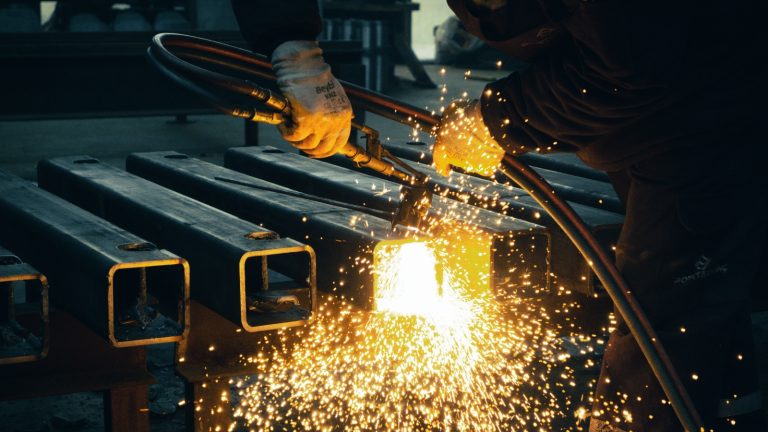
Classic assembly lines achieve efficiency by standardising tasks, maintaining continuous flow, and aligning production speed with demand using takt time and synchronised operations.
Fixed Workstation Sequencing Optimising Repetitive Task Execution
Classic assembly lines rely on fixed sequences where each workstation performs a single task repeatedly. This specialisation reduces training time and improves accuracy.
Since workers and machines focus on specific actions, errors decrease, and output becomes more predictable. Over time, this leads to higher labor productivity and smoother operations across the production line.
Conveyor Systems: Maintaining Consistent Production Flow and Takt Time
Conveyors ensure that products move at a steady pace, aligning production with customer demand. This pace is defined by takt time, which determines how quickly each unit must be completed.
By maintaining consistent flow, manufacturers avoid delays and ensure that every workstation operates in sync. This reduces idle time and supports efficient production scheduling.
Task Specialisation: Reducing Worker Training Time and Errors
It is evident that specialisation allows workers to master specific tasks quickly. Instead of learning the entire production process, employees focus on a narrow set of responsibilities.
This approach reduces training costs and minimises errors. Over time, workers become highly efficient, contributing to consistent product quality and faster production cycles.
Automotive Sector Achieving 40% Output Increase with Robotic Welding Cells
Automation has further enhanced traditional assembly lines. In the automotive sector, robotic welding cells using robotic arms have increased output by up to 40%.
These systems deliver precision and speed beyond human capability, ensuring consistent weld quality. When they integrate automation, manufacturers can scale production while maintaining high standards of performance and safety.
What Makes Modular Assembly Lines Ideal for Mixed Production?
Modular assembly lines are ideal for mixed production because they allow parallel processing, reduce dependency on a single workflow, and improve scalability for different product variants.
- Parallel Processing Reducing Bottleneck Dependency
Unlike traditional systems, modular lines enable multiple processes to run at the same time. This parallel structure reduces reliance on a single sequence and improves overall flow.
When one module slows down, others continue operating. This minimises disruptions and supports continuous improvement.
Over time, your manufacturing company can gain better control over production variability and can respond faster to changing demand conditions.
- Sub-Assembly Cell Independence Enabling Concurrent Operations
This indicates that each module operates as an independent sub-assembly unit. This independence allows different components to be built simultaneously before final integration.
By separating processes, manufacturers reduce complexity and improve flexibility. It also enhances quality control, as each module can focus on specific standards without affecting the entire production line.
- Scalability Through Workstation Replication Without Full Line Redesign
One of the biggest advantages of modular systems is scalability.
Instead of redesigning the entire line, manufacturers can replicate modules to increase capacity.
This approach supports gradual expansion and reduces capital investment risks. Your manufacturing business can scale operations in response to demand while maintaining operational stability and efficiency.
- Electronics Manufacturing Leveraging Modularity for Product Families
In electronics manufacturing, modular assembly is widely used to produce product families with similar components.
This way, manufacturers can quickly switch between models by adjusting specific modules.
This flexibility allows companies to meet market demands without sacrificing speed or consistency. It also reduces downtime during product transitions, improving overall productivity.
How Does Line Balancing Optimise Assembly Performance?
Line balancing optimises assembly performance by distributing tasks evenly across workstations, minimising idle time, and ensuring smooth production flow aligned with demand.
Takt Time Calculation: Aligning Production Rate with Demand
Line balancing begins with calculating takt time, which is the rate at which products must be completed to meet customer demand. This ensures that production stays aligned with market needs.
By setting a clear pace, manufacturers avoid overproduction or delays. This creates a stable workflow where each station contributes equally to the overall output.
Workload Distribution: Preventing Idle Time and Bottlenecks
Balancing workloads across stations ensures that no workstation is overloaded or underutilised. This reduces idle time and prevents bottlenecks from forming.
When tasks are evenly distributed, production flows smoothly. This improves efficiency and helps maintain consistent output levels across the entire line.
Cycle Time Analysis: Identifying Constraint Operations
We can see that analysing task durations helps identify operations that slow down production. These constraint points can then be optimised or redesigned.
As it is possible to address inefficiencies, manufacturers can improve flow and reduce delays. This leads to faster production cycles and better resource utilisation.
Simulation Tools Testing Balance Scenarios Before Implementation
Modern manufacturers use simulation tools to test different line configurations before making physical changes. These tools allow teams to evaluate performance under various scenarios.
This approach reduces risk and ensures that changes lead to measurable improvements.
It also supports smarter decision-making and faster implementation.
What Role Do Collaborative Robots (Cobots) Play in Modern Assembly?
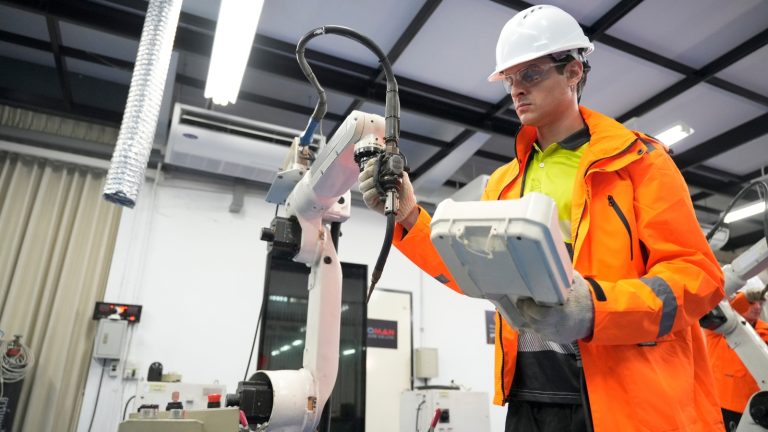
Collaborative robots enhance assembly lines by working safely alongside humans, improving precision, and increasing productivity without requiring complex safety infrastructure.
- Safe Human-Robot Collaboration Without Safety Cages
Cobots are designed for safe human-robot collaboration, allowing them to operate alongside workers without protective barriers. This makes them ideal for modern production environments.
They are equipped with sensors that detect human presence and adjust movements accordingly. This ensures safety while maintaining efficiency, making them suitable for dynamic assembly tasks.
- Precision Tasks (Microscopic Placement Tolerances) Beyond Human Capability
Cobots excel at tasks requiring extreme precision, such as placing small components or performing delicate assembly operations.
Their accuracy reduces defects and improves consistency. This is especially important in industries like electronics, where even minor errors can lead to product failure.
- Rapid Deployment and Programming via Intuitive Interfaces
Unlike traditional robots, cobots are easy to programme and deploy. Operators can quickly set up tasks using intuitive interfaces.
This reduces downtime and allows manufacturers to adapt quickly to new production requirements. It also lowers the barrier to adopting automation.
- Electronics Assembly Leveraging Cobots for Component Placement at Thousands Per Hour
In electronics manufacturing, cobots handle high-speed component placement with incredible accuracy. They can place thousands of components per hour without fatigue.
This significantly improves efficiency while maintaining consistent quality. As demand for precision increases, cobots are becoming essential in modern assembly lines.
How Does MES Transform Assembly Line Visibility and Control?
A Manufacturing Execution System (MES) improves assembly line performance by providing real-time visibility, tracking production activities, and optimising operations through data-driven insights.
Real-Time Workstation Monitoring Tracking Every Production Step
MES platforms enable real-time monitoring of every workstation. This allows manufacturers to track progress and identify issues instantly.
With live data, managers can make faster decisions and prevent small problems from becoming major disruptions. This improves overall operational control.
Work Order Management Coordinating Material Flow to Assembly Points
MES systems manage work orders and ensure that materials are delivered to the right place at the right time. This prevents delays and keeps production running smoothly.
When coordinating workflows, manufacturers reduce inefficiencies and improve resource utilisation across the assembly line.
Quality Inspection Integration: Capturing Defects at-Station
In this context, quality checks are integrated directly into the assembly process. This allows defects to be detected and corrected immediately.
Early detection reduces waste and prevents defective products from moving further down the line. This improves overall product quality and customer satisfaction.
OEE Calculation Identifying Availability, Performance, Quality Losses
MES systems support OEE optimisation by analysing availability, performance, and quality metrics. This provides a clear picture of production efficiency.
By identifying losses, manufacturers can implement targeted improvements. This leads to better performance and higher productivity across the entire operation.
What Advanced Automation Technologies Optimise Assembly Operations?
Advanced automation technologies optimise assembly operations by improving accuracy, reducing manual effort, and enabling intelligent decision-making through data and machine learning.
Vision Systems Providing Defect Detection and Part Verification
Did you know that vision systems use cameras and AI to inspect products during assembly? They detect defects, verify components, and ensure correct placement.
This improves accuracy and reduces human error. It also enhances defect reduction, leading to higher product quality and fewer returns.
Force-Control Robotics Handling Delicate Component Assembly
Force-control robots can adjust pressure during assembly tasks. This makes them ideal for handling fragile components.
Since the latter maintains precise force levels, these robots prevent damage and ensure consistent results. This is critical in industries requiring high precision.
AGVs and AMRs Automating Material Delivery to Line-Side
Automated guided vehicles support efficient material transport. These systems, often referred to as AGV AMR, deliver components directly to assembly stations.
This reduces manual handling and improves workflow efficiency. It also ensures that materials are always available when needed.
AI-Driven Adaptive Control Adjusting Parameters for Misalignment or Variation
AI systems monitor production conditions and adjust parameters in real time. This helps compensate for variations in materials or processes.
By adapting dynamically, manufacturers maintain consistent quality and performance. This represents a major step toward intelligent, self-optimising production systems.
How Do Digital Twins Enable Assembly Line Optimisation?
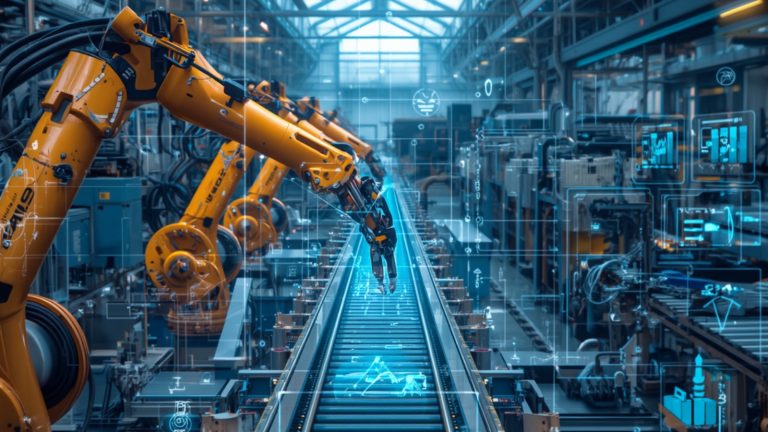
A digital twin is a virtual replica of a physical assembly line that allows manufacturers to simulate, test, and optimise production processes before implementing changes in the real environment.
- Virtual Commissioning Testing Robot Programmes Before Physical Deployment
You may have seen that these digital twins allow engineers to test robot programmes in a virtual environment before deploying them on the factory floor.
This process, known as virtual commissioning, reduces risk and ensures systems work correctly from the start.
As it identifies errors early, manufacturers avoid costly downtime. It also accelerates implementation timelines, allowing businesses to move from design to production faster and with greater confidence.
- Production Scenario Simulation Predicting Bottleneck Impacts
It is clear that with digital twins, manufacturers can simulate different production scenarios to understand how changes will affect performance. This helps identify potential issues such as delays or inefficiencies.
By predicting outcomes in advance, companies can make informed decisions and improve planning. This proactive approach supports smoother operations and better overall performance.
- Offline Programming Reducing Physical Line Downtime for Changes
One of the biggest benefits of digital twins is the ability to programme and test changes offline. This means adjustments can be made without interrupting live production.
When minimising downtime, manufacturers maintain productivity while continuously improving processes. This creates a balance between innovation and operational stability.
- 2,000+ Robot Model Libraries Accelerating Design-to-Execution
Modern digital twin platforms include extensive libraries of robot models and components. These libraries allow engineers to quickly design and simulate assembly systems.
This speeds up development and reduces the time needed to bring new production lines online. It also improves accuracy, ensuring that virtual models closely match real-world performance.
What IoT and Industry 4.0 Capabilities Enhance Assembly Intelligence?
Industry 4.0 assembly systems use IoT, AI, and connectivity technologies to create smart, data-driven production environments that improve efficiency, reliability, and decision-making.
IIoT Sensor Networks Collecting Cycle Time and Quality Data
Industrial IoT sensors are embedded throughout assembly lines to collect data on performance and quality.
These sensors track key metrics such as speed, output, and errors. Therefore, by analysing this data, manufacturers gain deeper insights into operations.
This helps identify inefficiencies and improve decision-making across the production process.
Predictive Maintenance Forecasting Equipment Failures Before Occurrence
IoT systems enable predictive maintenance by monitoring equipment conditions in real time. This allows manufacturers to detect potential failures before they occur.
The latter helps address issues early, and companies reduce downtime and extend equipment lifespan. This improves reliability and lowers maintenance costs.
Edge Computing Processing Vision Inspection Locally for Immediate Response
Edge computing allows data to be processed directly at the source rather than in the cloud.
This enables faster response times for critical operations.
For example, vision systems can detect defects instantly and trigger corrective actions. This improves efficiency and ensures consistent product quality.
5G Connectivity Enabling Real-Time Coordination Across Distributed Lines
5G technology enhances connectivity across manufacturing facilities. It enables real-time communication between machines, systems, and operators.
This supports better coordination, especially in large or distributed production environments. With faster data transfer, manufacturers can respond quickly to changes and maintain smooth operations.
How Can Manufacturers Overcome Common Assembly Line Challenges?
Manufacturers can overcome assembly line challenges by integrating digital systems, balancing automation with flexibility, investing in workforce skills, and strengthening cybersecurity.
System Integration Complexity with Legacy Equipment and ERP
You will notice that many factories still rely on legacy systems that are not designed for modern digital integration. Connecting these systems with new technologies can be complex.
To overcome this, manufacturers should adopt phased integration strategies. This ensures smoother transitions and minimises disruption to ongoing operations.
Balancing Automation Investment Against Flexibility Needs
While automation improves efficiency, it can reduce flexibility if not implemented carefully. Manufacturers must strike a balance between fixed automation and adaptable systems.
Investing in scalable and flexible solutions allows businesses to remain competitive while meeting changing market demands.
Change Management and Workforce Upskilling for Robot Collaboration
Introducing automation requires cultural and operational changes. Workers must be trained to collaborate with machines and adapt to new workflows.
By investing in training and development, manufacturers ensure a smooth transition. This also improves employee engagement and productivity.
Cybersecurity Protection for Interconnected Production Systems
As assembly lines become more connected, they are also more vulnerable to cyber threats. Protecting systems and data is critical.
Manufacturers must implement robust cybersecurity measures, including network monitoring and access controls. This ensures safe and reliable operations in a digital environment.
What Emerging Trends Will Shape Assembly Line Evolution?

Future assembly lines will be driven by AI, automation, and sustainability, enabling smarter, more efficient, and environmentally responsible manufacturing systems.
Self-Optimising AI Systems Adjusting Line Speeds and Quality Thresholds Autonomously
AI is enabling assembly lines to adjust themselves in real time. These systems can optimise speed, quality, and resource usage without human intervention.
This leads to higher efficiency and reduced waste. It also allows manufacturers to respond quickly to changing conditions and demand patterns.
Lights-Out Manufacturing Enabling Fully Unmanned Production Shifts
Lights-out manufacturing refers to fully automated production that requires no human presence. These systems operate continuously, even in complete darkness.
This maximises productivity and reduces labor costs. While still emerging, this trend is gaining traction in highly automated industries.
Additive Manufacturing Integration for On-Demand Custom Parts
3D printing is being integrated into assembly lines to produce custom components on demand. This reduces inventory and shortens lead times.
By combining traditional and additive manufacturing, companies can achieve greater flexibility and efficiency in production.
Sustainability Focus: Energy Monitoring and Carbon Footprint Reduction
Sustainability is becoming a key priority for manufacturers. Assembly lines are being optimised to reduce energy consumption and emissions.
By monitoring energy usage and improving efficiency, companies can lower their environmental impact while maintaining profitability.
Why Choose Cerexio MES for Assembly Line Optimisation?
Cerexio offers an end-to-end MES for assembly operations across all types of assembly lines in manufacturing. This software platform provides real-time visibility, automation integration, and performance analytics, enabling manufacturers to optimise assembly lines and improve efficiency.
Industry 4.0-Powered MES with End-to-End Assembly Visibility
Cerexio MES is built on advanced digital manufacturing optimisation principles, delivering complete visibility across the production lifecycle. From raw material input to final product output, every stage is tracked and analysed.
This transparency allows manufacturers to identify inefficiencies quickly and take corrective action. With data-driven insights, businesses can continuously improve operations and maintain high performance.
Robotic Integration Support: AGVs, RGVs, AMRs, Cobots, RFID Systems
Cerexio Suite supports seamless collaborative robot integration and connects with a wide range of automation technologies. This includes robotics, RFID tracking, and intelligent transport systems.
Since our software solution integrates robotic assembly automation, your manufacturing firm can enhance precision, reduce manual effort, and improve consistency. This creates a smarter, more responsive production environment.
Real-Time OEE Tracking and Digital Twin Simulation Capabilities
The Cerexio platform provides advanced analytics for monitoring equipment effectiveness and operational performance. With real-time dashboards, you can track key metrics and identify areas for improvement.
Simulation capabilities using digital twin models allow your business to test scenarios before implementation. This reduces risk and ensures that changes deliver measurable benefits.
Proven Deployments Across Classic, Modular, and Flexible Assembly Configurations
Cerexio MES is designed to support all major assembly line types, from traditional to flexible systems. Its adaptability ensures compatibility with diverse manufacturing environments.
By delivering consistent results across different configurations, Cerexio helps manufacturers achieve higher efficiency, better quality, and improved operational control.
Cerexio-Where The Perfect Digital Support Starts.
Ready to Transform Your Assembly Line Performance?
To improve assembly-line manufacturing, manufacturers should adopt digital systems, integrate automation, and leverage real-time data to optimise performance and reduce inefficiencies.
Schedule a Cerexio MES Demo to See Digital Assembly Optimisation
Seeing is believing. A live demonstration of Cerexio MES allows manufacturers to explore how digital tools can transform their operations.
From real-time dashboards to intelligent analytics, your business can experience how modern systems improve decision-making and operational efficiency.
Call for a free demo today.
Discover How Smart Systems Reduce Assembly Defects by 25%
Advanced systems powered by AI and analytics can significantly reduce defects. Many manufacturers report up to 25% improvement in quality outcomes after implementing smart technologies.
By improving visibility and control, businesses can detect issues early and maintain consistent product standards.
Implement Industry 4.0 Technologies for Competitive Assembly Operations
Adopting modern technologies is essential for staying competitive. Digital tools enable faster production, better quality, and greater flexibility.
If you fully embrace innovation, you can future-proof your manufacturing operations and meet evolving market demands with confidence.
FAQs About Assembly Line Manufacturing
Assembly line manufacturing is a production method where a product is built step by step as it moves through different workstations. Each station performs a specific task, which helps improve speed, consistency, and efficiency in manufacturing.
The main types of assembly lines are traditional, modular, and flexible systems. Traditional lines follow a fixed sequence, modular lines use parallel workstations, and flexible lines can adapt to different products and production needs.
Assembly lines improve efficiency by breaking production into simple, repeatable steps. This reduces errors, speeds up production, and ensures consistent quality while allowing manufacturers to produce large volumes quickly.
Automation helps assembly lines run faster and more accurately by using machines and robots to perform tasks. It reduces manual work, improves precision, and allows real-time monitoring to keep production running smoothly.
Digital systems optimise assembly lines by collecting real-time data, predicting issues before they happen, and improving decision-making. This helps manufacturers increase efficiency, reduce downtime, and maintain high product quality.