
The evolution of manufacturing execution systems (MES) is a game-changer that has allowed manufacturing enterprises to be more data-driven and less old-fashioned when it comes to manufacturing since the 1980s.
In the era of Industry 4.0, MES has emerged as the cornerstone technology for smart factories MES, enabling manufacturers to monitor, control and optimise their production processes like never before.
Starting as early plant floor solutions and morphing into the modular, AI-enabled platforms of today, MES has evolved to provide real-time data insights, predictive maintenance and a more digestible linkage with enterprise resource planning (ERP) systems.
In this article, we look into the evolution of Manufacturing Execution Systems for the Industry 4.0 digital era to offer the best benefits for your manufacturing organisation.
History of MES

Have you ever thought about when the MES solutions come into the picture?
Well, it has a long history, more than you ever imagined.
Understanding the heritage of MES offers insight into why these systems have become so important in the modern manufacturing sector.
In the beginning, MES solutions focused more on controlling and monitoring what was happening on the plant floor, providing visibility into production processes that were once manual or closed off.
Key Takeaways
Industry 4.0 manufacturing execution system turns MES into a connected, data-driven control layer for optimised production and quality.
Industry 4.0 MES connects machines, sensors, and operators for real-time visibility and predictive maintenance.
Manufacturing execution system Industry 4.0 uses modular, scalable architectures for MES platforms scalable across global production sites.
Next-generation MES platform hallmarks include ERP/legacy integration, cloud, digital twins, and analytics for MES capabilities for digital-first manufacturing.
MES for advanced manufacturing and Industry 4.0 manages scheduling, material flow, and quality to support just‑in‑time production and higher OEE.
A modern manufacturing execution system and MES for Industry 4.0 enable staged digital transformation and autonomous optimisation.
Early MES Applications and Shop Floor Control
The early MES systems gathered mostly raw materials, production schedules and quality control. The manufacturers had a view into the production process, which helped them prevent mistakes and optimisation.
Although narrow in scope, these early systems were the foundation for manufacturing execution system MES functionality today.
Integration with Legacy Systems
With the increasing complexity of manufacturing, MES had to interface with existing ERP systems and other dynamic computer systems.
The MES systems made it possible to collect production data across the enterprise and make decisions based on consolidated on a single plant-wide repository.
Challenges Faced in Traditional MES
Historically, MES had problems in real-time monitoring and data collection that incurred strict operational efficiency. This was very labour-intensive, and also organising the production schedule became inefficient.
This is when the manufacturers were looking for ways they could optimise processes and become more efficient.
MES in Industry 4.0
With the advent of Industry 4.0, MES’s role has been redefined from a one-trick pony monitoring solution to a strategic enabler of a smart manufacturing framework.
Smart Factories and Real-Time Data
You know that modern MES platforms now enable real-time monitoring, linking machines, sensors and production lines to give you instant insight into the real-time data.
This connectivity also enables smart manufacturing systems to work more efficiently with one another and thus produce a streamlined production process while optimally allocating resources.
AI and Machine Learning Integration
Contemporary MES solutions use Artificial Intelligence AI and Machine Learning to predict equipment breakdowns and make the most of production lines.
Yes, the result: Just-in-time and optimised production without downtime and at increased throughput through predictive maintenance combined with intelligent scheduling.
Digital Transformation and MES Platforms
Modern MES, Digital Twins and cloud-based MES solutions mean that you can replicate processes digitally and respond quickly to shifts in demand. Such a data-driven strategy helps to improve product quality, streamline operations and ensure enduring viability in the manufacturing industries.
MES Technology Trends

We are going to explore the top-notch MES technology trends, which show that these systems have been evolving to meet the demands of Industry 4.0.
Modular MES Platforms
Unlike large, integrated packages, modular MES systems can be used independently and in direct support of managing the production processes. This flexibility also enables your manufacturing companies with some customised solutions for different manufacturing fields, ensuring easier scaling and cost-effective operation.
Integration Capabilities
Seamless communication throughout the entire manufacturing enterprise business with MES integration, legacy systems, and ERP systems. These integration capabilities are what enhance the global operational effectiveness, providing manufacturers with a rapid response to market variation.
Data Collection and Analysis Innovations
Next-generation MES systems offer more advanced capabilities for data capture and analysis, consolidating and sharing information across manufacturing organisations to support better decision-making. The real-time availability of production data increases operational efficiency and, at the same time, helps you improve product quality in complex manufacturing systems.
Modular MES Platforms

Customisation and scalability have become key for Industry 4.0 strategies, following the success of modular MES platforms.
Flexibility in Manufacturing Operations
Such systems are fluid in the manufacturing operations and can accommodate varying material requirements and production needs. With such a level of reduction of downtime and waste, and the improved process control, manufacturers can achieve will allow them to enhance productivity.
Customisation for Industry Needs
MES vendors can customise MES systems to individual vertical sectors by synchronising them with businesses’ unique production practices. This level of customisation enables your organisation to become as efficient as possible without making the entire workflow chaotic.
Long-Term Benefits
With the introduction of modular MES solutions comes long-term advancements in OEE (overall equipment effectiveness), overall optimised production and operational efficiency. With the latter in place, your enterprises realise decreased downtime, better resource use and smarter decision-making throughout the manufacturing value chain.
Smart Factories MES
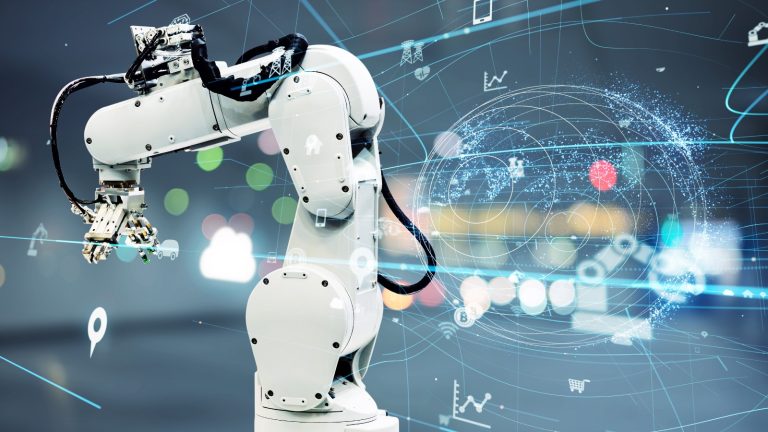
Smart MES factories represent a reality of Industry 4.0, where technology is being leveraged to optimise production and logistics processes that result in them being able to produce more with the same resources.
Real-Time Monitoring and Control
MES allows for continuous production line monitoring and supports in-depth control of production scheduling, as well as quality control. This feature allows your manufacturing company to have a quick bottleneck diagnosis and greater uniformity of product quality.
Predictive Maintenance and Efficiency
With predictive maintenance built in, the smart MES system can mark factors like pending equipment failures and minimise unscheduled stoppage. By streamlining production output and method of operation, the latter helps increase workflow efficiency in your manufacturing.
Industry Standards and Best Practices
ISA-95 standard MES platforms seamlessly link with your ERP system, and provide a standard architecture for your Manufacturing Execution System MES and the success that comes in the long term.
Cerexio Industry 4.0-Driven MES for Efficiency
Cerexio MES is a sophisticated Manufacturing platform that uses Industry 4.0 digital capabilities to signify how current solutions empower production with cutting-edge Industry 4.0 functionality.
Enhanced Real-Time Data Collection
Cerexio MES gives you full control of your production, thanks to real-time recording of data, production, which means having measurable knowledge with direct debriefing and analysis.
Improved Operational Efficiency
With an optimised production schedule and minimised downtime, Cerexio MES helps to increase the OEE (overall equipment effectiveness) and, in the end, overall operational efficiency. This allows for more efficient processes and the use of resources within your operational ecosystem.
Legacy and ERP System Integration
Cerexio MES seamlessly integrates with legacy systems and ERPs, allowing full digital transformation. We enable all types of manufacturing companies to link legacy to modern, data-driven production environments without any risk.
Call for a free demo today.
Steppling into the Digital Realm through the Evolution of Manufacturing Execution Systems
The development of MES systems has progressed significantly from basic plant floor monitoring to intelligent factories with full MES integration that enables production optimisation, instant decision-making and higher product quality.
By utilising contemporary MES with modular granularity and visionary Industry 4.0-enabled MES, you can expect to take a huge leap for better performance transparency, predictive maintenance and longevity for tomorrow and beyond.
Cerexio MES- The Future is Today!
FAQ about Evolution of Manufacturing Execution Systems
An industry 4.0 manufacturing execution system is a real-time production control layer that connects machines, sensors, people, and business systems to monitor, track, and optimise manufacturing operations, turning raw shop‑floor data into actionable insights for smarter decision-making.
An industry 4.0 MES goes beyond basic tracking by adding IoT connectivity, AI, and cloud capabilities, enabling predictive maintenance, digital twins, and integration with enterprise applications, rather than operating as an isolated, plant‑only monitoring tool.
MES for Industry 4.0 acts as the execution backbone that translates digital strategies into operational reality, synchronising schedules, materials, and quality controls so factories can run with higher agility, transparency, and automation.
Key next-generation MES platform hallmarks include modular architecture, open APIs, cloud readiness, strong analytics, digital twin support, and the ability to serve as MES platforms scalable across global production sites with consistent standards.
A modern manufacturing execution system enables next-gen MES systems for digital transformation by digitising processes, centralising data, and providing real-time performance insights that help manufacturers standardise, automate, and continuously improve operations.
Essential MES capabilities for digital-first manufacturing include real-time data acquisition, traceability, integrated quality management, predictive maintenance, and closed-loop feedback with ERP and automation systems to support rapid, data‑driven decisions.
MES for advanced manufacturing and Industry 4.0 coordinates complex processes like high-mix, low-volume production, orchestrates flexible lines, and ensures precise traceability, enabling manufacturers to adopt robotics, additive manufacturing, and mass customisation efficiently.
Yes, modern MES platforms scalable across global production sites use standard data models, modular functionality, and cloud or hybrid deployment, allowing companies to roll out common templates while accommodating local equipment, regulations, and workflows.
Industry 4.0 MES software improves OEE by detecting downtime causes, scheduling maintenance proactively, balancing workloads, and ensuring materials and recipes are correct, reducing waste and increasing throughput across the plant.
A MES manufacturing execution system Industry 4.0 typically sits between ERP and automation layers, integrating with PLCs, SCADA, and business applications to provide a unified, contextualised view of production and close the loop between planning and execution.