
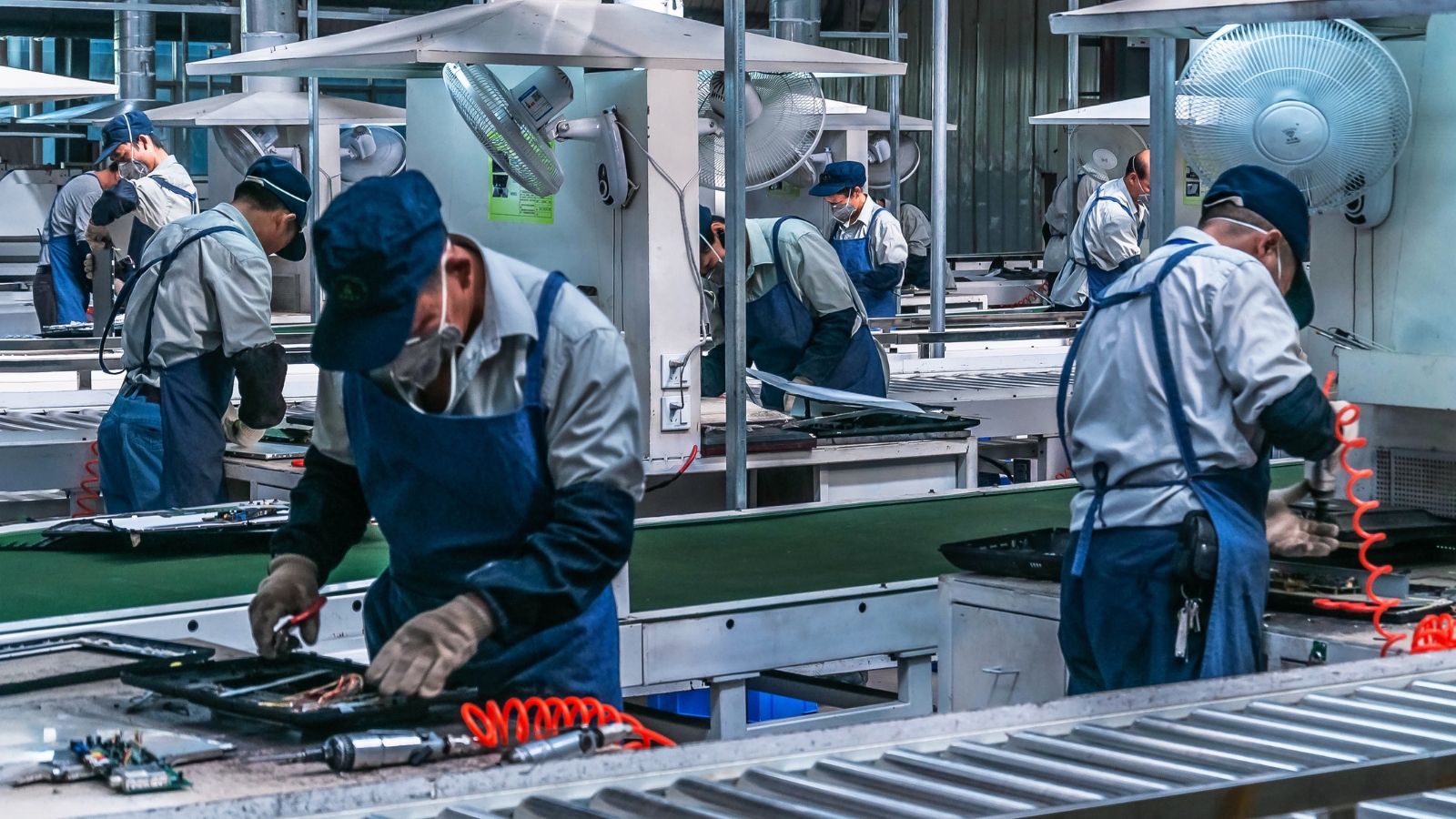
Imagine this scenario: a packaging motor inside an electronics factory suddenly failed. Within minutes, conveyors stalled, robotic arms froze, and production managers began calculating losses by the second. What looked like a single equipment issue soon exposed a chain reaction across an entire production floor. That is why modern factories are no longer treating maintenance as an isolated engineering task.
According to recent industry research, manufacturers implementing predictive maintenance programmes reduce unplanned downtime by 30%–50% while cutting maintenance expenses by up to 25%. In Singapore’s highly competitive industrial sector, building a scalable predictive maintenance strategy that Singapore manufacturers can trust has become essential for productivity, compliance, and long-term operational resilience.
In this article, we explore how to build a Predictive Maintenance strategy for a multi-machine factory.
The article covers
- Why a Multi-Machine Floor Needs a Strategy
- Step 1 — Conduct an Asset Criticality Assessment
- Step 2 — Choose the Right Diagnostic Methods per Machine
- Step 3 — Deploy IIoT Sensors Across the Floor
- Step 4 — Build AI Failure Prediction Models
- Step 5 — Integrate PdM With MES and CMMS
- Step 6 — Build a 10-Year Investment Profile
- How Digital Twin Strengthens Multi-Machine PdM
- How to Scale PdM Across Multiple Production Lines
- Common Mistakes When Building a PdM Strategy
- What a Strong PdM Strategy Delivers
- How to Get Started in Singapore
- FAQs About Predictive Maintenance Strategy
Why a Multi-Machine Floor Needs a Strategy
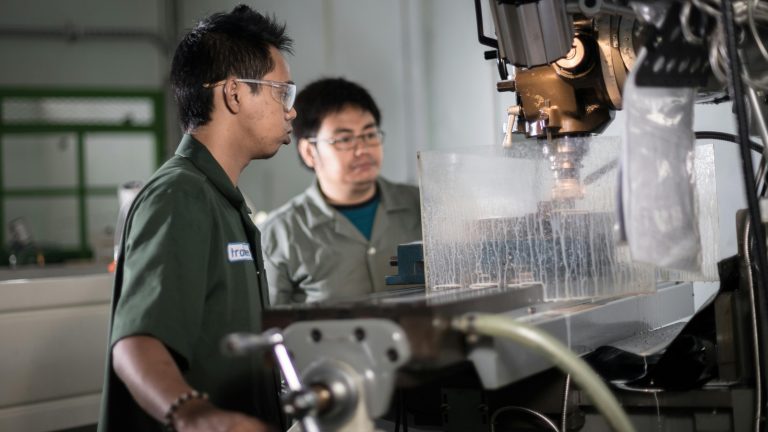
A multi-machine floor requires a strategy, as a coordinated maintenance framework helps manufacturers prevent cascading failures, reduce production interruptions, and improve factory-wide reliability.
Key Takeaways
- Predictive maintenance helps manufacturers reduce unexpected production downtime significantly.
- AI-driven monitoring improves machine reliability across multi-machine factory floors.
- Asset criticality assessments help prioritise high-risk equipment effectively.
- Digital twins strengthen maintenance planning through virtual failure simulations.
Single-Machine PdM vs Floor-Wide Strategy
Many factories begin with isolated predictive maintenance PdM projects focused on one machine. However, a disconnected approach rarely protects overall production continuity.
A floor-wide strategy examines machine relationships, shared workloads, utility dependencies, and synchronised production timing.
In Singapore’s high-output facilities, maintenance teams are increasingly shifting toward integrated reliability ecosystems rather than standalone monitoring initiatives.
Complexity of Monitoring 50+ Machines Simultaneously
A modern semiconductor, pharmaceutical, or food-processing plant may operate dozens of assets at once, right?
Coordinating alarms, sensor data, and technician workflows across multiple systems becomes extremely difficult without centralised orchestration.
This challenge is why multi-machine predictive maintenance Singapore initiatives require scalable infrastructure capable of handling enormous operational data volumes without creating alert fatigue for maintenance teams.
Hidden Failure Chains Across Interdependent Machines
Did you know that one overheated motor can overload upstream conveyors, destabilise robotic timing, and interrupt packaging synchronisation within minutes?
These hidden dependencies often remain invisible until breakdowns occur. This is why engineers now rely on interconnected monitoring systems to understand operational relationships between assets.
This is especially true in factories where production throughput depends on tightly aligned machine communication and synchronised manufacturing cycles.
Why Ad-Hoc PdM Deployments Underperform
Factories sometimes install sensors without defining maintenance objectives, integration logic, or operational priorities. This fragmented approach usually creates disconnected dashboards with little actionable value.
In such a scenario, a structured maintenance architecture ensures sensor placement, analytics, workflow automation, and engineering response procedures work together.
Without strategic alignment, predictive systems often become expensive visibility tools rather than operational decision engines.
Step 1 — Conduct an Asset Criticality Assessment
Before installing sensors or deploying analytics, manufacturers must determine which machines create the highest operational and financial risk.
Ranking Machines by Production Impact and Failure Cost
A failed cooling compressor inside a Singapore pharmaceutical facility may halt multiple production zones simultaneously. Engineers, therefore, prioritise equipment based on downtime cost, throughput dependency, safety implications, and replacement complexity.
A strong asset criticality assessment Singapore factory process allows maintenance planners to allocate resources toward assets that influence profitability and production continuity most significantly.
Identifying Single Points of Failure on the Floor
Certain machines silently support entire production ecosystems. One compressed-air unit, central chiller, or hydraulic station may influence dozens of connected systems.
Identifying these vulnerabilities helps manufacturers avoid catastrophic shutdown scenarios.
This is where engineers often map production dependencies visually to uncover hidden operational bottlenecks that traditional maintenance planning methods frequently overlook during routine inspections.
Grouping Assets by Criticality Tier for PdM Priority
After risk evaluation, machines are categorised into maintenance tiers.
Tier-one assets usually receive continuous monitoring, while lower-risk machines may follow periodic inspection schedules. This structured prioritisation prevents unnecessary spending.
Plus, it ensures critical production infrastructure receives the highest level of protection and engineering oversight across the manufacturing floor.
Using FMEA to Map Failure Modes per Machine Type
You may have noticed that reliability teams frequently apply FMEA predictive maintenance manufacturing frameworks to identify probable failure scenarios across different asset categories.
During this process, engineers evaluate failure mode effects, calculate a risk priority number, and document mitigation actions. This structured FMEA analysis approach becomes particularly valuable when factories manage diverse machine groups requiring different operational tolerances and maintenance responses.
Step 2 — Choose the Right Diagnostic Methods per Machine
Different machine categories fail in different ways, making diagnostic selection one of the most important stages of maintenance planning.
Vibration Analysis for Rotating and Bearing Equipment
Rotating assets such as pumps, compressors, and turbines generate measurable mechanical signatures long before breakdowns occur. In such cases, engineers use vibration analysis to identify bearing wear, shaft imbalance, looseness, and lubrication deterioration early.
This technique remains one of the most trusted approaches for preventing catastrophic rotating-equipment failures in high-speed industrial environments.
Infrared Thermal Imaging for Electrical and Motor Faults
Electrical resistance, overloaded circuits, and failing motors often produce abnormal heat patterns before visible damage emerges. Through infrared thermal imaging, technicians can identify overheating contactors, overloaded switchboards, and unstable power distribution systems without interrupting production.
Further, thermal diagnostics are especially useful in facilities where uninterrupted operations remain critical to meeting production schedules.
Acoustic Emission for Pressure and Structural Stress
Compressed systems, pressure vessels, and structural assemblies frequently release microscopic stress waves before major failures occur.
Using acoustic emission analysis, maintenance teams can detect leaks, crack propagation, and pressure instability at very early stages.
As it is visible, this method helps factories identify mechanical deterioration without invasive inspections or lengthy operational shutdowns.
Oil and Wear Particle Analysis for Hydraulic Systems
Hydraulic contamination often begins with microscopic metal particles circulating through lubrication systems. Engineers perform oil and wear particle analysis to identify abnormal friction, contamination, and internal component degradation.
When they analyse lubricant quality trends over time, maintenance teams gain valuable insight into hidden wear patterns affecting pumps, cylinders, and heavy industrial machinery.
Multi-Method Approach for Higher Prediction Accuracy
No single diagnostic method captures every failure signature. Do you agree?
Advanced factories, therefore,e combine thermal, vibration, lubrication, and ultrasonic testing techniques into unified monitoring systems. This multi-method diagnostic approach improves accuracy while supporting stronger false-alarm reduction capabilities.
It also allows maintenance teams to respond confidently instead of chasing unreliable alerts.
Step 3 — Deploy IIoT Sensors Across the Floor
Industrial data collection becomes effective only when sensor infrastructure aligns with machine behaviour, environmental conditions, and future scalability goals.
Selecting Sensor Types Matched to Each Machine Class
We know that factories operating CNC systems, chillers, robotic stations, and compressors require different monitoring devices for each asset category.
A successful IIoT sensor strategy manufacturing Singapore facilities can scale depending heavily on choosing sensors compatible with operational loads, environmental exposure, and data transmission requirements across varying machine architectures.
Positioning Sensors at Highest-Failure-Probability Points
Sensor placement directly influences prediction accuracy. Engineers usually install monitoring devices near bearings, gearboxes, heat-generating electrical panels, or high-pressure zones where degradation commonly begins.
Moreover, incorrect placement frequently produces incomplete operational visibility. The latter makes it harder for maintenance systems to detect emerging reliability risks before operational performance deteriorates.
Edge Computing for Real-Time Local Data Processing
Industrial environments generate massive operational datasets every second.
This means that instead of sending everything to centralised servers, factories increasingly use edge computing systems for localised processing. This architecture supports faster response times and reduced bandwidth usage.
It also helps with immediate anomaly evaluation during production operations, where milliseconds can influence operational continuity.
Building a Scalable Sensor Network for Future Expansion
A pilot deployment should never become a technological dead end.
Maintenance leaders design sensor architectures capable of supporting future production lines, additional assets, and expanded analytics capabilities.
Flexible network planning helps factories scale monitoring programmes gradually without replacing infrastructure every time operational requirements evolve.
Step 4 — Build AI Failure Prediction Models
Artificial intelligence transforms raw operational data into predictive insight that maintenance teams can act on before failures escalate.
Training Models on Historical Failure and Sensor Data
Modern AI failure prediction manufacturing floor systems learn by analysing historical breakdown records alongside live sensor inputs. Engineers feed operational data into advanced machine learning models capable of identifying hidden behavioural patterns linked to future equipment degradation.
The more operational context available, the more accurate predictive recommendations become over time.
Setting Failure Probability Thresholds per Machine Type
Different machines require different alert tolerances. A robotic welding arm may require extremely sensitive monitoring, while lower-risk utility systems can tolerate broader performance variations.
Maintenance teams, therefore, configure intelligent threshold alerts based on operational criticality, production sensitivity, and acceptable risk exposure across the manufacturing environment.
Generating Remaining Useful Life Estimates per Asset
Predictive systems increasingly calculate remaining useful life estimates using operational wear trends and historical degradation patterns. Instead of reacting to sudden failures, engineers gain visibility into how long components are expected to operate safely.
This forecasting capability helps factories align maintenance scheduling with production planning and spare-parts procurement cycles.
Continuously Retraining Models as New Data Arrives
Industrial operations constantly evolve through production changes, equipment upgrades, and environmental fluctuations.
AI systems, therefore, re require continuous retraining using fresh operational information. Ongoing refinement improves prediction reliability while helping algorithms adapt to changing workloads, new machine behaviours, and evolving manufacturing conditions across the production floor.
Step 5 — Integrate PdM With MES and CMMS
Predictive insight creates operational value only when maintenance actions automatically connect with factory workflows.
Triggering Work Orders Automatically From Sensor Alerts
When predictive systems detect abnormal operation or maintenance, software should immediately generate actionable tasks.
Automated CMMS work orders eliminate delays between failure detection and technician response. This integration reduces manual coordination while ensuring that engineering teams receive accurate maintenance instructions directly linked to equipment conditions.
MES Feeding Real-Time Production Context to Maintenance
Production systems provide essential operational context that maintenance analytics alone cannot capture. Through MES maintenance integration, predictive engines understand machine utilisation, production intensity, and scheduling priorities.
Maintenance teams can then avoid unnecessary interventions during critical production windows while protecting operational throughput.
CMMS Scheduling Technicians Before Predicted Failure Dates
With years of industry experience, we have seen that predictive scheduling enables maintenance planners to coordinate labour availability before operational risks escalate.
Instead of reacting during emergencies, engineering managers can organise inspections, spare-part allocation, and technician assignments proactively.
This transition from crisis management toward planned intervention significantly improves workforce efficiency and operational stability.
Unified Maintenance and Production View for Managers
Factory leaders increasingly demand centralised visibility into operational performance. Integrated dashboards combine machine reliability, production throughput, maintenance schedules, and operational risk indicators in a single environment.
This unified perspective improves communication between engineering, finance, and operations teams while supporting faster strategic decision-making.
Step 6 — Build a 10-Year Investment Profile

Long-term maintenance planning helps manufacturers forecast future operational risk instead of reacting to yearly budget pressure.
Forecasting Machine Replacement and Repair Costs Ahead
Factories operating with ageing production infrastructure often struggle with unpredictable maintenance spending.
Through 10-year maintenance investment profiling, organisations estimate future repair frequency, replacement timelines, and operational risk exposure. Long-range forecasting enables more stable budgeting while reducing financial shocks associated with emergency capital expenditure.
Prioritising Capital Spend on Highest-Risk Assets First
Not every machine requires immediate modernisation.
Reliability teams evaluate operational exposure, maintenance frequency, and production impact to determine where investment creates the highest return.
Strategic prioritisation ensures limited capital budgets support assets presenting the greatest risk to production continuity and operational efficiency.
Aligning Maintenance Budgets With Predicted Failure Curves
Predictive analytics allows financial planning to follow realistic operational behaviour instead of static annual assumptions.
This signifies that maintenance teams can align repair budgets with expected equipment degradation patterns, improving financial forecasting accuracy while supporting stronger coordination between engineering departments and executive management.
Presenting Investment Profiles to Finance and Management
Executives respond better to measurable operational forecasting than technical maintenance terminology alone. Reliability engineers increasingly present predictive strategies through cost-avoidance projections, downtime reduction estimates, and lifecycle risk visualisation.
Another fact is that clear financial communication helps leadership teams justify long-term maintenance investments more confidently.
How Digital Twin Strengthens Multi-Machine PdM

Virtual production environments help manufacturers test maintenance decisions safely before applying them to live operations.
Simulating Failure Propagation Across Interdependent Machines
Through digital twin simulation, engineers can observe how failures propagate across interconnected assets before physical disruptions occur.
Virtual modelling reveals operational bottlenecks, dependency risks, and hidden failure paths that traditional monitoring often misses.
This capability becomes especially valuable in highly automated production environments with tightly synchronised machine workflows.
Testing Maintenance Schedules Without Floor Disruption
Maintenance planning traditionally involves operational compromise. Digital simulation environments now allow engineering teams to test inspection timing, shutdown sequencing, and maintenance intervals virtually before touching production equipment.
This reduces operational uncertainty while helping manufacturers optimise intervention schedules with minimal production disruption.
Validating Sensor Placement in the Virtual Model First
Improper sensor positioning can undermine predictive accuracy significantly.
Digital models allow reliability engineers to simulate equipment behaviour and evaluate optimal sensor locations before physical installation occurs.
This virtual validation process improves deployment efficiency while reducing costly trial-and-error adjustments during implementation.
Live Digital Twin Sync With Real-Time Machine Health Data
Advanced manufacturing environments increasingly synchronise digital models with live operational conditions through real-time monitoring infrastructure. Continuous synchronisation helps engineers compare simulated behaviour against actual machine performance.
Not to mention that it improves operational visibility and supports more precise maintenance decision-making throughout the production lifecycle.
How to Scale PdM Across Multiple Production Lines
Scaling predictive maintenance successfully requires structured deployment, operational discipline, and repeatable engineering standards.
Starting with the Highest-Criticality Line as a Pilot
Most manufacturers begin with a pilot deployment on the production line carrying the highest operational risk.
This approach limits implementation exposure while helping engineering teams validate technology compatibility, workforce readiness, and maintenance procedures before expanding predictive systems throughout the facility.
Validating Model Accuracy Before Expanding Deployment
Predictive analytics should prove reliability before factory-wide scaling begins.
Maintenance leaders usually compare predicted failure events against actual equipment outcomes to measure precision.
Strong validation prevents large-scale deployment of unreliable analytics systems that could undermine operational trust and engineering confidence.
Standardising Sensor and Diagnostic Protocols Across Lines
Consistency becomes essential once predictive systems expand across multiple departments. Standardised monitoring procedures simplify technician training, improve data quality, and reduce troubleshooting complexity.
Uniform operational frameworks also help engineering teams compare reliability performance more accurately between different production zones.
Centralising All Machine Health Data in One Dashboard
Large factories often struggle with fragmented operational visibility. Centralised dashboards consolidate equipment conditions, sensor alerts, maintenance tasks, and production performance within one environment.
This integrated visibility allows engineering leaders to identify broader operational trends instead of analysing isolated machine behaviour individually.
Common Mistakes When Building a PdM Strategy

Many predictive maintenance projects fail not because of technology limitations, but because the planning and integration stages are rushed.
1.Deploying Sensors Without an Asset Criticality Baseline
Installing sensors before conducting an asset criticality assessment often produces unnecessary monitoring expenses and limited operational value.
Without risk prioritisation, factories may over-monitor low-impact assets while ignoring infrastructure capable of causing severe production disruption during unexpected failures.
2. Using One Diagnostic Method Across All Machine Types
Different assets generate different failure signatures.
Applying identical monitoring approaches across conveyors, compressors, and robotic systems usually creates incomplete operational visibility.
Reliability programmes become significantly stronger when diagnostic methods align directly with machine behaviour and operational stress characteristics.
3. Ignoring Interdependencies Between Machines on the Floor
Maintenance planning frequently focuses on individual assets rather than system relationships.
However, one malfunctioning machine can destabilise the surrounding production infrastructure quickly. Ignoring machine interdependencies increases the likelihood of cascading failures that simultaneously affect production output across multiple operational zones.
4. Failing to Integrate PdM Alerts With MES Workflows
Predictive alerts become ineffective when disconnected from operational execution systems. Maintenance notifications must connect directly with production scheduling, technician coordination, and operational planning processes.
Without integration, predictive systems generate visibility without delivering measurable operational response improvements.
What a Strong PdM Strategy Delivers
Well-designed predictive maintenance systems create measurable operational improvements across production reliability, financial performance, and equipment longevity.
- 50% Reduction in Unplanned Downtime
Factories implementing mature predictive programmes often achieve dramatic reductions in unplanned downtime because maintenance teams identify problems before catastrophic failures emerge.
Earlier intervention prevents production interruptions while reducing emergency repair scenarios that typically create operational chaos across high-output manufacturing facilities.
- Extended Machine Lifespan by up to 40%
Continuous monitoring helps engineers detect abnormal wear patterns before irreversible damage occurs.
As a result, critical assets operate more efficiently for longer periods. Extended equipment lifespan delays replacement spending while supporting more sustainable operational planning throughout the factory lifecycle.
- Lower Emergency Repair and Spare Parts Costs
Emergency procurement frequently carries higher operational and financial costs than planned maintenance scheduling.
Predictive visibility allows factories to order components strategically, optimise inventory management, and avoid expensive last-minute procurement during production crises.
- Higher OEE and Manufacturing Yield Factory-Wide
Improved reliability directly contributes to stronger OEE improvement performance across manufacturing operations. Stable equipment availability reduces production interruptions, minimises defective output, and improves overall operational consistency throughout the facility.
How to Get Started in Singapore
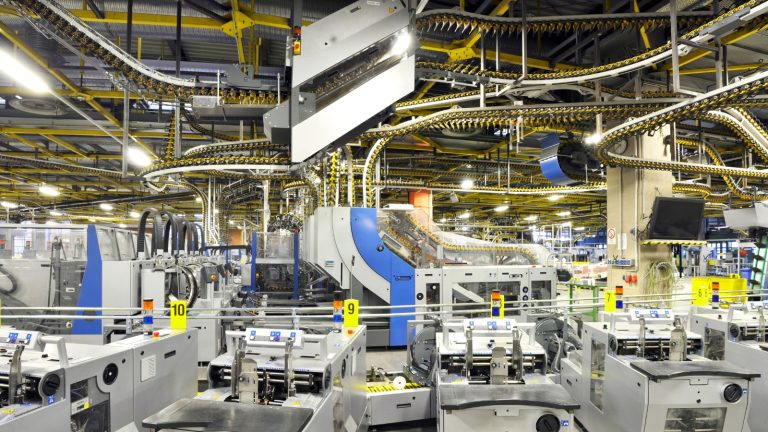
Singapore manufacturers can reduce deployment risk by beginning with structured pilots, measurable objectives, and experienced implementation partners.
Mapping Your Floor’s Asset Criticality and Failure History
The first step involves analysing historical breakdown records, maintenance frequency, and operational bottlenecks across the factory floor.
Engineers use this information to identify vulnerable production zones and prioritise predictive monitoring based on operational importance and historical failure patterns.
Piloting on One Line Before Full Floor Deployment
A focused pilot allows maintenance teams to validate sensor performance, technician workflows, and analytics accuracy within controlled operational conditions.
Lessons learned during pilot deployment often shape larger implementation strategies while reducing long-term deployment risk.
Selecting a PdM Vendor With Singapore Manufacturing Expertise
Local industrial experience matters significantly during predictive maintenance implementation.
Vendors familiar with Singapore’s manufacturing regulations, workforce environments, and operational expectations can often accelerate deployment while reducing integration complications across industrial facilities.
Setting Measurable KPIs Before Go-Live
Maintenance leaders should define measurable targets before deployment begins. Metrics such as mean time between failures, maintenance response speed, repair frequency, and production reliability provide clear benchmarks for evaluating implementation success after operational rollout.
Why Choose Cerexio for Your PdM Strategy?
Cerexio PM is a robust Predictive Maintenance Platform in Singapore that helps manufacturers transform maintenance operations into scalable, data-driven reliability ecosystems.
AI and ML Models Trained on Real Manufacturing Contexts
Cerexio has developed this predictive analytics platform using actual industrial operating conditions rather than generic datasets. This approach improves prediction relevance while helping factories address real operational variables affecting equipment reliability and maintenance planning outcomes.
Multi-Method Diagnostics Across All Machine Types
From CNC machine maintenance environments to robotic arm monitoring, Cerexio PM supports diverse industrial assets through flexible monitoring architectures. This Industry 4.0-driven platform also supports conveyor health monitoring and chiller monitoring capabilities across high-demand manufacturing environments requiring broad operational visibility.
10-Year Asset Failure and Cost Forecasting Built In
Cerexio provides long-term forecasting tools that help engineering and finance teams visualise operational risk years ahead.
Its predictive lifecycle planning enables more strategic investment coordination while improving budget stability across complex manufacturing environments.
Full MES, CMMS, ERP, and Digital Twin Integration
The platform supports integration across operational systems, including maintenance software, manufacturing execution platforms, and ERP asset data environments. Unified operational connectivity helps factories streamline maintenance coordination while improving enterprise-wide operational visibility.
Trusted by Singapore Manufacturers Since 2020
Over years of industrial implementation, Cerexio has supported manufacturers navigating operational modernisation, predictive analytics adoption, and reliability transformation. This experience helps organisations implement predictive systems with stronger operational alignment and reduced deployment uncertainty.
Cerexio-From Vision To Your Manufacturing Floor
Ready to Build Your PdM Strategy?
You may have noticed that the future of manufacturing reliability belongs to factories capable of predicting operational risk before downtime begins.
Consult Cerexio Predictive Maintenance Specialists
Cerexio specialists help manufacturers evaluate operational risk exposure, production dependencies, and predictive readiness across complex industrial environments. Our expert consultation ensures deployment planning aligns with both technical objectives and long-term operational strategy.
Call for a personalised demo.
Map Your Floor’s Criticality and Sensor Requirements
A structured evaluation process identifies critical assets, monitoring gaps, and infrastructure requirements needed for successful predictive maintenance implementation. This groundwork helps manufacturers avoid fragmented deployment and costly integration errors later.
FAQs About Predictive Maintenance Strategy
AI improves predictive maintenance accuracy by analysing historical failures, live sensor readings, and machine behaviour patterns simultaneously. Machine learning models identify anomalies earlier, reduce false positives, and generate more reliable failure predictions across interconnected production equipment environments.
The most effective predictive maintenance sensors include vibration, thermal, acoustic, pressure, and oil-quality sensors. Manufacturers select sensor combinations based on machine type, operating conditions, failure modes, and the level of monitoring precision required for operational reliability.
Edge computing processes machine data locally, near production equipment, rather than sending everything to centralised servers. This reduces latency, enables faster anomaly detection, improves real-time response capability, and minimises bandwidth strain across high-volume manufacturing environments.
Digital twin technology creates virtual machine environments that simulate operational behaviour and failure propagation. Engineers use these models to validate maintenance schedules, optimise sensor placement, test production scenarios, and predict operational risks before physical disruptions occur.
Manufacturers should monitor mean time between failures, maintenance response time, downtime frequency, asset availability, repair costs, and overall equipment effectiveness. These KPIs help evaluate predictive maintenance performance, improvements in operational reliability, and long-term maintenance cost optimisation.